
Trending
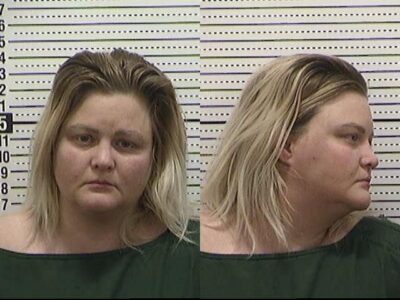
A district court judge has ruled on a proposed gag order for the attorneys of Nichole Rice, ruling that they will be required to circulate surveys only with court approval.
The parties gathered Thursday for a hearing at the Ward County Courthouse, where they both argued their cases before North Central District Judge Richard Hagar. The motion for the proposed order sprung out of prosecutor's concerns over a Survey Monkey survey commissioned by Rice's attorneys, who sought information to support a future argument for transferring the proceedings to another venue to ensure a fair trial.
The 2007 murder of Anita Knutson went unsolved for nearly 15 years, with Rice's arrest in 2022 generating a great deal of interest and discourse around the new development, announced at a news conference held by Minot Police Chief John Klug.
Filings by state prosecutors asserted that the results of the survey could be skewed with information from respondents who would not be a part of a potential jury pool and could even engender the very bias the defense sought to avoid by increasing discussion and awareness of the case outside of Ward County. The proposed gag order would block Rice's attorney's from making any further surveys, social media posts or statements to the media.
Assistant State's Attorney Stephenie Davis spoke for the prosecution, calling no witnesses but reiterating the arguments presented in the initial request and subsequent responses, saying the time hadn't yet come to question the bias of a potential jury pool.
"This case did garner media attention at various points, but it was never at the impetus of the State's Attorney's office. We believe this Survey Monkey survey has resulted in this conversation being restarted," Davis said. "There are proper ways, and this is the type of case under case law where it would have been appropriate in asking for a questionnaire once we have a jury panel. We don't have a trial at this point. To try to tailor this for a target audience is extremely premature."
Rice's attorney Philip Becher of the Sand Law Firm defended the use of the survey, arguing that case law is open for interpretation regarding exactly what a "qualified public opinion survey" can be and that a precedent blocking defendants from making statements did not cover surveys. Becher argued the expert his team had retained had experience performing jury surveys and they followed his guidance. He also took issue with the all-encompassing nature of the proposed gag order.
"They're saying that as a matter of principle we shouldn't be permitted to survey Ward County residents about potential bias in the jury pool that exists. I don't see anything that imposes limitation like that," Becher said.
Becher further provided defenses for the survey itself, saying he believed there wasn't anything in the questionnaire he felt was biased or objectionable.
"This gag order really is an extraordinary remedy for the court to impose. It's something that is presumptively unconstitutional, as it acts as a restraint of the First Amendment on both myself as the defendant's attorney but also on the defendant herself. The bar is really very high if the court is going to impose a gag order," Becher said. "Your honor, I think asking for a gag order is a gross overreaction and overreach."
Becher confirmed for the court that the survey was put on hold and removed from circulation after he was contacted by prosecutors with their concerns. Hagar said both parties deserved the chance for a fair trial in the case, but he agreed with the prosecution that Becher's effort to prove potential bias was putting the cart before the horse.
"The legitimate way that should take place is through a juror questionnaire, to weed out those who may have a bias, prior to ever bringing them in. Then you will have the chance to voir dire that jury panel one on one. That's the process we are going to take before we even get to the idea that we can't get a fair and impartial jury," Hagar said. "It's unlikely, if not completely out of the question, that this court would somehow grant a change of venue from media information solely. That's the way we're going to narrow our jury pool down. If they seem to have some bias or they can't be fair or have been tainted by whatever information they believe prior to that date, then the court would entertain it."
Hagar ultimately ordered that defense counsel remove the survey, and he required the defense to get court approval before pursuing another survey poll in the future.
"I'm not telling anyone here they can't talk about this case. I'm not going to stand in the way. I think the questionnaire is the way we're going to go. I don't want to believe that the survey was intended to bias people," Hagar said.