
Fight fire with fire: Prescribed burns used as tool
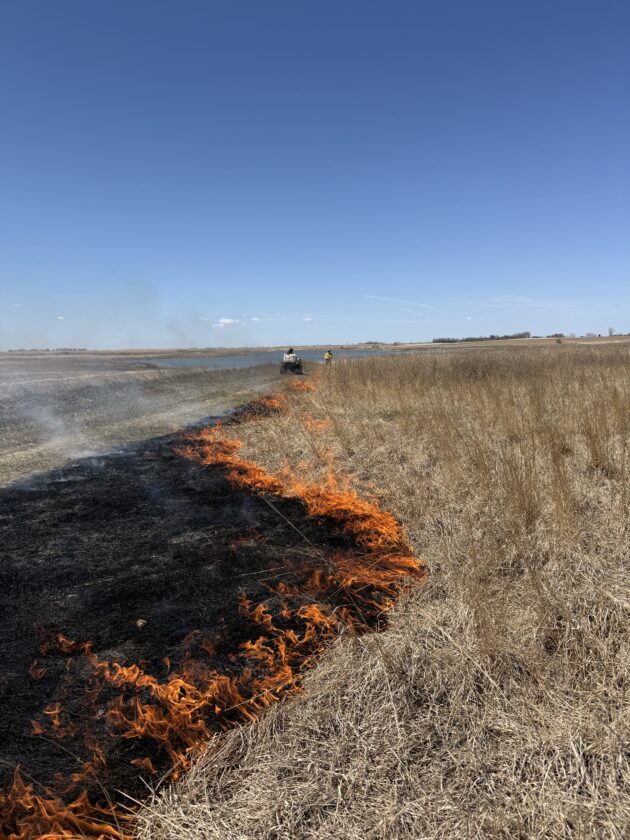
Submitted Photo Private landowner, north of Mercer, conducts a prescribed burn May 1, to reduce excess vegetation and help maintain ecological balance. Photo by Shelly Larson.
BELFIELD – Wildfires are catastrophic and difficult to manage, especially when conditions align for rapid fire spread. On Oct. 5, 2024, North Dakota experienced a perfect storm of weather and environmental conditions that allowed fires to ignite and grow uncontrollably.
Under typical circumstances, local volunteer fire departments can contain unintentional fires sparked by something as simple as a discarded cigarette or a piece of farm equipment. But that day was different. Emergency response teams were forced into a reactive stance, battling flames fueled by dry grasses, crop residue and woody species such as Rocky Mountain juniper.
These events highlight a long-standing question for North Dakota: Should we manage fire proactively or reactively? Even with strong preparation, some wildfires are inevitable. Yet in regions where fire is a recurring threat, better preparation can reduce the severity of impacts. Stronger control lines, reduced fuel loads and more resilient landscapes can make a measurable difference.
One proactive tool is prescribed burning. While many view fire as inherently destructive, prescribed fire is the opposite of a wildfire: it is planned, controlled and conducted under specific conditions to achieve clear ecological objectives. These burns help reduce invasive vegetation and fuel loads, manage woody encroachment and promote native grasses and wildflowers. Most importantly, prescribed burns only occur when conditions allow for safe, effective management.
“A prescribed burn begins with a detailed plan outlining acceptable wind speeds, wind direction, temperature, humidity and soil moisture. The plan identifies nearby infrastructure, emergency contacts and neighbors who may be affected. Control lines are established in advance, and a trained crew–briefed on assignments and equipped with radios and maps–executes the burn. This level of preparation gives prescribed fire a critical advantage over wildfire,” landowner Craig Larson explains as he talks about how he plans for prescribed burns. Larson manages his grasslands with prescribed fire and grazing in McLean and Sheridan counties. He has attended trainings and is working to train more landowners in the how, why, and what of prescribed burning.
With funding from the North Dakota Outdoor Heritage Fund, North Dakota Wildlife Federation, Pheasants Forever and other partners are working to help private landowners who want to implement the practice get connected with their local fire departments.
Oliver County resident Dorthy Duhr has been working with Rick Schmidt, North Dakota State University Extension agent, Agriculture and Natural Resources, to control buckbrush/ snowberry in a pasture.
“I had done some spraying one year and mowing another year when Rick suggested we try a prescribed burn. Rick contacted Chris Gordon with the Washburn Volunteer Fire Department and in turn Chris worked with me to come up with a prescribed fire plan,” Duhr said.
Duhr, supported by the NDWF Fire Program, worked with Washburn Volunteer Fire Department to successfully burn 105 acres near Hensler in April.
“I feel the fire was a great success in getting rid of the thatch in the brush patches and now look forward to seeing if some native grasses will return,” Duhr said.
“Fire will always be part of North Dakota’s landscape. The choice we face is whether we let it happen to us through destructive wildfires, or use it intentionally to strengthen our grasslands, protect communities and support wildlife. Prescribed fire gives us the power to shape healthier, more resilient rangelands,” said Cara Greger, Western Conservation director, North Dakota Wildlife Federation.
Research shows that prescribed burns produce less smoke than wildfires, and the smoke is more predictable, helping protect human health and reduce disruptions to livestock and wildlife. Because prescribed burns are planned, residents and landowners can be notified ahead of time, and sensitive areas can be avoided. Wildlife also benefits.
Prescribed fires are typically slow-moving, giving animals time to move away, and burns are scheduled to avoid nesting and birthing seasons. Prescribed burning has been shown to improve nutritional value and consumption of rangeland plants. Protein content and digestibility of plants are enhanced by a prescribed burn. Forage quantity, quality, height, and density increase with prescribed burns.
Animal performance improves in a number of ways with a prescribed burn. NDSU studies have shown increases in stocker cattle weight gains, cow body condition scores, and increases in calf weaning weights. Another benefit is the reduction in tick and horn fly populations after prescribed burning.
Prescribed burning offers a safer, more controlled approach to fire management, helping protect North Dakota’s rangelands, wildlife habitat and rural communities.
Local News

MLS students receive scholarships
Vitalant seeks blood donors in June
As school lets out and schedules change for the summer months, blood donations dip, but patients don’t stop ...

Donated, recycled ride to take airman home

NoAH volunteers beautify Amtrak depot

Taube presents ‘Beyond the Prairie’
Upcoming Minot area veterans’ events
The following information is provided by the Disabled American Veterans Chapter 4, Minot. June 3: DAV Coffee in ...