
Local speech coaches earn peer recognition
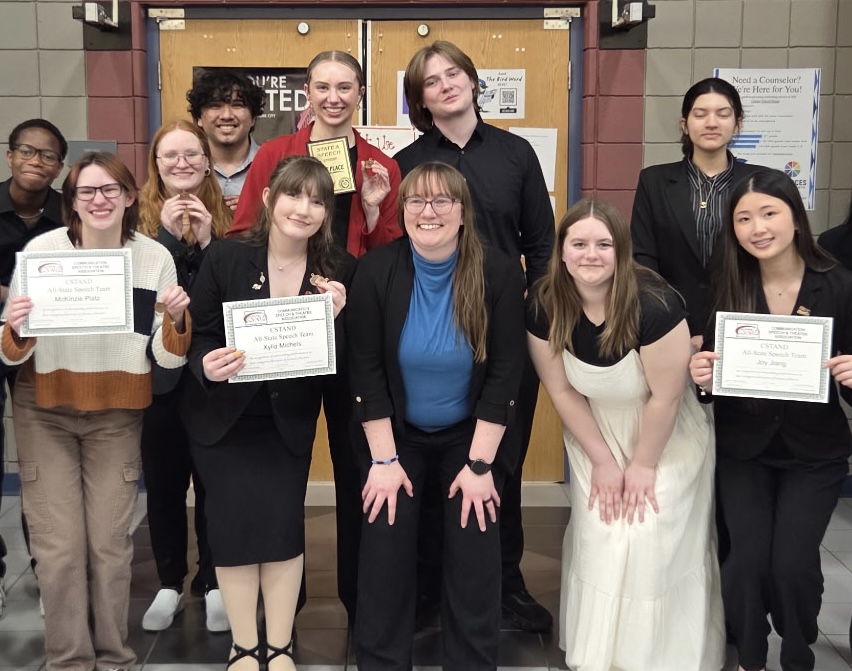
Submitted Photo Crystal Michels, center front, poses with some of her speech team members with their awards.
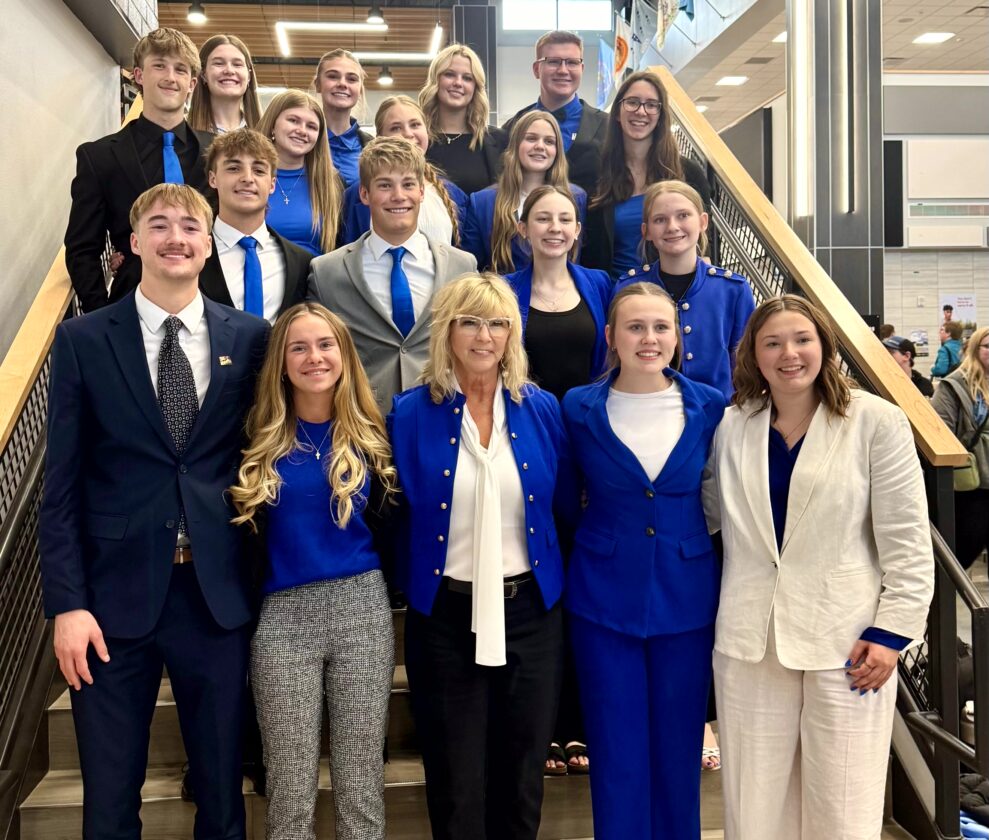
Submitted Photo Paula Rauschenberger, center front, poses with her some of her speech team members at a meet this past season.
Submitted Photo Crystal Michels, center front, poses with some of her speech team members with their awards.
Submitted Photo Paula Rauschenberger, center front, poses with her some of her speech team members at a meet this past season.
Trending
For Paula Rauschenberger, recognition as North Dakota's Class B Speech Coach of the Year caps off 30 years of advising and serves as a fitting finish as she hands off her speech team duties at South Prairie school to a new coach next year.
For Crystal Michels, her selection as North Dakota's Class A Speech Coach of the Year recognizes her contributions to the Minot speech program but also reflects how far she has come from a novice adviser 14 years ago.
The Coach of the Year selections were announced at the Class A and B state speech meets this spring, and awards will be presented at the Communication, Speech, Theater Association of North Dakota (CSTAND) conference in September.
Recalling her entry into coaching, Michels said as a new teacher at Berthold, she was slated to become the assistant speech coach. Just before the season started, she found herself as head coach, despite having never participated in speech herself.
"This didn't come naturally to me," Michels said. "It was totally new to me. I had never even heard of what this was before I came into it."
With the help of resources and mentors with CSTAND, she navigated the process. She later started a high school speech team after coming to Central Campus in 2015, adding middle school students in 2021, and now working with the students across the district from Minot North. With the addition of middle school, the team has grown from about 10 participants to this year's 27 participants.
Michels credited the growth to the mentorship of younger students by older students who serve as role models. Starting a fall Student Congress that promotes public speaking and recruitment from theater students also have helped out the speech program.
Rauschenberger, a former Class B Drama Coach of the Year who also directs one-act plays at South Prairie, said students are better actors if they have participated in speech. Competition also teaches great life lessons, from staying organized to handling criticism to dealing with disappointment, she said.
"A lot of them, they've really improved just in self confidence," Rauschenberger said.
Rauschenberger started speech teams in three schools.
"My first school in the mid-80s was Sawyer, and I started a team there. Then I went to Glenburn, started a speech team there, and then I went to Minot High and worked with Crystal," she said.
Rauschenberger started the team at South Prairie, where she now teaches part-time, having semi-retired in 2019. South Prairie's team included 24 students this year.
"It can be a small group when you start," Rauschenberger said, "but once they get some success and they talk about it, pretty soon their siblings are coming out. Pretty soon their friends are coming out. Success breeds success."
Another key to a team's success is support from the school administration, Rauschenberger said. She's experienced the struggles of not having that support, which increases her appreciation for the strong support the speech program has at South Prairie.
Rauchenberger noted former students love to come back and help and assist the younger students, too.
Michels said she hears every year from military members who want to help the speech team because of their own positive experiences with speech in school. Michels also cited the support from other school clubs that recognize the value of speech training. Then there is the backing of teachers and staff members who are willing to help where needed and from fellow coaches through CSTAND, she said.
"I wouldn't be here if it wasn't for people like Paula, just knowing you have people who support you," Michels said.
Rauschenberger and Michels said speech coaches engage in friendly competition because they want to see all youth succeed, regardless of the team. Rauschenberger said speech is unique in that coaches, doubling as meet judges, provide advice to help the opposition improve their skills.
Michels said part of coaching is guiding students as they navigate the paths they want to take. Every participant is different, with some working on their speeches year round while others are writing their speeches on the way to a meet, she said.
"It's that differentiation piece, and kind of figuring out, 'How do you work with those different kids in different ways? What are their needs?'" she said.
Michel said she has even learned from her students. One of her impromptu participants developed an informational grid system for practicing that worked so well that Michels adopted it for advising all her impromptu speakers.
Having coached on and off for 30 years, Rauschenberger said the biggest and most positive change has been allowing students to use their expressions and body movement in their presentations. She finds topics also have become more interesting, and students have more license to use humor, even in informational talks.
The intensity of the speech season has increased from attending a single invitational before heading to regionals and, if lucky, state, she said. Now practice starts before Christmas and meets are held nearly every weekend from the end of January to the end of April.
"We both host tournaments, too," Rauschenberger said of the South Prairie and Minot teams. "The kids love to have everybody come to our house. They love that, but it's a lot more work for the coaches. But if we didn't do it, where would the opportunities be for the kids?"
Michels has added an opportunity for her speech members to participate in a national point system, with one of her members earning a trip to national competition this year.
"It might not sound like a fun activity - speech - because people fear it worse than death, right?" Rauschenberger said. "But, if you talk to our kids, I think they’ll tell you differently. It's so much fun. They make so many friends from other towns. The sense of team amongst our own kids and the pride is just so cool to see, too."
Michels and Rauschenberger said speech skills serve their students well regardless of their career pursuits.
"They're good communicators,” Rauschenberger said. "I always stress that to my kids. Yeah, the trophies are great and the winning is great, but when you're out of here and you have that diploma, the fact that you can speak to people, especially in this electronic world that we're living in, if you can look someone in the eye, shake their hand and speak to them because you spent some time with me, I've accomplished what I wanted to. That's our biggest goal - that they go out into the world and they can communicate. As a coach, that is the most important to me - and that they are good citizens."
She said her greatest rewards aren't the compliments about her speech team's performances but it's the compliments about how the members treat and respect others.
"Speech kids are the best kids in the state of North Dakota,” Rauschenberger said, pausing to add, "Drama kids, too."
"I don't think that many of us coaches would do the things that we do and put in the hours that we do if we didn't deal with such a good group of kids," Michels said. "There are a large number of kids who are really just awesome."