
Sheriff’s office enters realm of AI
Trending
The Ward County Sheriff's Department has cautiously dipped its toe in artificial intelligence (AI) and plans to wade a little deeper.
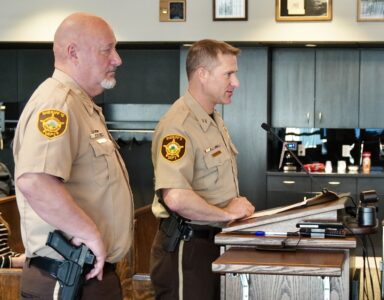
Sheriff Robert Roed and Capt. Jason Kraft received the support of the Ward County Commission Tuesday, April 21, to take a gradual approach to adopting the rapidly developing technology.
The commission voted 4-1 to authorize the department to use a federal $9,643 Justice Assistance Grant toward a software system designed to reduce report writing time, improve quality and consistency of reports, enhance investigative capabilities through automated data analysis and support data-driven decision-making.
Kraft said the department piloted the program and found it does facilitate report-writing and increases officer efficiency. By guiding the entry of information, it has helped deputies write more detailed reports, he added.
"I am still nervous about using AI for something that could end up putting someone in jail," said Commissioner Ron Merritt, who cast the only vote against acquiring the program licensing. "I am much more forgiving of a human making a mistake."
The commission noted the publicity around a Fargo arrest warrant last year for a Tennessee woman, based on a bank fraud investigation that included assistance from a partner agency's AI facial recognition software. The judge dismissed the case when evidence showed the defendant had never been to North Dakota prior to her extradition to the state.
Kraft assured commissioners that AI-driven reports still are vetted by officers, who do make a number of changes.
"I think we will see more law enforcement agencies going to this," he said. "If you see the efficiencies and improvements and things you can do with it, it's coming."
The department plans to contract for the software for one year only and make a decision about future use afterwards. The software would come at a cost to the county after the first year's grant ends.
Commissioner Jim Rostad said he trusts the department will be monitoring the AI.
"I am looking forward to seeing how they evaluate the program," he said.
"It's exciting," Commissioner Miranda Schuler added. "I applaud you for going down this road. I think it's going to be providing efficiencies."
The commission also learned the deadline for meeting U.S. Department of Justice rules for digital accessibility for people with disabilities has been pushed back a year to April 26, 2027. Entities with smaller populations, such as the City of Minot, that had a deadline of April 26, 2027, now have until 2028.
Schuler said the deadline extension gives the county the opportunity to be proactive in looking at software options to come into compliance, rather than being forced into a hasty decision.
Jason Blowers, the county's technology director, said department heads are aware that the intent is to try to make documents ADA-compliant going forward. Existing documents can be marked as archived, which then exempts them from future conversion requirements. The county has 3,978 existing documents online, he said.