
Keeping eyes on food safety
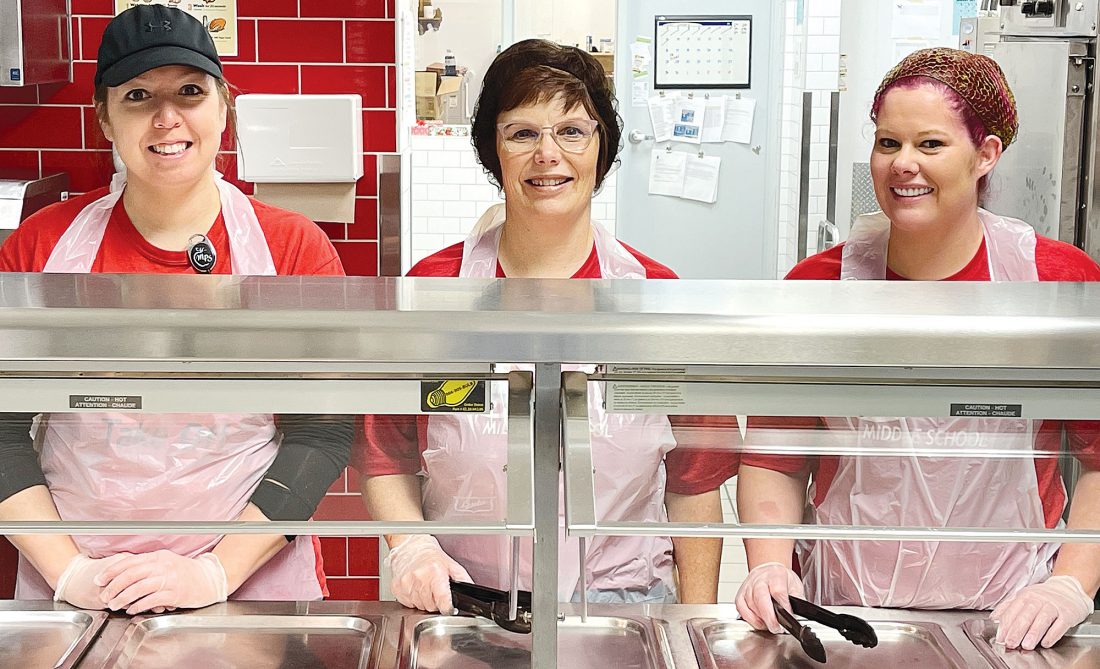
Submitted Photo Food service workers Julie Watson, Darcy Schiele and Nikki Meadows prepare to serve students at Erik Ramstad Middle School this week. Because they serve a vulnerable population, school food programs are inspected twice a year by First District Health Unit and frequently score high in food safety, including occasionally getting a top score of 100, as Erik Ramstad did last April.
-
- Submitted Photo Food service workers Julie Watson, Darcy Schiele and Nikki Meadows prepare to serve students at Erik Ramstad Middle School this week. Because they serve a vulnerable population, school food programs are inspected twice a year by First District Health Unit and frequently score high in food safety, including occasionally getting a top score of 100, as Erik Ramstad did last April.
-
- File Photo South Broadway in Minot features a collection of different kinds of restaurants. Local restaurants are held to high food safety standards and are inspected for compliance regularly.
First District Health Unit focuses on both in its charge to monitor the food service industry in its seven-county area, according to Environmental Health Director Lisa Otto-Westman.
The health unit regularly inspects hundreds of establishments to check for food safety compliance. Out of more than 400 food establishments inspected in Ward County in 2021, 15 Minot restaurants and one grocery required follow-up inspections and additional monitoring after their scores fell below an acceptable threshold. Five of those restaurants had to close temporarily to get operations back to standards.
“We do not want to close anybody, so when we have to, we take that seriously. That’s a big deal,” Otto-Westman said. “They’re not closed for a very long time. We don’t want to restrict their business, either, but we just want to make sure that they understand the importance of their processes.
“We take more of an education approach,” she added. “We want to help them make their business better.”
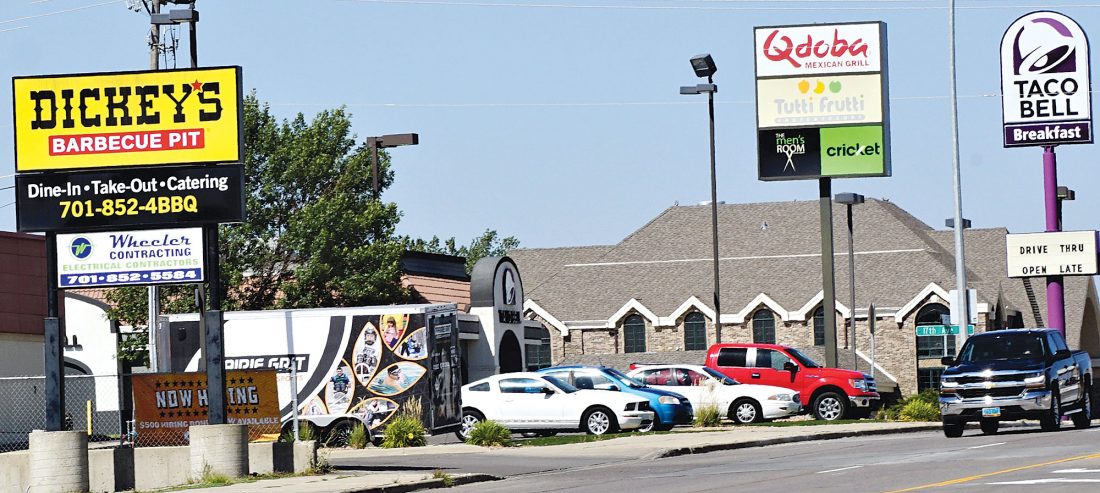
File Photo South Broadway in Minot features a collection of different kinds of restaurants. Local restaurants are held to high food safety standards and are inspected for compliance regularly.
On a positive note, Otto-Westman said it has been several years since First District has had to inspect an establishment as part of an investigation into food-borne illness.
If inspections can help ensure better food safety, it’s a good thing, she said.
“We hope that makes a difference. We also are one of the few in the state that require food safety training for all food employees. We hope that’s a piece that gets that education out there for all the workers,” she said.
First District offers food safety training, although due to the pandemic, both First District classes and other classes for which the health unit accepts certification are now offered only online. The $10 class provides a three-year certification.
The health unit conducts unscheduled inspections of restaurants, schools, daycares, senior living centers, groceries, convenience stores and other establishments that serve food. Inspections are typically once or twice a year, depending on the type of establishment. The health unit also conducts inspections in response to complaints or as follow-up in working with establishments that fall out of compliance.
Inspections can be time consuming because of the education and assistance provided to ensure the establishments are able to get on track with any corrections or improvements, Otto-Westman said. It might mean helping to troubleshoot a problem with a dishwashing machine or to locate a supplier who has the right cleaning chemicals. It can be reminding staff of proper handwashing protocols, which Otto-Westman said can be the subject of public complaints to the health unit when it is overlooked.
“There’s a lot of public out there that pays attention to those things,” she said.
Otto-Westman said the health unit receives an average of two or three consumer complaints a week about food establishments, which it then investigates. She said First District welcomes the input of the public because even if a complaint is discovered to be minor, having the eyes of the public on establishments assists in monitoring those services.
“We can’t be out there all the time,” she said, noting the district has only four inspectors serving the seven counties. “It’s good when we get those calls because that helps us then see who needs more attention, needs an extra inspection.”
An issue such as floor cleanliness, while it might generate public complaints, can have a small impact on an establishment’s inspection score because it doesn’t directly impact the food. Inspectors look harder at risk activities.
Restaurants are categorized according to risk, with those that engage in more processes having higher risk levels. Working with raw meat and foods that need heating or cooling increase the risk level.
“A lot of things we’re looking at are their processes. We also look at the things that mainly cause foodborne illness and that’s their cooking process, their heating and cooling and then a lot of personal hygiene,” Otto-Westman said.
Common violations relate to improper food handling or temperatures or lack of food safety training certifications for employees.
On a scale of 100, a score of 69 or lower generates a re-inspection, while a score of 59 or lower results in a temporary closure until compliance is obtained.
When restaurants fail an inspection to the point of temporary closure, they receive more frequent followup, Otto-Westman said. In addition to the re-inspection, there are follow-up conversations and another full inspection a month or so afterwards. The additional attention from the health unit tends to resolve issues, she said.
The establishment that slips back into bad habits will always exist, but First District often has seen small steps of improvement even in these cases, she said.
“We’re paying attention and we feel these things are very important,” she said. “Then they start paying a little more attention, too.”
Establishments also pay more attention when they know the public is paying attention, she said.
“That’s one of the reasons that we started our public portal a while ago,” Otto-Westman said. “We want to have our information available out there so the public can make their own decisions.” The portal can be found at fdhu.org in the Environmental Health section or https://nd.healthinspections.us/firstdistrict/.
The public can look up establishments to find inspection scores, critical risk factor violations and the types of problems that inspectors found.
Otto-Westman said the detail is limited so it can be difficult for the public to determine the true seriousness of a violation. However, the score and an establishment’s response in correcting a violation and not repeating it are worth noting for the public, she said.
An inspection is just a snapshot in time, though. What is important is ongoing practices, Otto-Westman said.
“We take that into consideration during our inspections as well,” she said.
Local News
ND governor, senators pay tribute to Graham
BISMARCK – Gov. Kelly Armstrong and U.S. Senators John Hoeven and Kevin Cramer paid tribute to U.S. Sen. Lindsey ...

ND State Fair to celebrate America’s 250th

ND State Parade set for Saturday in Minot
City of Minot Building Permits
June – Homeowner, 600 Harmony St. NW, shop, $275,000. – Homeowner, 3521 Kodiak St. NW, home addition and ...

Local organizations celebrate historic year
Road assessment team begins work in area
The Central Dakota Metropolitan Planning Organization (CDMPO) and City of Minot recently kicked off a project to ...