
Trending
Last year, artificial intelligence accounted for 46 cents of every dollar invested in American healthcare. (Silicon Valley Bank, 17th Annual Healthcare Investments and Exits Report)
That is not a projection. It is what happened in 2025. More than $18 billion went into healthcare AI in a single year, and that money is not staying on the coasts.
If you've been seen at a major health system recently, there is a reasonable chance AI was involved somewhere in your care. It may have read your imaging before a radiologist reviewed it. It may have flagged a risk in your chart. It may have played a role in whether your insurance approved a procedure.
That last part matters more than most people realize.
Until this year, North Dakota had no rules around how AI could be used in prior authorization -- the process insurers use to approve or deny care. Physicians here were spending up to 14 hours a week fighting those decisions ( American Medical Association, 2023 survey).
In April 2025, Governor Kelly Armstrong signed Senate Bill 2280, putting the first guardrails on AI's role in that process. It was progress. But prior authorization is only one piece of how AI is entering healthcare.
The larger shift is happening in clinical decision support -- tools that help physicians decide how to treat you. AI systems are now being used in emergency rooms to flag stroke risk, in ICUs to predict sepsis, and in primary care to identify patients who may need follow-up before they know it themselves. These are not experiments. They are deployed tools making recommendations that affect what happens in your care.
The question most people never ask is: was this tool tested on patients like me?
Most of the time, the honest answer is: not exactly.
Healthcare AI is overwhelmingly built on data from large urban academic hospitals. North Dakota is not that. Nearly 75% of our rural counties face primary care shortages (National Governors Association). Our patients drive further. They arrive later. They carry different combinations of chronic conditions shaped by the demographics of this state, including our Native American population, our aging rural communities, and our veterans.
When an AI tool built on data from a Boston hospital gets deployed at a clinic in Minot or a tribal health facility on the reservation, it is operating on a population it has never seen. That gap is the difference between how a tool performs on a test and how it performs on your grandmother.
This is the problem I work on from Minot. Using a system called HipAAsynth, I build simulated patient populations calibrated to the actual demographics of North Dakota and test how clinical AI tools behave when the population shifts. No real patient data. No privacy risk. A rigorous way of asking: does this tool work the same way here as it does somewhere else?
Healthcare AI is not slowing down. Nationally, 85% of healthcare organizations say they are increasing their AI budgets this year (NVIDIA's State of AI in Healthcare and Life Sciences: 2026 Trends). The federal government is actively pushing AI into clinical care. This is the direction things are going.
North Dakota took a real step with SB 2280. The next step - making sure the tools coming into our clinics were actually tested on populations like ours - is still ahead of us.
That work is happening here. In Minot. Right now.
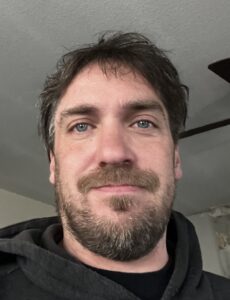
Cody Carlson is a Minot resident and founder of HipAAsynth, a medical AI validation company that tests how clinical AI systems perform across different patient populations before deployment.