
Milestone marked with Makoti Threshers
Dunn Center man volunteers for 25 years
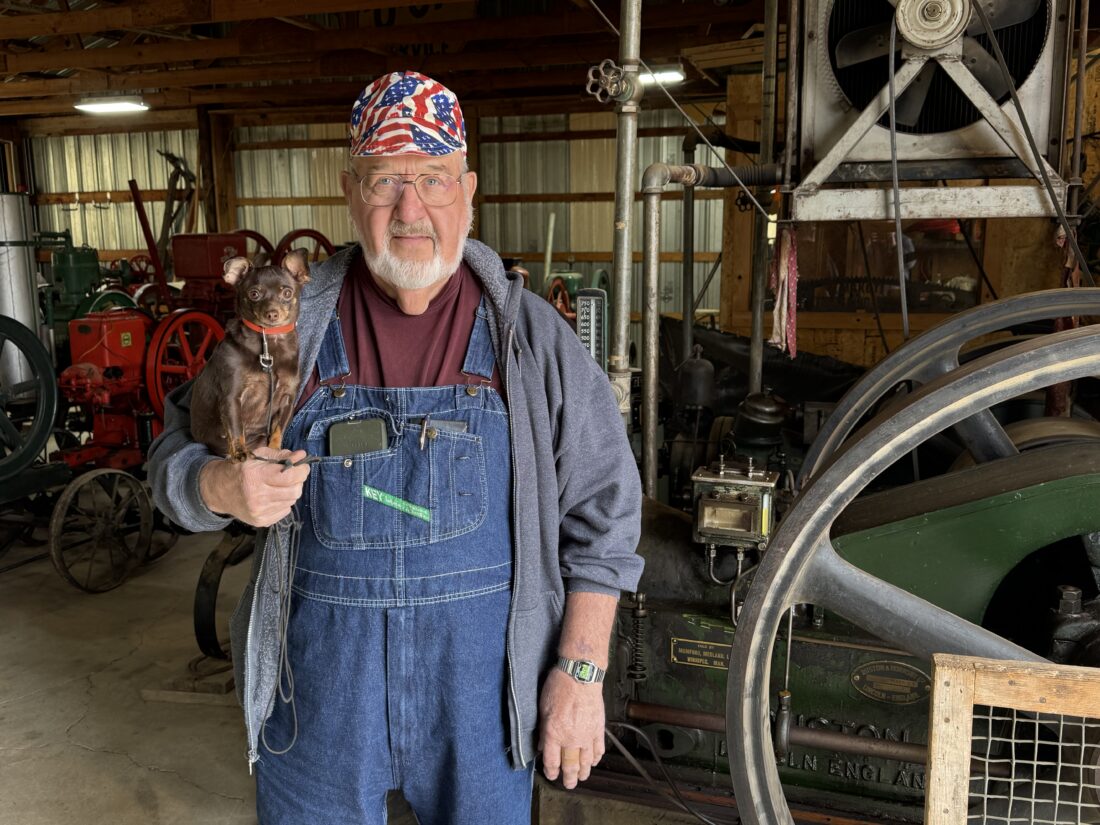
Submitted Photo Leo Piatz and his dog Nico pose for a picture in the Stationary Engine Building in Makoti. Photo by Hunter L. Andes.
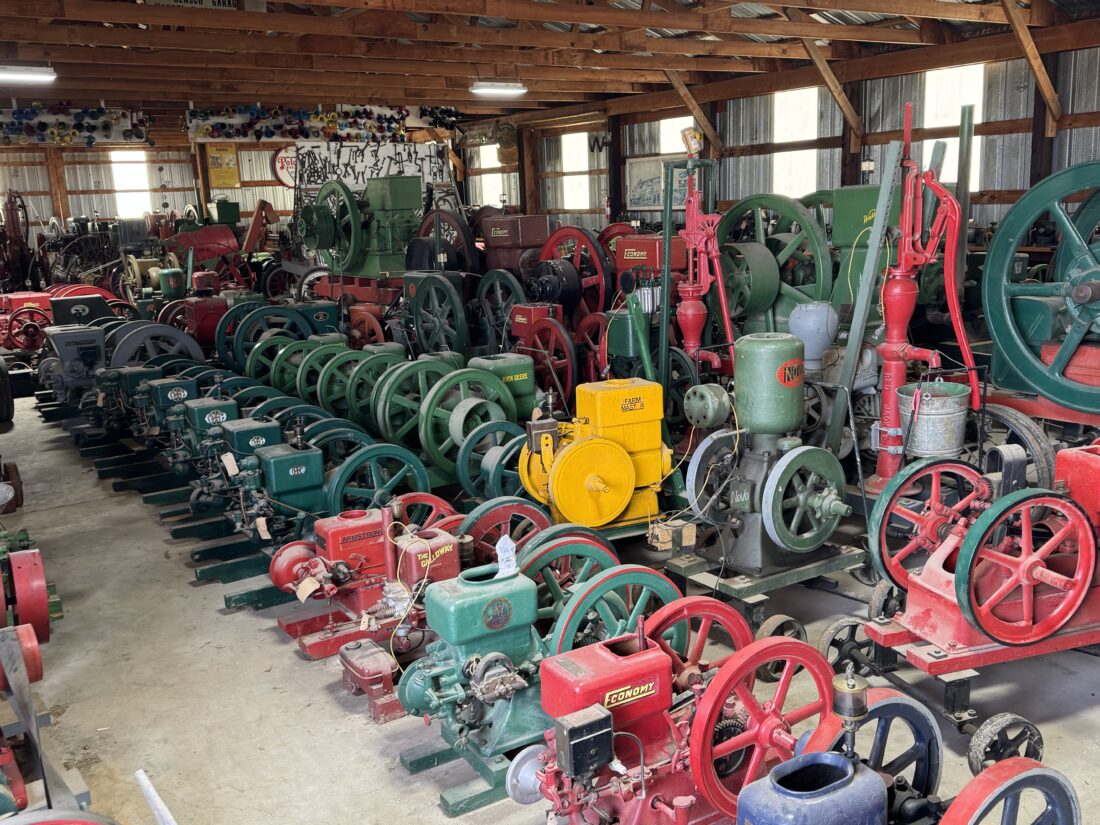
Submitted Photo This is the Stationary Engine collection in Makoti. Nearly all the engines in this building were collected by the late Wayne Jones of Ryder and donated to the Makoti Threshers. Photo by Hunter L. Andes.
Submitted Photo Leo Piatz and his dog Nico pose for a picture in the Stationary Engine Building in Makoti. Photo by Hunter L. Andes.
Submitted Photo This is the Stationary Engine collection in Makoti. Nearly all the engines in this building were collected by the late Wayne Jones of Ryder and donated to the Makoti Threshers. Photo by Hunter L. Andes.
Trending
Since 2001, the world has changed immensely; however, one thing has remained a constant: a Dunn Center man's presence, quiet charisma and volunteer labor at the annual Makoti Threshing Show.
Each year, Leo Piatz travels about two hours and more than 100 miles one way to breathe life into the Makoti Threshers Association's Stationary Engine Building. Other stationary engine enthusiasts have come and gone over the years, but Piatz's attendance can always be counted on.
"I started coming in 2001," Piatz said. "I heard about it; I've always been into threshing shows back home, back where I grew up in Napoleon, N.D. Then, when I moved to Killdeer, I was working at an implement shop, and some people I worked with, and a number of farmers who are no longer with us, told me about it. And that was the beginning of it.
Piatz said he and a friend came to Makoti to see what all the talk was about. It was then when he acquired the job he has manned for a quarter of a century.
"In 2001 me and a friend of mine went up there (to Makoti) and looked at the whole complex," he said. "Elmer Wolff (a charter member and a former MTA president, now deceased) was showing us around. He asked me if I wanted to look after the stationary engines because he was looking to move on from it.
"My wife and I came back the next year, and well, I've been looking after this building every year since. It worked out great for the two of us because my wife made crafts and sold them at the flea market off and on over the years, so we both kept busy."
Piatz's claim to fame established over the years has been as the caretaker of the larger of the two Ruston & Hornsby elevator engines in the MTA's collection. The engine, a model CY, was manufactured in Lincoln, England, and sold by Mumford, Medland, Ltd. in Winnipeg, Manitoba, and is thought to have operated a sawmill. Piatz said what he enjoys most about his job are the people and explaining this engine to passersby.
"I love the people and answering questions," Piatz said. "Mostly to do with the look on the kids' faces - both the girls' and the boys' because they can't believe how quiet the engine is compared to the newer style motors."
In attending a threshing show over the course of 25 years, one is likely to amass a number of memories. Piatz is a living testament to the notion.
"The one that really sticks with me was in 2005, back when the show was still in October," Piatz said with a laugh. "The wife and I went up there, and we got in late in the evening if remember correctly. Marvin Franklin parked us on the west side of the treeline, and when we woke up the next morning there was three inches of snow! And then one year it hit 80 degrees. It's North Dakota after all; it is what it is."
He said the show has definitely changed for the better over the years.
"We all knew what the issues were - bad weather being one of them," Piatz said. "Some people may still disagree, but in my opinion, the best thing that happened was when they moved the show to July. And with the board going in a more diversified direction with the rodeo and everything else they've been working on to try and bring young people in, I think things are heading in a positive path forward."
Piatz said people change over the course of time, and so too do organizations who host events.
"Let's face it, the show was declining back when it was in September and October," he said. "People change. Priorities change. But when it was moved in July, it helped. There were still struggles, but it helped. It wasn't just Makoti's show declining - all the threshing shows are struggling with getting the younger people to attend. But in Makoti, what has really made the difference was the rodeo being added last year. It breathed a new wave of life this show hasn't seen in years."
The public can visit with Piatz and the many other volunteers who make the Makoti Threshing Show possible during the show on Friday, July 10, and Saturday, July 11.