Minot nears end of resilience grant program
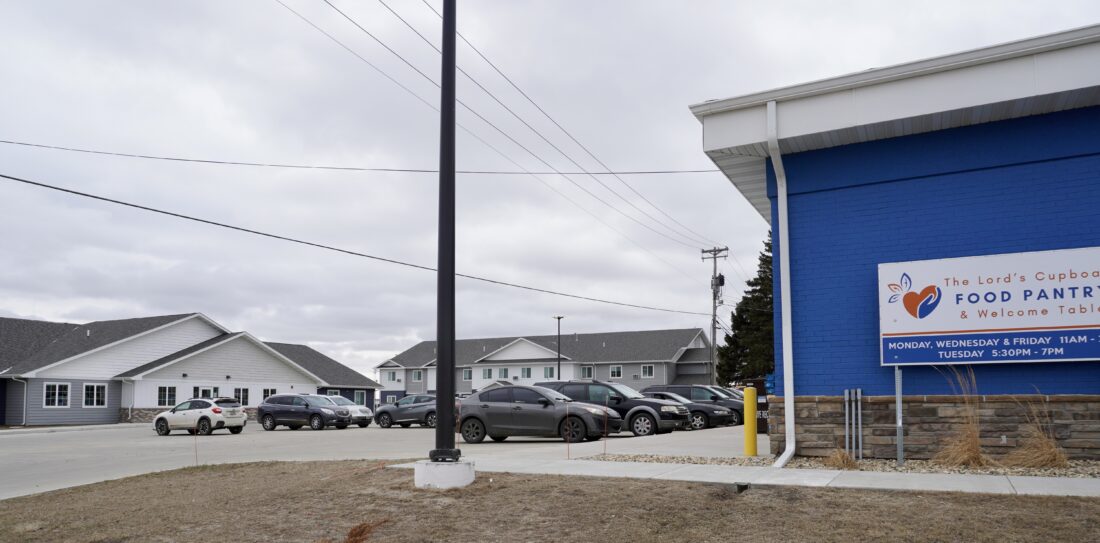
JILL SCHRAMM/MDN Broadway Circle is home to the Lord’s Cupboard Food Pantry, right, along with a family homeless shelter, left, and Broadway Circle Apartments, center.
Ten years after learning Minot would receive $74.34 million in the National Disaster Resilience (NDR) competition, the city is coming to the end of its program.
The city has built a center for technical education, relocated city hall, invested in multi-family affordable housing, constructed a family homeless shelter, assisted flood victims in buying homes outside the flood zone, conducted an affordable housing supply and demand study and developed flood risk management tools and an economic resilience strategic plan.
City comptroller Jenna Zelinski said an amendment is being prepared to allocate about $1.2 million in leftover funds, with much of the money going to complete administrative tasks and close out the grant. A portion will go to NDR’s property acquisition program for the Mouse River Enhanced Flood Protection Project.
Overall, the city has acquired 243 properties for the flood project, of which 91 properties were acquired using NDR funds. Eight of those 91 properties were partially funded with State Water Commission funds, according to the city’s NDR report in March. Property acquisitions once NDR money is spent will continue to be funded by the water commission and Minot’s city sales tax, Zelinksi said.
Minot and 12 other national recipients whose plans were selected for NDR grants in January 2016 had a September 2022 deadline for using the funds, although that was extended a couple of times and now is September 2029.
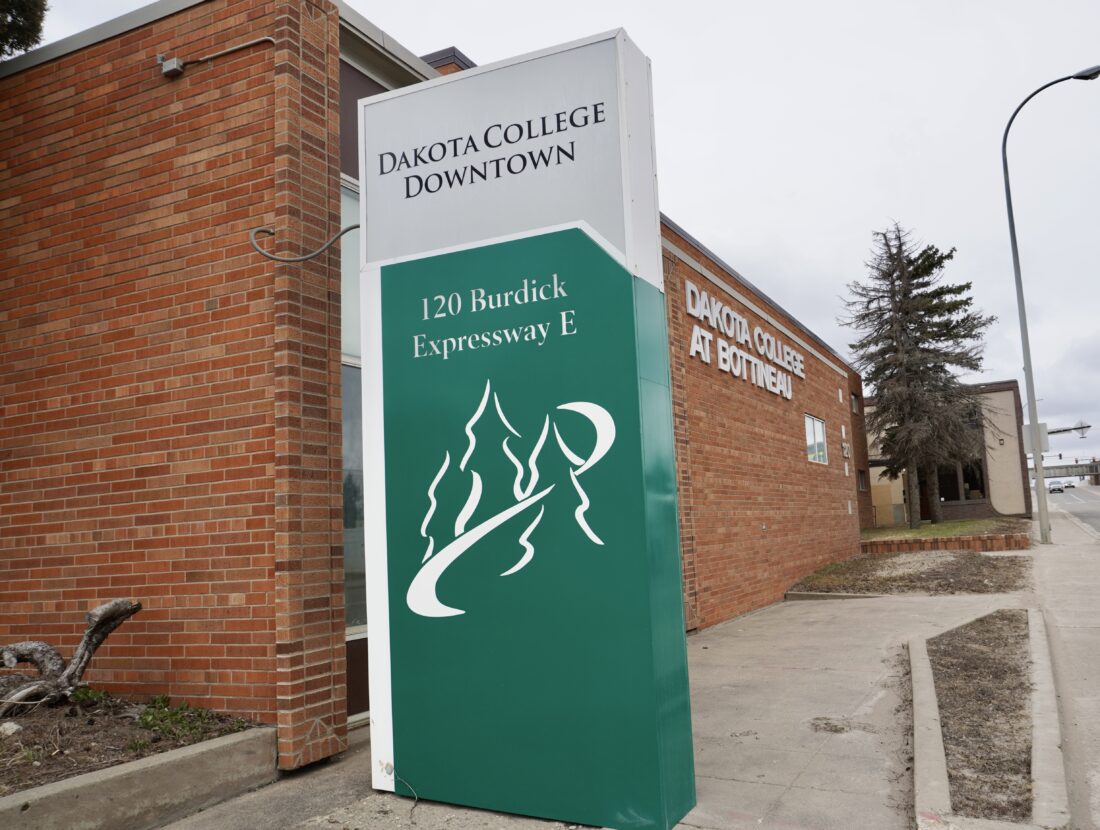
JILL SCHRAMM/MDN A career and technical center operated by Dakota College at Bottineau along Burdick Expressway in downtown Minot is home to a dental assisting and hygiene program as well as other DCB courses in health and technology.
One highlight in Minot’s NDR program has been the opening of a six-unit family shelter and 17-unit affordable apartment complex at Broadway Circle. Both were operational by early 2026.
The city spent more than $4.2 million in NDR funds on the family shelter and allocated additional money to Broadway Circle Apartments from its multi-family affordable housing bucket of funds.
Broadway Circle had its ups and downs along the way. When the original operator, Lutheran Social Services of North Dakota, folded, Project BEE stepped in but also experienced financial troubles that left the city and county looking to account for the dollars invested. Pathfinder Services of North Dakota ultimately opened Broadway Circle, which also is home to the Lord’s Cupboard Food Pantry and is financially assisted by commercial leases of some space.
NDR funds also helped construct Beyond Shelter’s Souris Heights, a 54-unit senior apartment complex, completed in 2023; renovate more than 200 units in Minot Housing Authority’s Milton Young Towers, a more than 50-year-old affordable housing high-rise, completed in 2023; construct Park South townhouses and apartment renovation, completed in 2022 by Essential Living and EPIC Companies; and build EPIC Companies’ Blu on Broadway, a 42-unit affordable housing complex on South Broadway with commercial space on the main floor, completed in 2021.
The Resilient Homebuyer Program offered financial assistance to help 76 homeowners secure their futures, according to the city. The program provided gap financing in the form of forgivable second mortgages, up to $60,000, to enable low- to moderate-income households in Minot to purchase an affordable home. Buyers had to demonstrate they were living in a home significantly damaged or destroyed by the 2011 flood or a home purchased for the flood control project.
In May of 2023, Minot’s new city hall opened in a renovated former bank building. City operations moved from the floodplain to be closer to the city’s core, reviving an underused downtown building. NDR funds contributed more than $7.5 million.
NDR invested more than $3.46 million in a center for technical education. The CTE in downtown Minot educated its first class of dental assisting students and this school year started a dental hygiene program through Dakota College in Bottineau.
The building also hosts a paramedic program, computer and technology classes and virtual allied health classes. Other programs there offer student services in test proctoring, advanced cardiovascular life support training and CPR/Basic Life Support certification, according to DCB-Minot Programs Director Maggie Backen.
One piece of the NDR program that never came to fruition was a downtown public gathering space. Prepared with a budget of $6 million, the city spent about $190,000 before abandoning the project, according to a 2019 city report.
Zelinski said the project ended when good options for a location couldn’t be found. Money was redirected toward the relocation of city hall and the CTE, she said.
Since then, a community gathering space has been created through the initiative of a downtown developer, Aksal Group. Citizen’s Alley, operated by the nonprofit Local Motives, provides year-round activities and will be hosting a concert series this summer.
CDM Smith, Minot’s NDR consultant, has worked with the city over the years to administer some of the programs. Zelinski said CDM Smith currently handles property acquisitions conducted through NDR.
“In-house, we don’t have the capacity to run an acquisition program. So, they’ll stay on because acquisitions will continue, and they’ll probably move toward a contract outside of NDR,” she said.
Zelinski said Minot also received two other Community Development Block Grants-Disaster Recovery through the U.S. Department of Housing and Urban Development (HUD) after the 2011 flood.
The first CDBG-DR allocation of $67.57 million was awarded in 2012 for housing and infrastructure projects to help with Minot’s disaster recovery. The bulk of the funds have been spent, Zelinski said.
Among projects listed in the grant were landfill expansion, sewer projects, Sixth Street Southwest underpass and storm drain improvements, a fire station, rehabilitation and reconstruction of flooded homes and tenant relocation. An agreement on a housing development at 55th Crossing ended in litigation over delays and contract compliance issues, although the development today includes a fire station, school, townhomes and mobile home park.
A second CDBG-DR of $35 million came in 2013 and close-out information was submitted to HUD earlier this year, Zelinski said. The grant included allocations for flood buyouts, repair assistance on flooded homes and street and road repairs.
-
- JILL SCHRAMM/MDN Broadway Circle is home to the Lord’s Cupboard Food Pantry, right, along with a family homeless shelter, left, and Broadway Circle Apartments, center.
-
- JILL SCHRAMM/MDN A career and technical center operated by Dakota College at Bottineau along Burdick Expressway in downtown Minot is home to a dental assisting and hygiene program as well as other DCB courses in health and technology.
Local News
Milestone
North Dakota State University FARGO – Area students were among North Dakota State University graduates this ...
Music camp continues concert performances
DUNSEITH – Session 4 at the International Music Camp culminates on Saturday, July 11, with a performance or ...
MSU Summer Theatre presents ‘Death by Design’
Fire emergency order in place for grasslands
BISMARCK – The Dakota Prairie Grasslands (DPG) issued an updated Emergency Fire Closure Order for National ...
Area trail projects receive grant dollars
BISMARCK – The Maah Daah Hey Trail restoration and the Three Affiliated Tribes National Park East Side Trail ...