
Farm to School connects students with local food
Trending
North Dakota is a leader in agriculture; however, many of our students are several generations removed from the farm. The Farm to School program helps students learn where their food comes from; provides locally grown and raised foods to lunchrooms; and gives schools a chance to incorporate experiential learning opportunities into the curriculum.
The North Dakota Department of Public Instruction (NDDPI) provides state representation for the program in the National Farm to School Network, and partners with the North Dakota Department of Agriculture (NDDA) to provide resources and connections to producers, while staying up to date with all federal regulations for the program. Other organizations, like North Dakota State University Extension, may work to connect producers with the information they need to participate in the program.
Farm to School activities enhance classroom education through hands-on learning related to food, health, agriculture and nutrition. Some of the things that students may learn from include producer presentations, field trips and garden projects. We recently had the chance to offer some unique STEM learning opportunities to North Dakota schools through the Specialty Crop Block Grant Program.
The first was the hydroponic tower garden. Fifty teachers across the state received the tower garden for use in their classrooms. They are growing lettuce varieties, cauliflower, herbs, strawberries, scallions, sunflowers and cucumbers. The tower garden is being used at various grade levels from K-12. The produce is being used in the lunchroom, students are sampling it in the classroom, teachers are making recipes with it for the students to eat and it is being sent home with students so they can eat it with their family. At least one project is donating the produce to their local food pantry. They are learning in many different areas including time management skills, math, science, marketing and more.
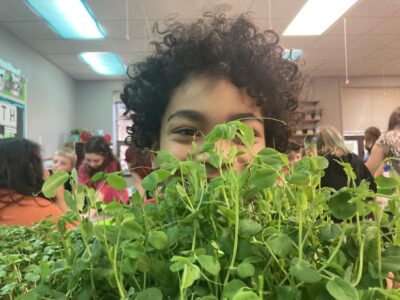
The second opportunity was the microgreens kits. We awarded 50 different teachers with the kits and they will be able to grow pea and broccoli microgreens. Students will learn about the plants, how they grow and how microgreens are used in basic recipes. We are holding a special Farm to School Day in Jamestown on April 17. A local producer will visit three elementary schools, do microgreens kits with students and be there during lunch to talk to the students about microgreens. The students will have the opportunity to visit a special microgreens salad bar that day.
Students aren't the only ones who benefit from Farm to School. Local foods producers can get information about selling their products to schools. When schools buy from local producers, it helps contribute to the local economy and can create jobs in the region.
In conjunction with NDDPI and NDSU Extension, we recently held discussions across the state for producers and schools interested in the Farm to School Program. At least three new local producers are participating in the program due to the discussions.
The United States Department of Agriculture's National Farm to School staff spoke at our Local Foods Conference, held March 21-23 in Bismarck, to keep momentum going and to get more producers involved in the program.
The Farm to School program is a win-win. It helps students understand the importance of agriculture in their own lives and benefits the kids, the local producers and the community.S