
Native American history abounds throughout North Dakota
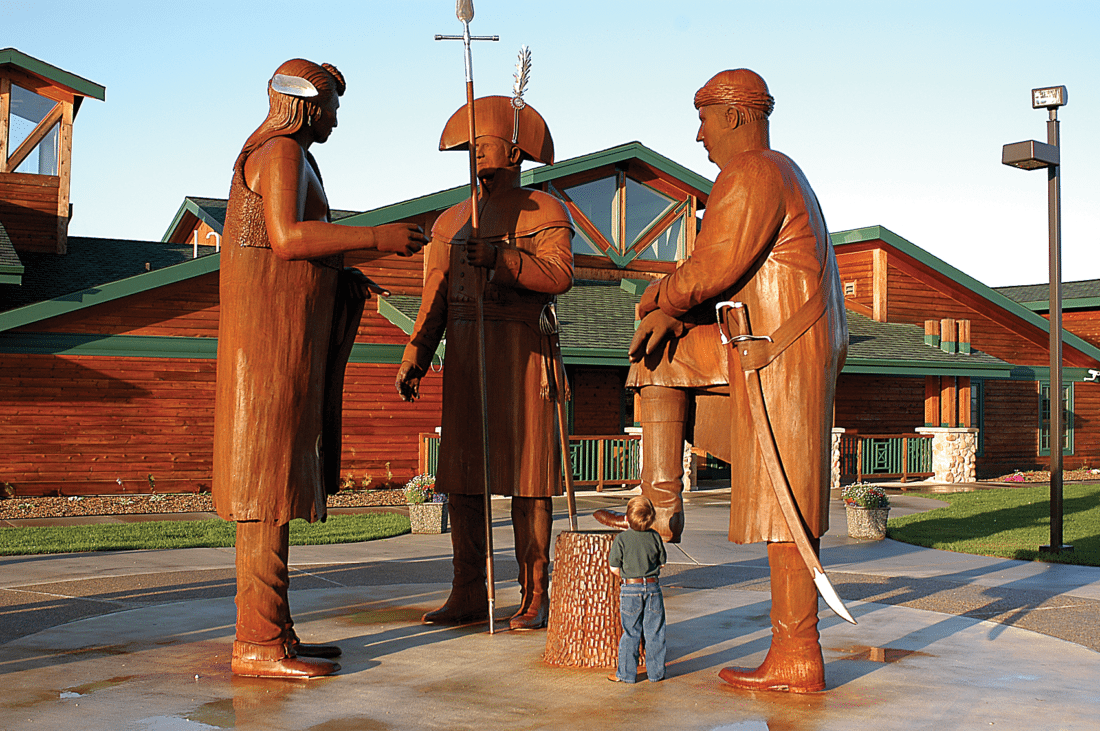
Submitted Photo Statues are pictured in front of the Lewis and Clark Interpretive Center in Washburn.
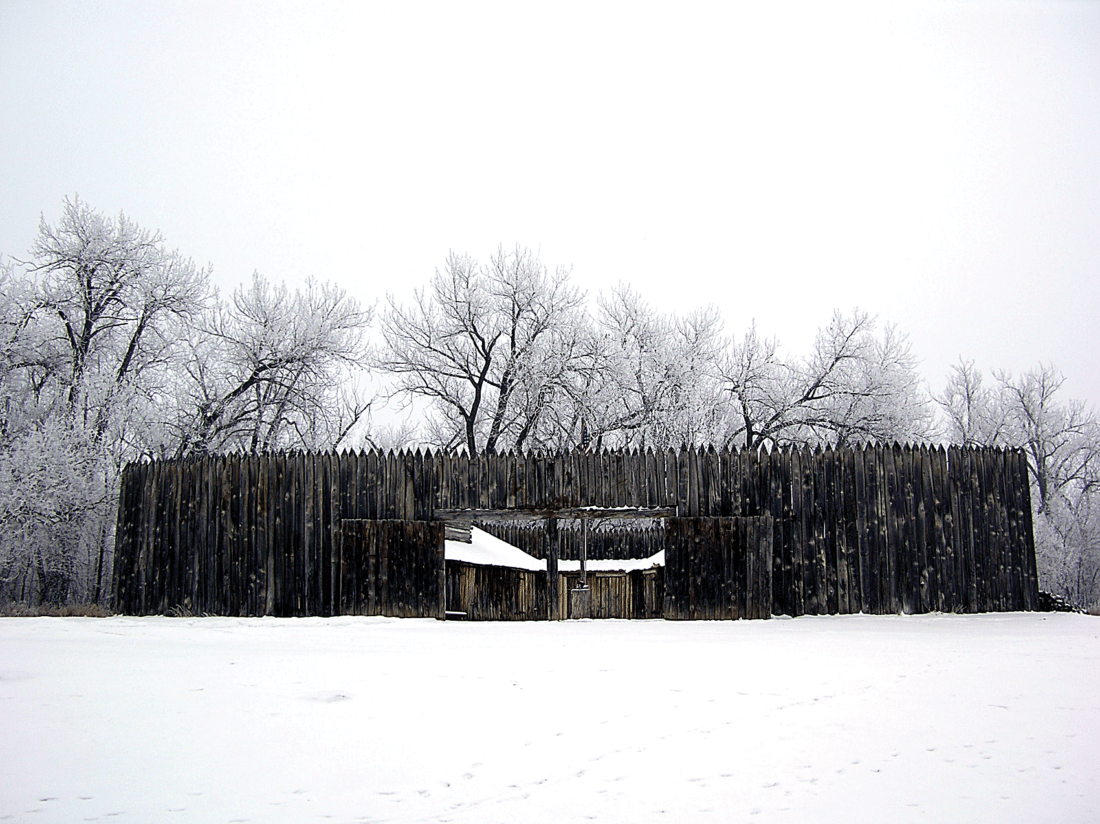
Submitted Photo Fort Mandan with frost.
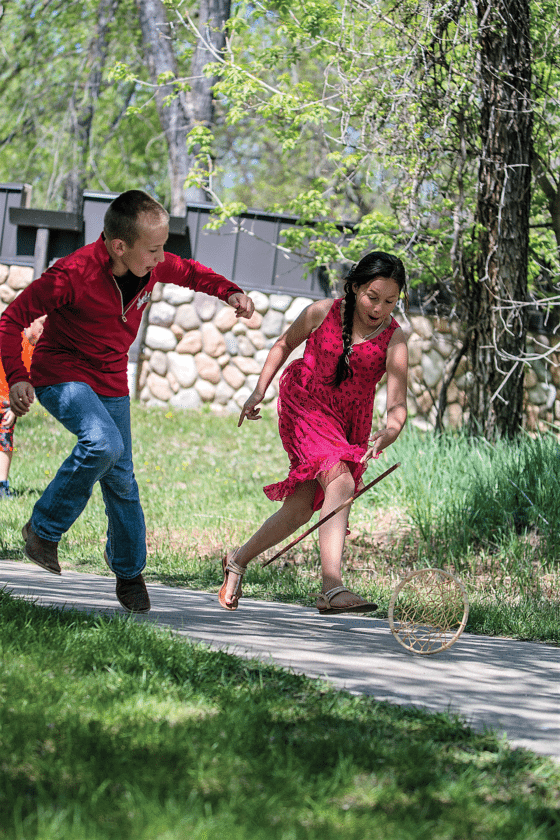
Submitted Photos Children play Native American games.
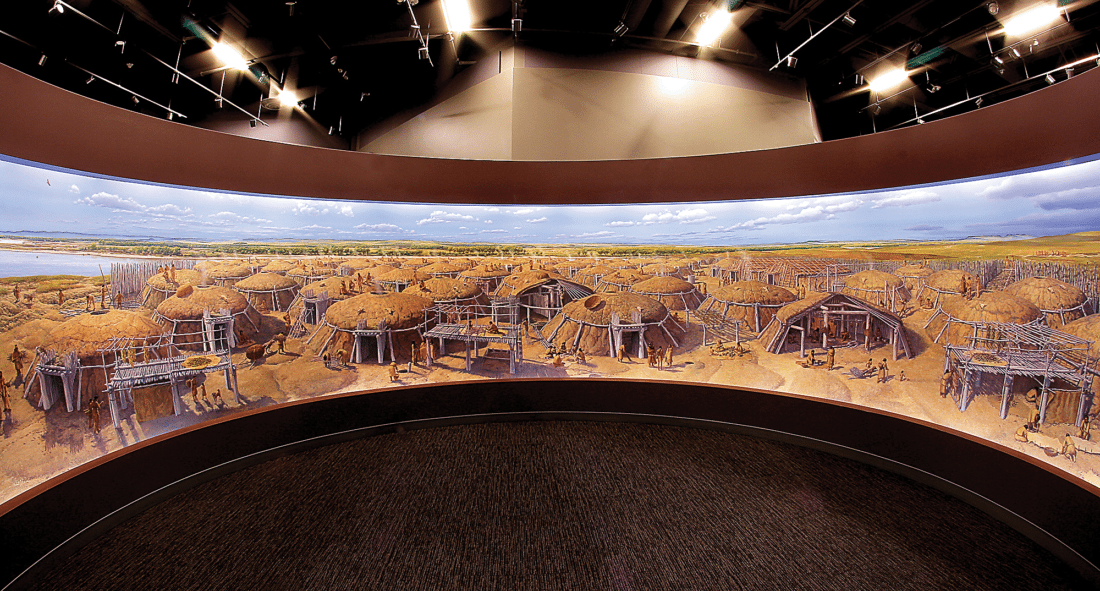
Submitted Photos The Double Ditch Mural is pictured at the Heritage Center in Bismarck.
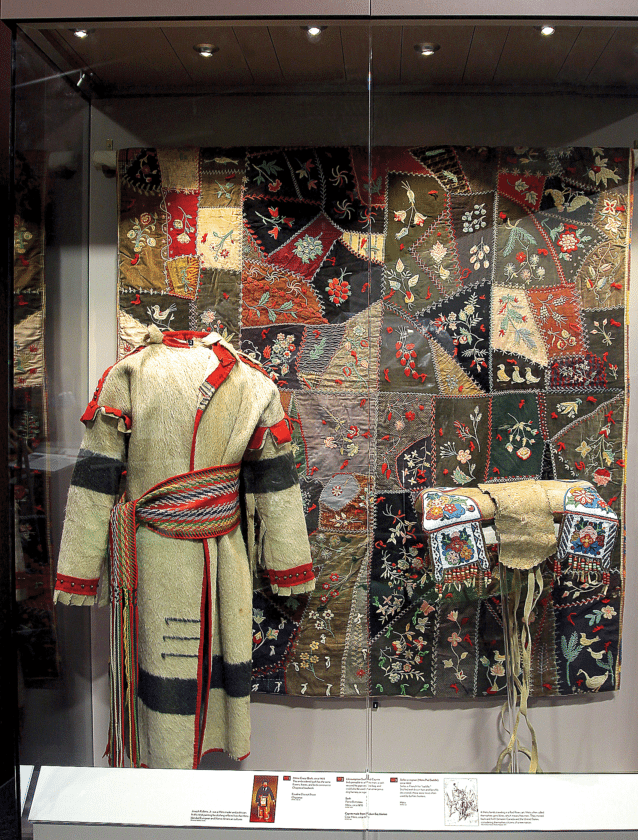
Submitted Photo A case with Metis artifacts is pictured at the North Dakota Heritage Center in Bismarck.
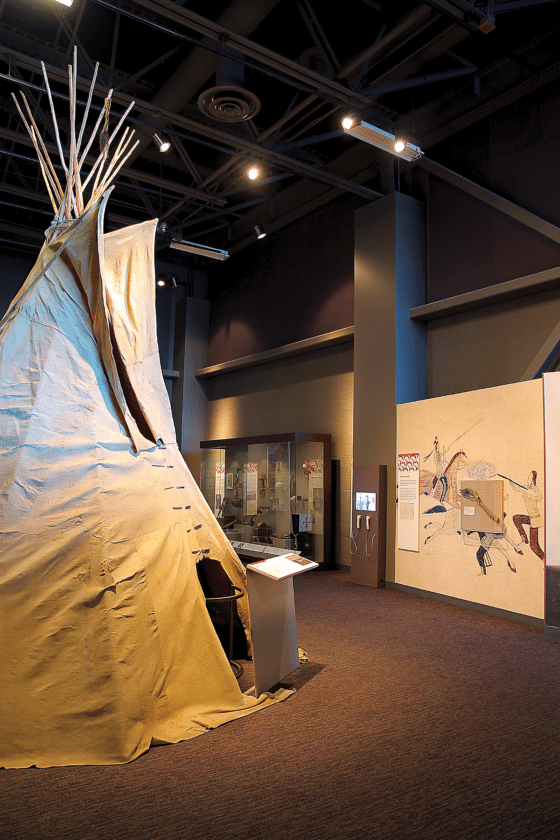
Submitted Photo A tepee and ledger art are pictured at the North Dakota Heritage Center in Bismarck
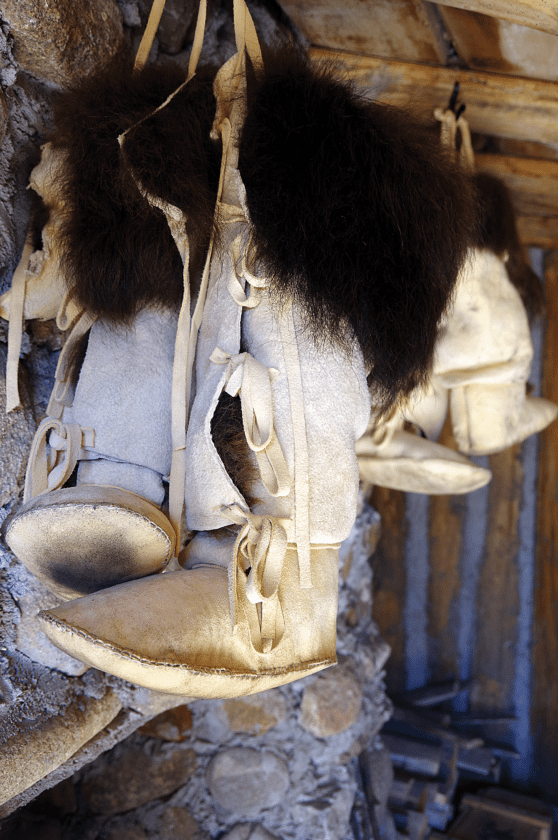
Submitted Photo Sakakawea’s winter moccasins are pictured at Fort Mandan.
Submitted Photo Statues are pictured in front of the Lewis and Clark Interpretive Center in Washburn.
Submitted Photo Fort Mandan with frost.
Submitted Photos Children play Native American games.
Submitted Photos The Double Ditch Mural is pictured at the Heritage Center in Bismarck.
Submitted Photo A case with Metis artifacts is pictured at the North Dakota Heritage Center in Bismarck.
Submitted Photo A tepee and ledger art are pictured at the North Dakota Heritage Center in Bismarck
Submitted Photo Sakakawea’s winter moccasins are pictured at Fort Mandan.
Trending
This month's frigid weather might have some North Dakotans longing for summer and the months when they can explore the outdoors. Fortunately, there is so much history to be seen in North Dakota that many people might not need to plan trips for outside the state.
Hundreds of years before people of European descent first arrived in the region that would become North Dakota, there was already a thriving metropolis near modern-day Washburn.
"(Today's Knife River Indian Villages site) would have been close to the size of Washington, D.C., in their day," said Robert Hanna, interpretive coordinator of the Lewis and Clark Interpretive Center and Fort Mandan.
During the summer months, people can visit the Knife River Indian Villages site at Stanton, about 23 miles from the Lewis and Clark Interpretive Center in Washburn, and learn more about the interconnected villages that were a major trading hub from the 1500s on.
"Any one of those towns was bigger than St. Louis," the city from which the Lewis and Clark Expedition set out in 1804, Hanna said.
The Knife River Indian Villages is just one of many sites across North Dakota that were of historical significance for the first North Dakotans, the indigenous tribes who lived and worked here hundreds or thousands of years ago.
"Almost everything that has happened in North Dakota is Native American history," said Hanna. "The American history of this area is comparatively new."
In western North Dakota, the longest inhabitants are the Hidatsa, a tribe that much later joined with the Mandans and later the Arikara to form the Three Affiliated Tribes after a smallpox epidemic.
"By their own tradition, they've been in North Dakota forever," said Hanna.
The Hidatsa and Mandan trading villages along the Knife River were reached by the Lewis and Clark expedition in the fall of 1804 and they wintered there. This was the site where the expedition met the famous Sakakawea, the Lemhi Shoshone woman and wife of the fur trader Toussaint Charbonneau, who served as an interpreter and guide during their travels. She gave birth to a son at Fort Mandan and carried the baby on her back thousands of miles from North Dakota to the Pacific Ocean.
Visitors can also visit Fort Mandan, where there is a reconstructed fort. The site of the original fort is under the waters of the Missouri River. This was the site where the the Corps of Discovery wintered, where they set out on their expedition to explore the western United States. They had set out from St. Louis, Mo., in 1804 and reached Fort Mandan - located two miles from Washburn - later that year. By that time, the area was frequented by fur traders and other Europeans. A number of languages would have been heard by new arrivals at Fort Mandan, from the tribal languages of Hidatsa, Mandan, Assiniboine, Arikara and others to European languages including English, German and French, just as in urban areas today, said Hanna.
But the villages along the Knife River, inhabited by members of the Mandan and Hidatsa tribes, were a destination location for tribes from Minnesota to the Pacific Coast several hundred years beforehand.
Hanna said people from different tribes traveled hundreds or thousands of miles to trade or purchase items. Popular items for trade included guns, Knife River flint, metals including copper, furs, and varieties of food that could not be found anywhere else.
For instance, there were about 13 different types of corn available - hundreds of pounds in store - that tribesmen traveled to sample.
"For many of those tribes, it was a luxury item," said Hanna. "…This corn was the best and they loved those certain flavors of Mandan corn."
Hanna said one variety of corn is still grown at the site so modern-day visitors can sample the corn that indigenous tribes traveled so far to taste.
Also at the Knife River Indian Villages National Historic Site near Stanton, which was established in 1974 to preserve the historic and archaeological remnants of Northern Plains Indian tribes, is a reconstructed earth lodge like those that would have been present when the tribal members lived there. According to the Lewis and Clark Interpretive Center, an earth lodge would have been about 40 feet in diameter and housed up to 20 families, including some of their dogs and horses.
Further along the path are the sites of the original earth lodges of the villages. People can see the large circular impressions left behind in the earth.
Painted Woods
Hanna said visitors might also be interested in traveling to the Painted Woods Nature Preserve, a less well known historic site along N.D. Highway 1804 just east of Washburn.
"In Lewis and Clark's day, it was an island in the river," said Hanna. "It was where they had their first sit down with Mandan chiefs."
Prior to that, it was the site of a conflict between Mandan tribal members and the Yanktonai Dakota Sioux tribe.
According to legend, a Mandan woman fell in love and eloped with a man of the enemy Yanktonai Dakota tribe, probably sometime between 1715 and 1738. The two tribes differ on what happened next, but agree that the young lovers died during the resulting conflict and were laid to rest in the trunks of cottonwoods nearby. When they laid the two to rest, the Mandan painted the trunks of the trees with pictographs. The following spring, the Yanktonai returned and found the remains of the young lovers. They removed the man and woman, buried them, and then painted the cottonwoods with pictographs of their own, according to a blog entry at http://thefirstscout.blogspot.com/2011/03/painted-woods-tragic-love-story.html
The site is now a game and wildlife preserve. An interpretive sign was installed there by historians outlining the story of the site. Hanna said he would advise hikers not to go there during the hunting season.
Medicine Rock
Another site of significance for the Three Affiliated Tribes is Medicine Rock State Historic Site, located along the north fork of the Cannonball River, according to the State Historical Society of North Dakota.
It is one of six rock art sites in North Dakota and holds religious significance for the Mandan.
On Feb. 21, 1805, William Clark wrote in his journal:
"The medicine-stone is the great oracle of the Mandans, and whatever it announces is believed with implicit confidence. Every spring, and on some occasions during the summer, a deputation visits the sacred spot, where there is a thick porous stone 20 feet in circumference, with a smooth surface. Having reached the place, the ceremony of smoking to it is performed by the deputies, who alternately take a whiff themselves and then present the pipe to the stone; after this they retire to an adjoining wood for the night, . . . in the morning they read the destinies of the nation in the white marks on the stone."
Pilgrims to the rock left offerings there. Rock art depicting a rider on horseback, turtles, bighorn sheep, a bear paw, a handprint and footprint, bird track and a number of horse prints are visible on the rock, according to the Historical Society, which notes that it is hard for visitors to access the site because it crosses private land.
Earth Lodge Village
The Three Affiliated Tribes also has Earth Lodge Village west of New Town, where visitors can see reconstructed earth lodges like those lived in by the Mandan, Hidatsa and Arikara years ago.
There are six structures made of logs and earth and a larger ceremonial lodge, according to a past story in the Minot Daily News. People can visit during the summer months. Each lodge has a fire pit and scaffolds, like those used to tan hides and cure meat, that were constructed outside the lodges. Tribal members harvested squash, corn and pumpkins and frequently stored them in underground pits. A garden has also been planted near the earth lodges on the site.
For more information about the Earth Lodge Village visit (www.mhanation.com), then go to "Departments," then scroll down to "Tribal Tourism" and click on it.
On-A-Slant Indian Village
Another historic site is the 400-year-old On-A-Slant Indian Village seven miles south of Mandan, where the Mandan tribe lived for over 200 years until about 1780, when a smallpox epidemic struck the tribe. At that point, the survivors abandoned the site and joined the Hidatsa along the Knife River near Stanton.
Matt Schanandore, the interpretive coordinator for Fort Abraham Lincoln State Park On-A-Slant-Village and an enrolled member of the Three Affiliated Tribes, said there are earth lodges on the site that were reconstructed on the site of the original village in the early 2000s. A large counsel lodge was built in the 1990s. The lodges had originally been constructed by the Civilian Conservation Corps in the early 1930s.
From Memorial Day to Labor Day, visitors can take daily guided tours of the village or explore the village on their own and learn about the history of the Mandan through displays explaining the history and culture of the tribe.
The site has been reconstructed with input from tribal members and archaeologists.
"They can experience what an earth lodge is," said Schanandore. "A lot of people don't know what it's like to be in an earth lodge. People find that really unique."
Schanandore said the site is so unique because it is a rarity to have lodges built on the site of the actual village.
Heritage Center
The Early Peoples gallery at the recently-remodeled Heritage Center in Bismarck also includes a great deal of information about the history of the earliest inhabitants of North Dakota and the way they lived, up until the present day.