
North Dakota Outdoors: Why high-grading isn’t legal in ND
Trending
Every winter, as pickup trucks venture onto frozen lakes and steam rises from the first pour of coffee, the world of ice fishing reminds us why it remains one of North Dakota's cold-weather joys.
Beneath the surface, though, the biology of our fisheries shifts into a slower, more fragile state. Oxygen levels dip, fish metabolism changes, and the margin for stress narrows. A few drilled holes and a handful of jigs may look simple from above the ice, but every tug on the line has a biological impact below it. It's exactly why winter angling carries a responsibility that's easy to overlook, especially when the conversation turns to high-grading.
High-grading, for those who may not know the term, is the practice of continuing to catch and release fish after you've already kept a legal limit, hoping to "upgrade" to bigger or more desirable fish. During winter, it becomes even more problematic, both biologically and ethically.
Let me be perfectly clear. High-grading is not legal in North Dakota. For the health of the fish and fishery, it shouldn't be.
Most anglers don't intend to harm fish. Almost everyone I talk with genuinely believes in conservation and wants our fisheries to remain healthy for the next generation. But even good intentions don't change biology. Fish simply don't handle extreme winter catch-and-release well.
Cold air, even colder hands, and extended time on the ice can cause subtle but significant damage.
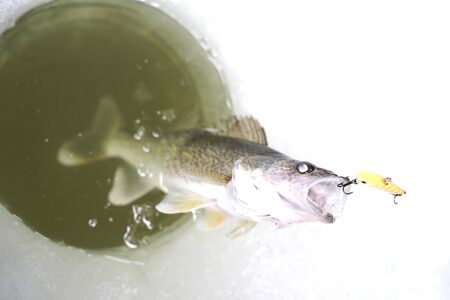
Take this common scenario: An angler catches a "keeper walleye," lands it on the ice to unhook it, debates whether it's worth keeping, watches it flop around a bit, and then decides it's "not quite big enough." Back down the hole it goes. In January, after spending half a minute on ice crystals sharp enough to freeze-burn human skin, that same fish may swim away looking fine but never fully recover. Sublethal injuries from frozen gills or stressed internal organs often mean mortality happens hours or days later.
That's where the ethical part comes in. If your limit is five fish, but half a dozen more die after being released because you were looking for a thicker perch or a plumper walleye, you've unintentionally doubled your harvest. It's illegal in North Dakota, and it undermines the purpose of limits in the first place.
There's also the matter of time. Fish pulled from deep water during winter can experience barotrauma - swim bladder damage caused by rapid pressure changes. In warm weather, anglers have multiple techniques to reduce those effects. On the ice, options narrow. The colder it gets, the quicker a fish's eyes, gills and fins begin to freeze. Decisions need to be made fast.
Some anglers argue that catch-and-release is the very heart of conservation. I'd agree - within reason. Catch-and-release only works when release means survival. Winter complicates that equation. The act of high-grading extends handling time, increases exposure to freezing air, and often leads to more deep-hooking as anglers sort through fish. It's not difficult to see how quickly good intentions can fall short.
So, what's the solution? It's not complicated. Keep what you plan to keep, and release with purpose. If you're on the fence about a fish's size, make the decision quickly. Avoid laying fish directly on the ice. Keep your hands wet and your tools ready. And maybe most importantly, once you've kept your limit, consider switching to a different species or putting the rod down for the day. Limits are meant to be limits, not goals.
High-quality fisheries don't happen by accident. They're the product of intentional management and ethical angler choices. If we all handle fish with the same care we give our augers, heaters, and ice houses, we'll continue to see strong perch, walleye and pike populations well into the future.
On a cold February afternoon, that's something worth warming up to.