
America at 250: Expansion of nation starts with trip along Ohio River
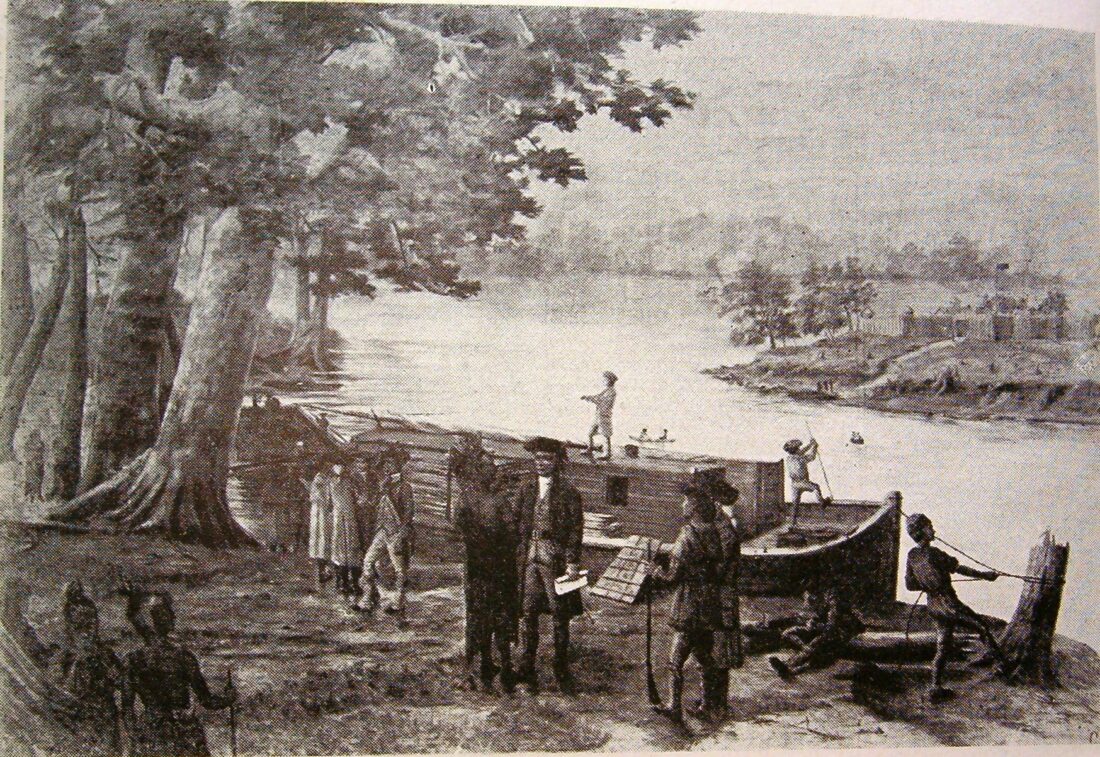
Submitted Photo This image from John T. Faris' book, “On the Trail of the Pioneers,” published in 1920, depicts the arrival of Rufus Putnam and other pioneers to the Northwest Territory on April 7, 1788, at the confluence of the Ohio and Muskingum rivers. Fort Harmar is in the center-right background of this image, on the west side of the mouth of the Muskingum river. This led to the establishment of Marietta in present-day Ohio, the first permanent settlement in the Northwest Territory.
Submitted Photo This image from John T. Faris' book, “On the Trail of the Pioneers,” published in 1920, depicts the arrival of Rufus Putnam and other pioneers to the Northwest Territory on April 7, 1788, at the confluence of the Ohio and Muskingum rivers. Fort Harmar is in the center-right background of this image, on the west side of the mouth of the Muskingum river. This led to the establishment of Marietta in present-day Ohio, the first permanent settlement in the Northwest Territory.
Trending
Following the Revolutionary War, the newly formed United States was eager to begin expanding beyond the borders of the original 13 states.
Land south of the Great Lakes and north of the Ohio River had been ceded to the United States from the British following the Treaty of Paris in 1783. Squatters were moving onto the land, there were still pockets of the British, and the Native Americans that had been on the land for centuries were not thrilled about the influx of new people. The passage of the Northwest Ordinance in 1787 would set in motion the authorized development of the land.
But even before the ordinance, a group of men were planning how to develop the land once it opened.
On Jan. 25, 1786, Gen. Rufus Putnam and Benjamin Tupper started promoting the idea of forming the Ohio Company to settle land near the Muskingum River, in what today is southeastern Ohio.
The next year or so entailed organizing the company and getting funding in place. On March 8, 1787, the associates met again, and Putnam, the Rev. Manasseh Cutler and Gen. H. Parsons were named directors. They came up with the plan to buy land from the Continental Congress. After negotiations the group ended up with 964,285 acres of what Thomas Hutchins, geographer of the United States, considered "the best part of the whole western country."
At a November 1787 meeting, they decided on the size of house lots. At a meeting at Bracket's Tavern, the group decided on the makeup of the first party to head to Ohio.
According to the plan, the first group would be made up of four surveyors, and 22 men to "attend" the surveyors; six boat builders, four house carpenters; one blacksmith and nine common workers for a total of 48.
On March 5, 1788, Putnam was given "full power to do and transact all matters necessary for the progress of the settlement." At that point he was already on the road that would in April 1788 lead him to Ohio.
The trip overland from Massachusetts started Dec. 31, 1787. The trip over the mountains was hard. They battled deep snow, at times building sleds to make their way west.
When they arrived at Sumrells Ferry on the Youghiogheny River they would have to prepare for the second part of their journey, which would take them down tributaries to where the Monongahela joins the Allegheny to form the Ohio River at Pittsburgh, and finally to Marietta, arriving 238 years ago on April 7, 1788.
The 48 men who made the initial trip to what is now Marietta quickly got busy clearing the trees. Trees were needed to build housing, and the land would have to be prepared for crops. Fort Harmar, one of several military outposts along the Ohio River, stood along the western bank on the Muskingum River at the confluence with the Ohio. Members of the Ohio Company chose a spot about a mile upstream on the east side of the Muskingum to build Campus Martius, a fortification that would provide protection from attacks by native Americans. Today the Campus Martius Museum details the journey and contains Putnam's house and the Ohio Land office, the oldest building in the state.
Food was plentiful at first for those setting up the new town, with deer and bison easy to find.
By the summer of 1789 it was becoming harder to find enough food to eat thanks to a clearing out of the animal by Native Americans angry over a treaty. An early frost in October ruined an already weak corn crop forcing the citizens to turn to their neighbors across the Ohio River for help.
The naming of the young city took even longer than the planning of it. Many in the Ohio Company also had strong connections to the Scioto Company further down river. The Scioto Company had connections to France so many favored naming the new city on the Muskingum "Marietta" to honor Marie Antoinette, queen of France, to gain support from the monarch.
Marietta was the first city created in the Northwest Territory. None of the cities settled before Marietta were done so under United States law because the land was not officially part of the nation. There were plenty of people throughout the area, however. In fact, those that founded Marietta passed by many of them on their way down river.
In other states of the Northwest Territory, people were setting up towns long before 1788. Although Marietta got a jump start on other cities in Ohio, it never grew to be a large town.
Today the efforts of the Ohio Company are celebrated. Tourism is an important part of the region's economy. The Sternwheeler Valley Gem provides river tours on the Ohio and Muskingum rivers, and Campus Martius Museum tells the story of the establishment of the Northwest Territory and features the home of Rufus Putnam. A new Ohio River Museum is under construction.
Efforts are also under way to restore the 1938 National Memorial to the "Start Westward of the United States.” The sandstone monument is the centerpiece of Muskingum Park.