
District 3 Republican primary offers choices
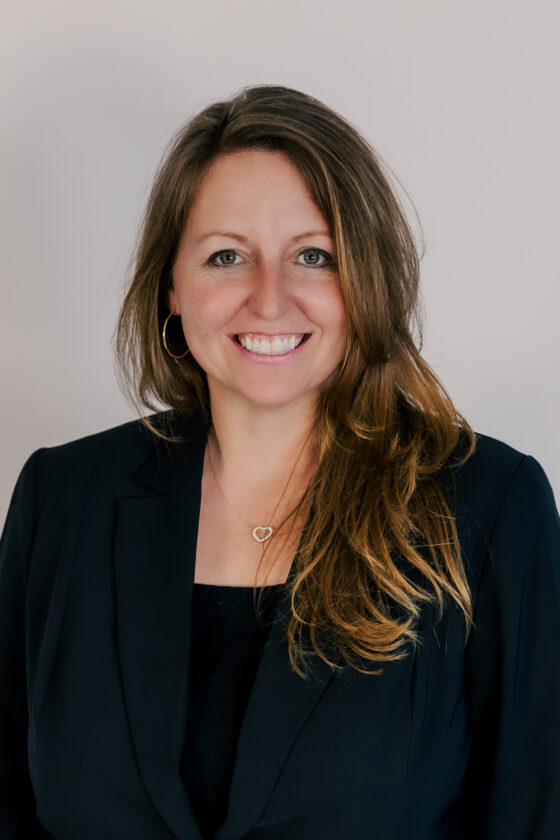
Crystal Hendrickson
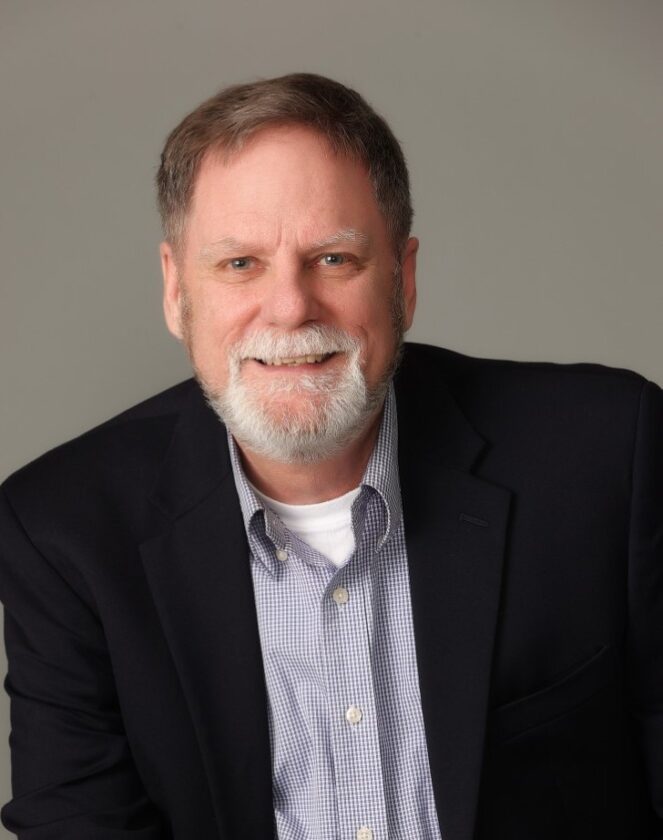
Jeff Hoverson
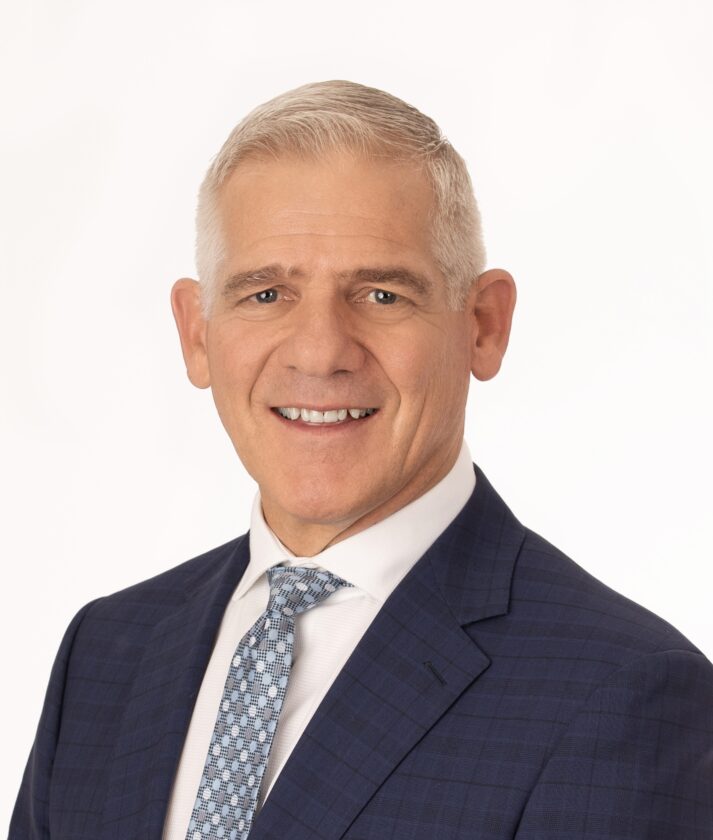
Blaine DesLauriers
Tim Mihalick
Crystal Hendrickson
Jeff Hoverson
Blaine DesLauriers
Tim Mihalick
Trending
District 3 Republican House candidates Blaine DesLauriers and Tim Mihalick say they want to bring their business and financial backgrounds to the North Dakota Legislature to help grow the state.
Running for his third term, Rep. Jeff Hoverson, R-Minot, said he would work more behind the scenes to uphold the Republican platform and promote conservative policies.
Crystal Hendrickson, who along with Hoverson is endorsed by the District 3 Republican Party, said she represents the district's grassroots conservatives who want to see more restraint in government spending.
District 3 voters will advance two of the Republican House candidates from the June 9 primary to the general election ballot in November. Sen. Bob Paulson, R-Minot is unchallenged in the primary for the Senate seat. The Democratic column also has no challenges, with Michael Thiesen running for Senate and Tara Hiatt and Natalie Mclauglin running for the House of Representatives.
DesLauriers and Mihalick did not seek their party's endorsements.
"I've been to the district meetings and participated in them, and certainly felt like we wouldn't have been able to accomplish what we wanted to, going through that route," Mihalick said.
DesLauriers added that going door to door to collect signatures to get on the ballot offered a valuable opportunity to meet with and hear from residents.
"District 3 needs a stronger voice for this area," DesLauriers said. With his decision to retire after 46 years in banking on June 30, the timing was right for him to seek to be that voice, he said.
Mihalick, who ran for Minot mayor in 2018 and served seven years on the State Board of Higher Education, said he is ready to contribute in a different capacity.
Mihalick and DesLauriers voiced support for the governor's platform, particularly in increasing the property tax credit.
Both DesLauriers and Mihalick also believe the governor is on the right course in requiring departments to propose 2027-29 budgets of 3-10% less than the current biennium. The extra spending in recent bienniums addressed the needs and now it is time to step back and make cuts as needed, they said.
Hendrickson called Armstrong's directive to departments to reduce their budget requests a great move but too little.
"That's a reasonable ask, but I think it could be more," she said. "What frustrates me a little bit about our current Legislature is that we're spending more and more every year."
"We've had record growth for too long. We're bloated," Hoverson said. "We're not going to get by with just trimming waste."
He suggests eliminating the Commerce Department and allowing the free market system to work. He supports eliminating 90% of the Department of Public Instruction (DPI) over time, sending the responsibilities back to local school districts.
"We've been throwing money at it for a long time, and it seems like the outcomes are worse," he said of K-12 education. "I don't think more money is the answer. I think more local control is the answer."
He defined local control as families, not just local school boards. Rather than DPI developing programs, schools should develop programs that work for them and learn from each other in sharing ideas, he said. He also would like to see DPI promote homeschooling as some other states do.
Hendrickson said she supports using school trust fund dollars to do more to assist with school construction projects because bond issues are the most crushing burden on taxpayers. She also is concerned the state is spending disproportionately on higher education compared to K-12 education.
"If the constitution says that we should fund public education, we need to focus first on fully funding K through 12 before we have all this extra money going to higher education," Hendrickson said.
Hoverson favors adequately funding K-12 education and addressing bloat where it exists in higher education. Hoverson said he has voted against the higher education budget, not because he doesn't want the schools funded but because he wants committees to further adjust the spending. He added he's been impressed with Minot State University, which consistently presents a reasonable budget.
DesLauriers and Mihalick list K-12 funding as a priority. Mihalick added higher education also is important as an economic engine in the communities and as a key player in building a workforce.
"Higher education has done well, pivoting to the needs of the state," DesLauriers said, citing the three-year bachelor degrees, trade schools and high school dual credit courses.
However, Mihalick said colleges and universities need to address maintenance before constructing more new buildings.
"We've got to get after it. We've got $2 billion worth of deferred maintenance that we continue to ignore," he said.
Regarding a November ballot measure requiring the state to cover the cost of school meals for all students, DesLauriers said there are valid arguments on both sides. He said a better plan might have been raising the income eligibility level to ensure students in need are helped while those who can afford it still pay.
Mihalick said students who go hungry because families don't apply for assistance programs is a concern.
"I think if we can help, I'm in favor of making that happen," he said.
Hoverson and Hendrickson do not support the ballot measure.
"I'm less concerned about the money," Hoverson said. "I'm more concerned about entitlements and dependency on the government."
He noted schools already are required to feed all children the same meal, regardless of the status of their lunch accounts, without shaming.
"This measure isn't even targeting the needy anyway. It's expanding it to the wealthy," he said.
Hendrickson said many people can afford to pay for the lunches and those who cannot have programs on the federal and state level to address their situations. Funds already set aside by the state aren't fully used, she said.
Although all four are running as Republicans, the candidates say they offer voters real choices.
"We'd like to maintain the traditional Republican platform and move the state forward. That’s our goal - keep that competitive advantage, that wonderful business climate that we enjoy, keep taxes low, regulations low and protect our quality of life," DesLauriers said.
"We want to come to the table and discuss issues and concerns and walk away with, I think, everybody feeling good about the discussion," Mihalick added. "We're willing to understand and take a look at other people's thoughts and needs and come to an amenable agreement as everybody works together to get things done. I like to term myself probably as more of a Reagan Republican. He did it right. He took care of the fiscal responsibilities and made sure we were operating well, but he also understood and took care of people."
Hendrickson, who serves on the North Prairie Regional Water Board and Ward County Planning Commission, described her approach on the water board as a little abrasive but indicated her approach to the Legislature would be different.
"Different situations call for different approaches," she said. "Generally, I get along pretty good with people, and so I want to build bridges but also keep people aware of 'Does that spending really need to happen?' or 'Let's look into this a little bit more.'"
Hendrickson said while her strength is in identifying problems that need to be fixed, she is open to hearing solutions from others who have good ideas.
Hoverson said he is more conservative than either of the primary challengers, particularly in spending tax dollars. Social issues also are a greater concern of his, he said.
"I definitely am very open and unashamed of wanting a Christian worldview to undergird the state government. My first session I fought the repeal of the Sunday blue laws. I wanted to keep the Sunday blue laws. I brought the 10 Commandments bill," said Hoverson, a church pastor.
Hoverson explained promoting a Christian worldview acknowledges Christian principles, which is different from a Christian Nationalist position that suggests all people must be Christian.
"I care a lot about just representing District 3 - the grassroots," Hendrickson said, citing campaign donor differences. "I like the idea of District 3 being represented by average people and conservatives with conservative values."
Mihalick's and DesLauriers' campaign disclosures show donations from banking and energy interests as well as individuals, with the largest single donation from Gov. Kelly Armstrong. Hoverson and Hendrickson show fewer donations, coming from individuals, although Sons of Liberty has contributed to Hoverson's campaign.
Hendrickson noted the campaigns of the endorsed candidates are funded by the district party, which raises money in the local community. Hendrickson and Hoverson also questioned the constitutionality of the governor endorsing candidates.
Mihalick and DesLauriers see positive things happening with the state's economy and expect more good things to come from a federal grant to address health care delivery.
They support continued state funding for the Souris River flood protection project, and DesLaurier said he hopes to see the Legislature address fully four-laning U.S. Highway 52 from Minot to Voltaire.
Mihalick said it comes down to continued road improvement, tax reform, workforce development, strong schools and reliable, affordable health care.
"And then responsible energy development, from gas to oil to coal. They all bring a lot of benefits to the state," he said.
An issue for Hendrickson is the potential for proliferation of data centers. She noted the 2025 Legislature authorized up to $500 million for a natural gas pipeline to connect the oil field in western North Dakota to the eastern part of the state. The big purchasers of that natural gas will be data centers, which will use it to construct power plants to run the centers, she said.
"Most people don't want data centers. That's a bipartisan issue, and it's a bubble. So what happens when it bursts?" she said. "I feel like it's going to ruin our quality of life here in North Dakota. The noise that's generated by them is disruptive to animals and wildlife and anybody that would live close by."
Hendrickson also is disappointed with the state's position supporting carbon pipelines. Additionally, she would like to see residents in city extraterritorial zoning areas have more say. Each city should have the right to decide how to provide representation, such as allowing extraterritorial residents to vote in city elections or have a member seated on the governing board, she said.
Hoverson said his plan if reelected would be to work behind the scenes to help others advance good legislation. His intent is to assist with drafting bills, conducting research for bills, making phone calls and enlisting constituent testimony, with the goal of producing successful legislation.
Legislatively, successes for conservatives have been limited, he said, although behind the scenes, there’s been tremendous movement toward getting back to the platform of the Republican Party.