
Food hub pilot holds potential for region
Trending
Rural communities have been challenged to maintain local groceries, but a new food hub concept could help.
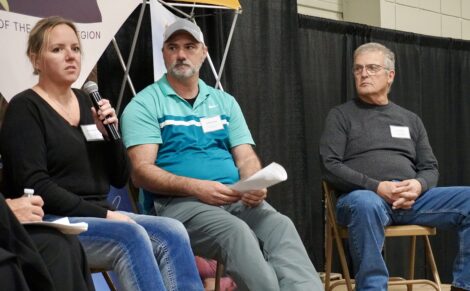
The proposed North Central Grocery & Food Hub Initiative in the Minot region will pilot new ways for rural grocers and producers to come together, cut costs and expand markets. Souris Basin Planning Council highlighted the initiative in a panel discussion at its State of Region 2 meeting in Minot Thursday, Oct. 30.
"We've identified about eight grocery stores in the surrounding region who are interested in exploring collaboration and talking about what types of services they would like to collaborate on," said Ellen Huber, executive director for the North Dakota Association of Rural Electric Cooperatives, Mandan. "We've also formed two other subcommittees. One is local produce growers, and the other one is meat focused."
The new initiative has a model in the Rural Access Distribution Cooperative in Walsh County, which serves three groceries. That model has resulted in a more affordable and wider selection of food, with better sales and profits, Huber said.
The Bush Foundation has pledged $12.6 million over seven years to help turn the proposed north central food hub into an actionable project, she said.
"Nobody just wanted to study something for another year, two years, three years. They're interested in action," Huber said.
Among interested producers is Charlie Hannon, who runs a noncertified organic farm north of Stanley that grows a variety of root vegetables and lettuce greens that are marketed at farmers markets and to grocery stores. In a typical week, marketing is as time consuming as actual farming, he said.
A food hub would alleviate much of that marketing burden, he said.
"You would spend more time growing food and producing for your local communities and less time out selling it, marketing it, washing, packing, transporting," he said.
Brenda McCasson, who owns Velva Fresh Foods with her husband, Matt, stressed that customer education is important. She noted customers need to know there is a financial benefit to them in supporting locally owned, family operated businesses.
"If you don't shop at those stores, they're eventually going to go away," added Matt McCasson, who also sat on the panel. "They're going to have to close down. Too many of them close down, that's going to affect your community."
Brenda McCasson recalled taking over the Velva store in 2020, then dealing with the pandemic and competition from a chain store. She spoke of difficulty in finding staff and the small margins for eking out a profit. The McCassons took over the Drake grocery in 2020 but ended up having to close it.
"We have to find our niche," Matt McCasson said. "Our biggest thing is customer service." The store delivers to the nursing home, smokes its own meats and offers deli meals.
"The hardest part now is finding out how young people grocery shop because that's changing. They don't really make meals at home anymore. So, we're trying to find our niche in that," he said.
Success is not just increased patronage but fair purchasing, which means wholesale prices for rural groceries can't be higher than retail prices at big box stores, Brenda McCasson said.
Dwindling access to regional grocery warehouses is part of the problem, Huber said. Investments into local production through community-supported agriculture systems and local meat processing have helped but still aren't able to fully meet the consumer need, she said.
Huber said fewer than 90 groceries remain in North Dakota, down from 137 groceries in 2014.
"This is causing families to leave many of these communities to get their essential goods. And when they're doing that, then they're often purchasing other things while they're away from their communities. So, it has a compounding negative economic effect on our communities and our regions," Huber said. "When the Bush Foundation issued this grant, they wanted to make sure that it was noted that this problem is so enormous that it takes funding on all levels and from all types, and so, we still need the federal and state government funding to help address these issues, and then business and philanthropic and individual support as well."
Huber spoke about the benefit from the state's Rural Sustainability Grocery Grant, which has helped stores increase energy efficiency and capacity. Eleven communities received grants, but 46 other applicants also might have benefited had more funds been available, she said.