
Facade makeovers continue downtown
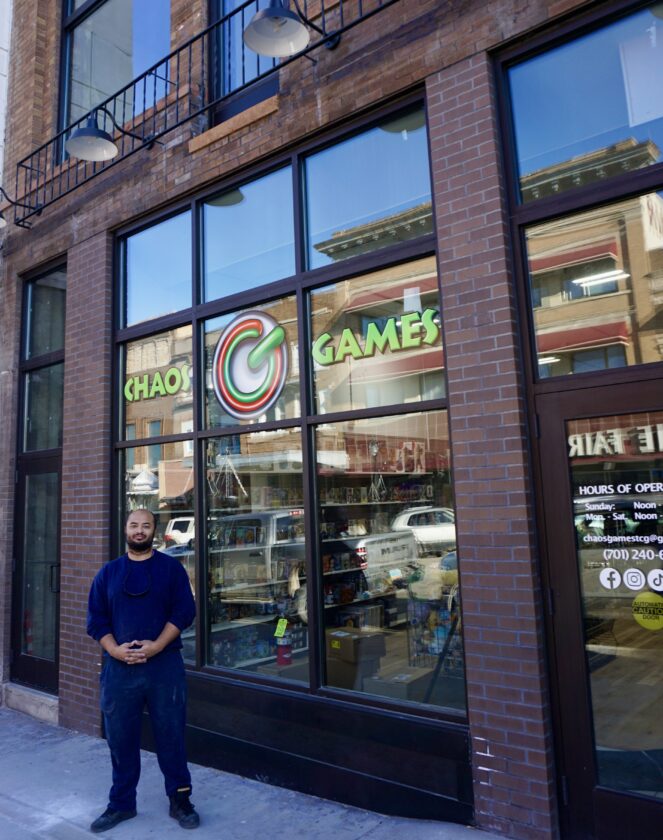
Jill Schramm/MDN Owner Joseph Hurt stands outside the new Chaos Games location on Minot’s Main Street. The building’s new facade was completed with the help of the city’s Facade Improvement Program.
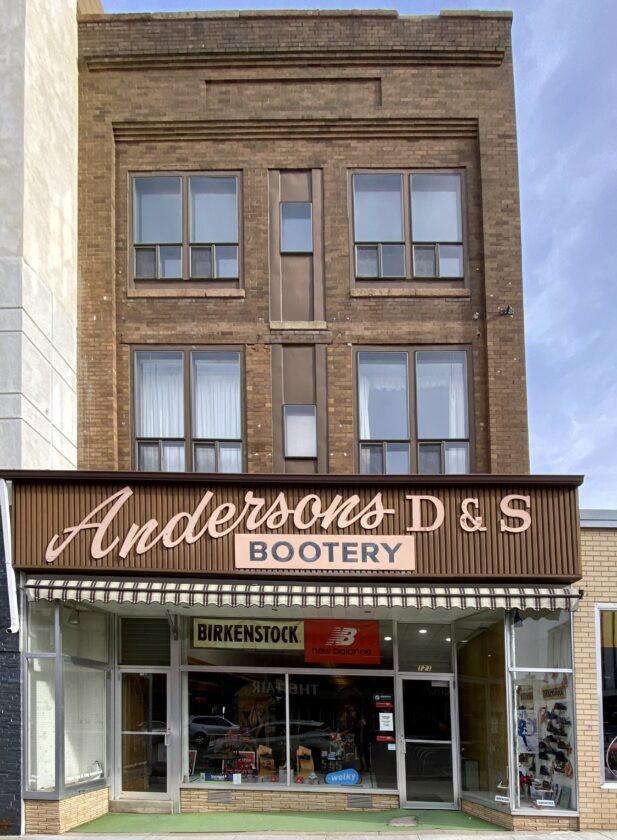
Submitted Photo The former Anderson’s D&S Bootery building is shown as it looked before its makeover as the new store for Chaos Games.
Jill Schramm/MDN Owner Joseph Hurt stands outside the new Chaos Games location on Minot’s Main Street. The building’s new facade was completed with the help of the city’s Facade Improvement Program.
Submitted Photo The former Anderson’s D&S Bootery building is shown as it looked before its makeover as the new store for Chaos Games.
Trending
Moving into his new building this week, Chaos Games owner Joseph Hurt was pleased to have a place that - thanks to the City of Minot's Facade Improvement Program - looks as good on the outside as it does on the remodeled inside.
"When you get that first impression, you know that it's new, that it's updated. People themselves are excited when they go into that space," said Hurt, who moved his store around the corner to 121 S. Main St., which formerly housed Anderson's D&S Bootery.
Given the cost of making the interior improvements, the facade improvements would have had to wait if the city funding hadn't been available, Hurt said.
"The facade program was 100 percent why I did it," he said. "Otherwise, it would have been a lot, financially, to try to do everything."
Jonathan Rosenthal, economic developer for the City of Minot, said he had anticipated 15-17 buildings facades eventually would be improved through the program when the council approved it in 2021. So far, nine owners have taken advantage. Some projects are already completed, and additional applications are likely, based on inquiries.
"I kind of feel that the impact is still building," Rosenthal said. "The aesthetics of downtown have improved and they're continuing to improve."
The facade program provides up to $100,000 toward improvements, with $180,000 allowed on buildings with more than one street-facing side. Rosenthal said inflation hasn't increased the need to raise those amounts, but it has pushed more projects to need the full amount.
Singling out downtown properties for the investment of city sales tax dollars isn't universally popular, but Rosenthal argues the city, for many years, made decisions and built new infrastructure that encouraged businesses to move out of downtown, while the downtown infrastructure was neglected. He notes the downtown generates sales tax, which is the source of funding for the facade program. He sees the investment of sales tax dollars back into programs like facade improvement as priming the pump for private dollars to flow back to the downtown again.
Peter Hugret, chairman of the Renaissance Committee that oversees the facade program, said downtown buildings were constructed to last, with brick exteriors and an architectural appeal.
"I really think that a lot of people want to see a vibrant downtown," he said. "Downtown has a lot of niche businesses that would not probably ever move into a mall and, to me, I think that appeals to a lot of people. Plus, the fact of preserving the historic buildings is very important."
An International Economic Development Council planning effort several years ago included a recommendation for a downtown facade program.
The program seeks to restore a more historical look to the downtown. Among the successes that have been shaping up are the building improvements on the east side of Whiskey Nine on Central Avenue, which originally had a leaded glass scene of a Viking ship in its facade. The building owner was able to reclaim the glass from a previous owner so it can be inset over the door once again when the renovation is finished.
Although accessibility improvements have been an allowed expense in the program, the Renaissance Committee has recommended the council provide additional funding and require power-operated entrance doors. The council is to take up that recommendation tonight.
"The program really is historic and aesthetically oriented. However, I think to add some emphasis to the accessibility issue was called for. It was brought to our attention by a member of the community who would particularly benefit from having better access," Rosenthal said. He also pointed out there are other businesses downtown that have installed power-operated doors using federal funds. Chaos Games included a push-button door in its facade remodel.
Rosenthal said the future of the program depends on the city council's interest in continuing funding. Eventually, the program will run its course, but Rosenthal said the hope is the city can follow up with a second program to assist property owners in renovating upper floors, typically rented to apartment tenants.
"We do think that it's important that we have people living downtown and that these units are occupied," he said. He estimated at least 40 units are vacant now. When upper levels aren't in use, deterioration can occur through lack of maintenance and damage by pigeons.
Hurt said remodeling the upper level of Chaos Games would be a considerable expense so he has put it on hold for another time. Should the city adopt an assistance program for that type of project, though, he said he definitely would be interested in applying.