New state regulations needed
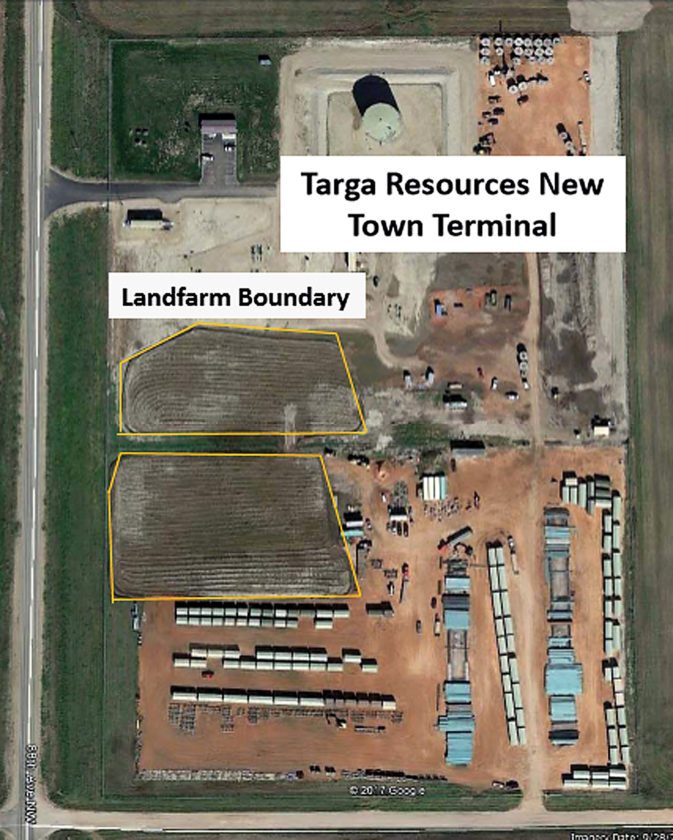
Submitted Photo This is an aerial view of the New Town Terminal and Targa’s land treatment area.
-
- Submitted Photo This is an aerial view of the New Town Terminal and Targa’s land treatment area.
-
- Submitted Photo This view shows the land treatment area during construction phase.
Targa Resources is working to change that, but the technology also requires state legislators to come up with regulations to allow it, according to David McQuade, Targa Resources’ senior director, Environmental, Safety and Health.
“What is needed is a regulation that addresses notice and application requirements for minor permits issued in association with the management of crude oil and natural gas condensate spill. These permits include the land treatment of soil impacted by a spill for beneficial re-use of the soil,” said McQuade.
Bill Suess, manager of the Spill Investigation Program for the North Dakota Department of Health’s Environmental Health Section in Bismarck, said in 2017, North Dakota had 636 crude oil spills ranging from a couple gallons of crude to much more. This year through March 31, there’s been 165 crude oil spills.
Starting in September 2016, Targa Resources conducted a pilot land treatment project on a 4-acre section of disturbed land within the lease boundaries of an operational crude oil terminal station at New Town on the Fort Berthold Reservation.
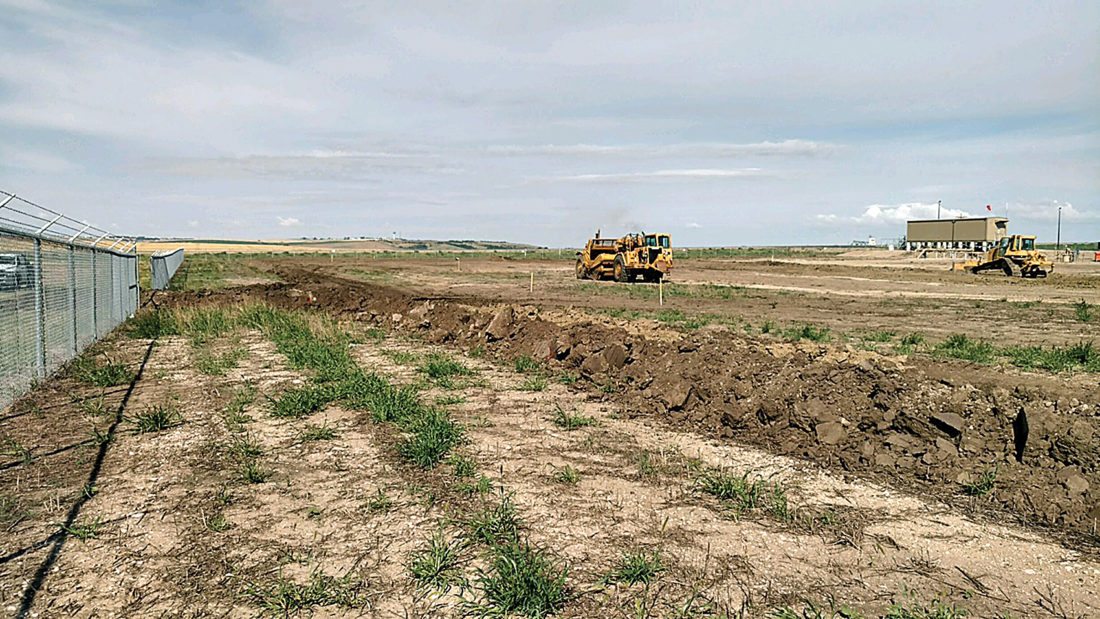
Submitted Photo This view shows the land treatment area during construction phase.
The project was completed in the fall of 2017, said McQuade. He said the remediated soil was beneficially reused at the New Town terminal.
Targa’s goal is to combine scientific data with real operational experience in support of land treatment as a viable remediation technique in North Dakota.
Company officials hope North Dakota will come up with new state regulations that will allow this.
McQuade gave a presentation about the pilot project and how it can benefit North Dakota to the Northwest Area North Dakota Landowners board of directors in February. When board members asked how they could help, he said he told them to talk to their local legislators. McQuade has already met with Lt. Gov. Brent Sanford about the project and its benefits to North Dakota. He plans to set up meetings with legislators this summer for similar discussions.
Earlier, he said, the Three Affiliated Tribes’ business council gave its support to the pilot project conducted at the New Town crude oil terminal station.
Targa Resources was awarded the North Dakota Petroleum Council’s inaugural Environmental Excellence Award for the pilot project. The award was presented at the NDPC’s 2017 annual meeting.
Targa Resources has its corporate office in Houston, with its North Dakota operations office in Watford City. The company has a gas processing plant south of Watford City.
Land treatment
Targa project treats crude oil impacted soils for re-use
By David McQuade
Targa Resources
Senior Director, Environmental, Safety and Health
The majority of crude oil spill cleanup efforts in North Dakota involve excavation of affected soils to achieve regulatory cleanup criteria.
These affected soils typically are 100 parts per million (ppm) Total Petroleum Hydrocarbons (TPH) for off-pad releases, followed by direct landfill disposal.
When these stringent cleanup levels are targeted, the volume of native soil removed can be substantial, often totaling tens of thousands of cubic yards. Landfill disposal of native soils means the soils will never be returned to productivity, and limited landfill airspace is consumed.
Through a land treatment study, a pilot program of Targa Resources sought to substantiate an alternative means of crude oil remediation to allow local industry to decrease the wastefulness of valuable native soils while remaining substantially protective of human health and the environment.
We are optimistic that the results of this pilot program will demonstrate the effectiveness of land treatment as a safe and viable approach to remediate crude oil impacted soils in North Dakota.
Acceptance of land treatment by landowners and regulators has the potential to drastically reduce the waste of native soils across oil producing areas of the state. By validating a process that will free up valuable landfill airspace and reduce the necessity for soil disposal, we believe this pilot program will provide significant positive environmental impacts to the state of North Dakota and further reduce the environmental footprint of the oil and gas industry.
For the project Targa met or exceeded the requirements of all federal, state, and local agencies by working directly with government agencies, industry groups such as the North Dakota Petroleum Council, the Mandan, Hidatsa and Arikara Nation and consulting firms.
As a member of the North Dakota community, Targa seeks the trust of our neighbors as much as of the government agencies who regulate our operations, and have worked closely with the MHA Tribal Business Council toward a mutually beneficial land and resource partnership. We actively collaborate with government agencies on new regulations and technology to promote environmentally sustainable industry operations. In North Dakota, Targa has worked extensively with the MHA, Tier I companies and consulting firms in constructing a pilot program to evaluate the treatment of crude oil impacted soils through microbial enhanced bioremediation (land treatment). We believe that development of a passive remediation technique that facilitates the re-use of native soils will prove to have a lasting beneficial impact across the state of North Dakota.
Project Purpose & Operation
Typical off-lease crude oil spill cleanup efforts involve excavation of affected soils to achieve North Dakota Department of Health cleanup criteria, which are 100 ppm, followed by direct landfill disposal. When these stringent cleanup levels are targeted, the volume of soil removed can be substantial. Disposal of native materials removes these soils from productivity, and fills landfill airspace at a rapid pace.
Since September 2016, Targa has been treating a large volume of crude oil impacted soils within the Fort Berthold Reservation using microbial enhanced bioremediation (land treatment).
In general, TPH (Total Petroleum Hydrocarbons) concentrations less than 8 percent are readily treatable (U.S. EPA 2003).
This bioremediation process involves the use of oxygen to stimulate the growth and reproduction of aerobic bacteria (microbes) which degrade hydrocarbons adsorbed to soil. The effect is reducing hydrocarbon impacts over time through natural digestion processes, as well as providing beneficial nutrients back to the soil.
Land treatment is often used to remediate crude oil impacted soils in warmer climates; however, its effectiveness in a northern climate where microbes undergo a dormancy period during winter months has been questioned.
Targa’s goal is to combine scientific data with real operational experience in support of land treatment as a viable remediation technique in North Dakota.
The land treatment project was constructed over a 4-acre section of disturbed land within the lease boundaries of an operational crude oil terminal station on Fort Berthold.
Impacted soils were spread across the prepared area, then raked into windrows perpendicular to topographic contours to facilitate stormwater drainage toward collection areas.
The combination of stormwater controls, material placement, and the compacted clay facility base material were included in the project design to ensure treatment efforts would be adequately protective of groundwater resources and areas surrounding the site.
During treatment, soils undergo routine monitoring for nutrient content, microbial populations and soil moisture to ensure conditions are ideal for microbial reproduction and that the bioremediation process is operating at maximum efficiency.
Project Accomplishments
The pilot program has demonstrated that crude oil impacted soils can successfully be land treated. With increased acceptance by landowners and regulators across the state, Targa believes land treatment applications will provide a sustainable alternative to traditional landfill disposal for the oil and gas industry across the state of North Dakota.
Long-term benefits associated with land treatment efforts include:
– Permanent elimination of waste and the need to dispose of soils in industrial
landfills;
– Reduces liability associated with transportation of waste;
– Reduces cost;
– Restoration of soil to productivity;
– Ability to combine with other treatment techniques.
Local News
Time capsule, sculpture highlight pioneer reunion
Defendant in Spirit Lake shooting pleads guilty
A Fort Totten man has pleaded guilty to two separate counts of assault and voluntary manslaughter in U.S. District ...

Moen Family musicians return to Frozen Fingers Festival
Accommodating growth

Discovery well anniversary