New life for Broadway Bridge scraps
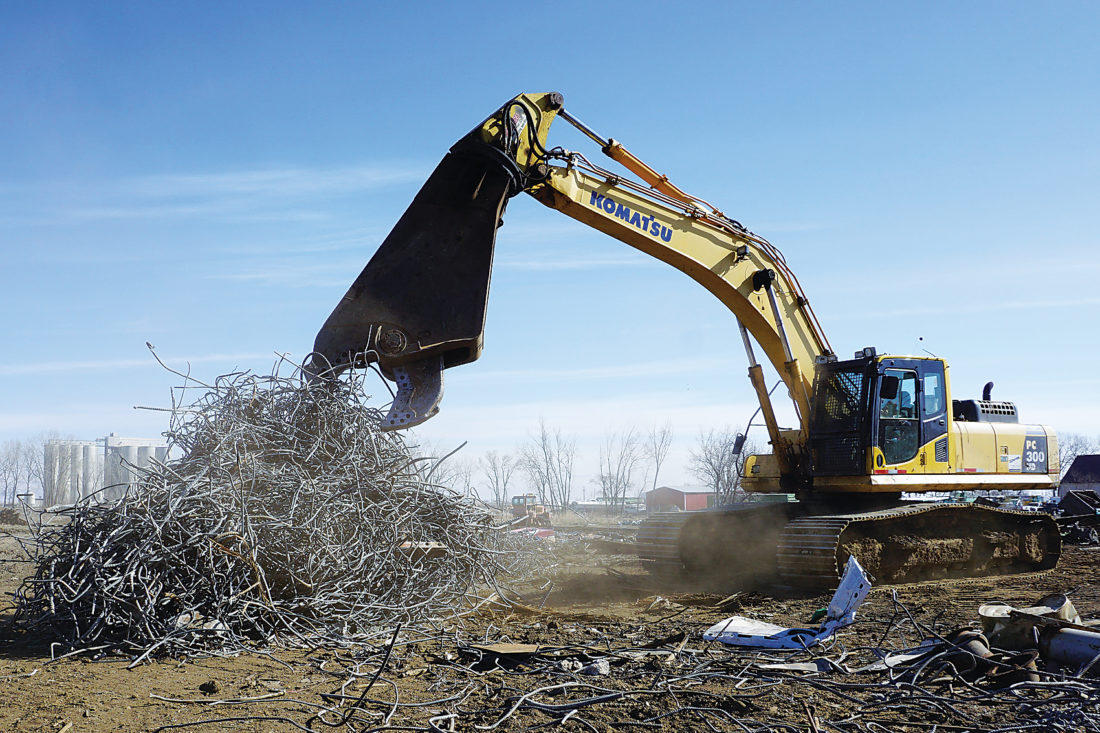
Jill Schramm/MDN A machine operator at Gerdau uses a shear to snip into a pile of rebar removed from the Broadway Bridge April 17. The steel is cut into three-foot pieces and shipped to one of Gerdau’s recycling mills.
Steel being removed in the replacement of the Broadway Bridge could end up in another bridge, or maybe used with alloy metals in an automobile or other products.
Gerdau of Minot is working with bridge contractor, Lunda Construction, to take the removed steel rebar and prepare it for shipping to one of its recycling mills, where it will be processed to provide material for new construction.
“We were really happy that they called us and picked us to do that,” said Kevin Hanson, regional manager for Gerdau. “The cool part about it for us is they are using our steel to put back into the bridge.”
The new bridge steel is coming from a Gerdau plant in Virginia. Gerdau is a multi-national company with mills in Canada, the United States and Mexico in North America.
“The other thing I like is it’s American made,” Hanson said of the steel being provided for the Broadway Bridge.
Most of the steel used in construction today is recycled, he said. Gerdau’s Minot plant initiates recycling of between 30,000 and 40,000 tons of steel a year.
The Broadway Bridge is estimated to generate roughly 500 to 600 tons of steel. In addition, Gerdau is taking other structural components from the Broadway Bridge, such as the aluminum guard rails.
Gerdau had recycled the steel when contractors began removing the old Four Bears Bridge near New Town in 2003. That bridge generated 4,000 tons of steel for recycling. Gerdau took steel from a second bridge in Bismarck, making the Broadway Bridge its third bridge project.
Gerdau also recycled metals when Minot’s former airport terminal was torn down last year.
Originally Porter Brothers before purchased by Gerdau a number of years ago, the company’s presence in Minot for more than 100 years, as well as it’s affiliation with a long-time internationally known corporation, have helped it gain recognition in the industry. So when contractors look for a place to send their metals, they know they have someone local to turn to.
Hanson said the opportunity to recycle steel from the Broadway Bridge means jobs for the community.
“It’s good for the company. It’s good for the community. It has to go somewhere so it might as well come here,” he said.
Hanson explained the recycling process with the Broadway Bridge actually starts with Lunda Construction, whose workers remove the concrete from the rebar before placing it in Gerdau’s 30-cubic-yard containers at the bridge site. Gerdau employees pick up the containers and truck them to the plant in east Minot, where the rebar is examined to ensure all concrete has been removed and then is cut with a shear into pieces about three feet long. The cut rebar is shipped out, typically by railroad, to a mill.
Scrap can be shipped anywhere it is needed, but the Minot plant’s main shipping destinations are Selkirk, Manitoba, St. Paul, Minnesota, and Wilton, Iowa.
What happens to the steel once recycled depends on where it may be needed. A mill might produce more steel rebar or add alloys to create metals for use in other products. Along with accepting steel for recycling, Gerdau sells steel from its mills that is ready for use in new projects. So, who knows where the Broadway Bridge steel could end up?
“This rebar here could end up right back in our warehouse,” Hanson said.
Local News
Fedorchak forum to focus on nation’s 250th anniversary
BISMARCK – Congresswoman Julie Fedorchak, R-ND, will host her next Fedorchak Forum on Thursday, June 25, at 6 ...
91st Missile Wing successfully tests readiness, reliability
Dads 101 prepares Minot AFB expectant fathers
MINOT AIR FORCE BASE – To help expecting fathers build confidence and prepare for the realities of parenthood, ...

MSU students earn two national titles
Canvass produces updated tally, write-in recount