
Embrace North Dakota’s early winter
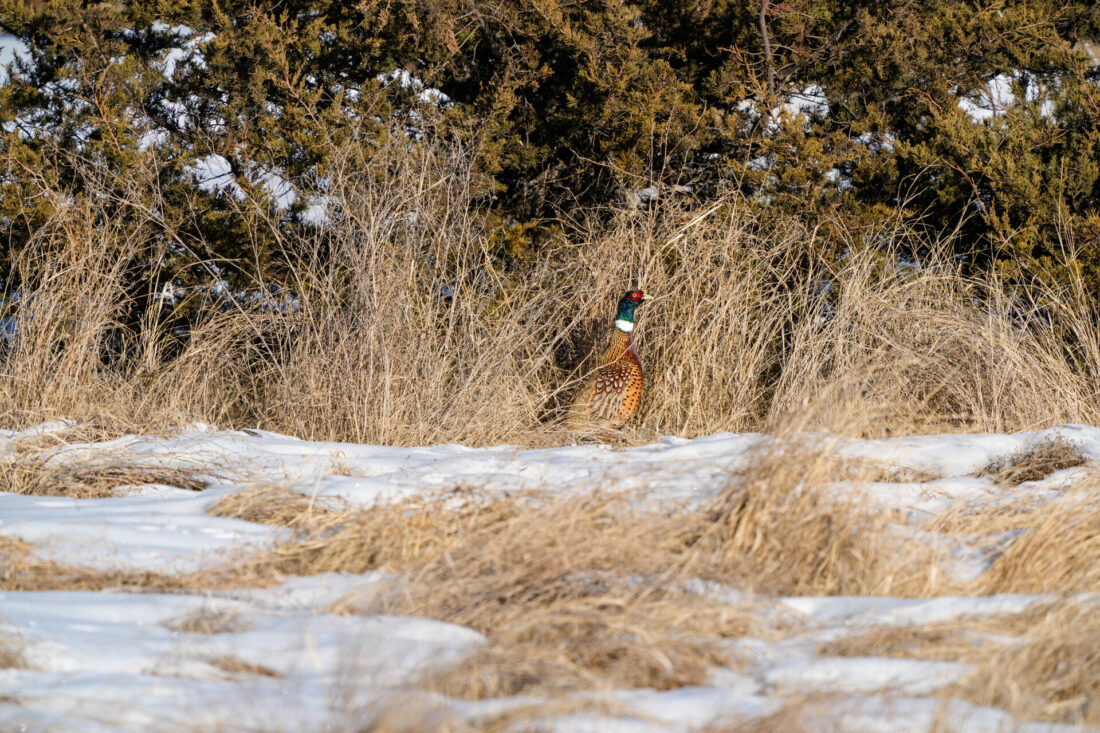
Submitted Photo As we move into the cold season, take a moment to step outside. Listen. Watch. Feel the quiet strength of this land and its wild inhabitants. Photo from NDGF.
Early winter in North Dakota is unlike anything else – a time of transition, not just in the weather, but in mindset. The landscape quiets. The urgency of fall – hunting seasons, harvest, migration – fades and the brown turns white. Christmas and the holidays add to the stress. After the holidays and we turn the calendars to 2026 we’re hit with the reality of winter.
For those who know and love this state, it’s a season of peace, solitude and subtle beauty. And for the wildlife that call this place home year-round, it’s also a season of survival.
There’s a calmness now that doesn’t exist during the vibrant chaos of spring or the long workdays of summer. Walk out into a prairie coulee or along the edge of a frozen slough and you’ll find it – the hush. The snow, when it isn’t blowing, settles in slowly, coating the stubble fields and shelterbelts, muffling the noise of the world. The wind still bites and most days around here it howls, but there’s peace in the silence between gusts.
For humans, this season demands preparation: block heaters, boots, jumper cables and layering clothes like grammas quilt on the couch. But we’ve got furnaces, vehicles and grocery stores. For wildlife, survival looks a little different.
Take the sharp-tailed grouse. These prairie birds don’t pack up and leave for warmer climates. Instead, they tuck into snowbanks for warmth and huddle in cattail sloughs for protection from
the wind. They rely on their instincts, their biology, and the landscape itself to survive January and February when the thermometer dips to levels that can make even a seasoned North Dakotan pause.
Red fox and coyote are also permanent residents of the prairie that survive and sometimes thrive. You might catch a glimpse of one at dawn, trotting along a fence line or weaving through drifted snow in search of voles or a winter-weakened rabbit. Their coats thicken, their senses sharpen, and they become models of winter adaptation.
What’s remarkable is that none of these animals complain or question the cold that we know of? They prepare. They endure. And in that, there’s a lesson for all of us.
Winter can feel long here. But just as the snow settles in slowly, so do the days begin to lengthen, subtly at first, then more noticeably. By late December, when the solstice marks the longest night, something shifts. It’s barely noticed at first, but the light slowly begins to return. That sliver of optimism – a just a minute or two of daylight gained each day – carries a quiet hope that spring will return.
So, as we move into the cold season, take a moment to step outside. Listen. Watch. Feel the quiet strength of this land and its wild inhabitants. We may not migrate like snow geese or hang up our routines for winter, but like the sharp-tail, the fox, and the coyote, we adapt. We prepare. We endure. And we appreciate the rhythm of the seasons.
Local News

Devils Lake educator named state’s Elementary National Distinguished Principal
City offices closed for Presidents’ Day
City of Minot offices will be closed Monday, Feb. 16, in observance of the Presidents’ Day holiday. Because ...

Book club meets at Confluence Center

Federal grand jury indicts for firearms charges
ND respiratory disease surveillance report shows decline
The most current respiratory disease surveillance data for North Dakota are summarized below for the week ending ...
Reclamation urges caution on unstable ice
BISMARCK – The Bureau of Reclamation reminds the public that ice on rivers, lakes and reservoirs becomes ...