
Former school land eyed for native grassland
Property to serve new educational use
Trending
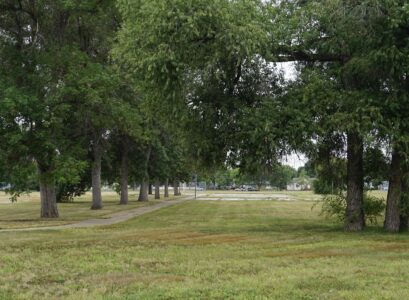
The former Erik Ramstad school property in northwest Minot could eventually fill a new educational purpose as a native grassland.
Minot Public Schools, Minot State University and Audubon Great Plains are planning a project to bring that vision to reality on the site of the former middle school, destroyed in the 2011 flood.
Dan Conn, associate professor and chairman of the Education & Kinesiology Department at MSU, said much has been lost in the natural environment with the disappearance of grasslands, including many traditional birds, such as orioles and cardinals.
"By bringing this grassland back, it’s going to bring back insects and vegetation and eventually birds and other critters back into our community and be a part of our ecosystem," he said. "It’s going to take about five years by the time the project is done, but we’re hoping that it will bring back the native prairie grassland, that it would bring all these different types of species - and especially birds."
Audubon Great Plains is providing funding and expertise for creation of the natural prairie grassland under a 10-year agreement. Conn explained it takes about five years to establish a fully flourishing grassland. Work is expected to start on the project next spring.
The intent is to use the grasslands as a learning space for university students, he said.
"If they want to go to see different varieties of insects and plants, they have to drive outside of Minot quite a way to do that. Now, they could just go half a block away and be able to study and look at natural habitats," Conn said. "I know there’s a high school group as well that’s really interested in using that space. It’s like its own laboratory for biology students."
The idea to use the Ramstad land educationally came from Laurie Geller, vice president of academic affairs at MSU, who saw potential in the vacant space, Conn said. Geller reached out to Conn, who has worked with another MSU garden space on campus, and they brought in Chad Williamson, assistant professor in the biology department, who steered them toward the native prairie idea.
Initially, the thinking was to plant a regular garden or pollinator garden, Conn said, but the direction pivoted because of a desire not to bring unwanted animals that could be bothersome to the neighborhood.
"Between Chad and Laurie, they really shaped a lot of the vision with this," Conn said. Williamson took an active role in obtaining grant funding. Once funding was arranged, the group approached the Minot School Board.
"The flood protection is not done in that phase, where we would look at building anything on that site," said School Superintendent Mark Vollmer. "The goal of this is just to have something done with that area. But in this process, how can we gain an educational benefit from that area?"
He said the dream for the 14 acres is to have space where students can gain a better understanding of natural habitats, pollinators and other ecological facts related to the world around them. Potential educational opportunities exist not only in the classroom but through the before- and after-school programs and Magic City Discovery Center, he said.
"So it's an exciting project, and we look forward to getting it going," Vollmer said. "The biggest issue with it is, of course, upkeep and maintenance of the property and signage, and we all have a lot of things that we’ll need to do over the next several years."