ND Supreme Court reverse Carpio woman’s forgery conviction

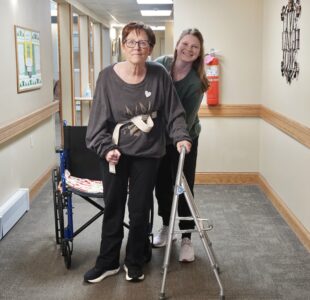
Susan Kay Coons
The North Dakota Supreme Court narrowly voted to toss out the forgery conviction of a Carpio woman.
Susan Kay Coons had been convicted in May 2022 and was facing a sentence of 10 years in prison for allegedly filing a falsified deed in a county office. On Wednesday, the court voted 3-2 to overturn the conviction, with the majority ruling that the trial judge violated Coons’ Sixth Amendment right to a public trial when some jury selection interviews were held in private.
After the general questioning of the panel of prospective jurors during the trial, three of the jurors informed the court that they may have some knowledge about the case. This resulted in all parties meeting in a private room to conduct individual questioning of the three jurors regarding topics that might have tainted or prejudiced the rest of the panel. Justices Jon Jensen, Jerod Tufte and Douglas Bahr ruled in favor of reversing the conviction, finding the action violated Coons’ constitutional right to a public trial.
“The court’s repeated characterization of those proceedings as ‘private’ is sufficient on appeal to establish that they were what the court said they were: private as opposed to public.” the Court’s majority said in their ruling, “These statements would reasonably communicate to anyone present that they were not welcome to follow to the other courtroom in order to continue observing the proceedings.”
Justices Daniel Crothers and Lisa Fair McEvers authored the dissenting opinion, finding that Coons failed to establish that public was actually excluded from viewing and participating in the “limited separate voir dire” of the three potential jurors.
The dissenters went on to say “because the separate interviews were for protection of the jury pool, and not to avoid embarrassing individual jurors by disclosure of intimate or salacious information, I do not believe it is reasonable to infer the district court conducted ‘private jury selection’ from which the public was excluded.”
The Court did rule against Coons regarding a claim of bias on the part of the trial judge, who referred to a separate probate action involving Coons during the trial. The Court found that the trial judge was not biased or prejudiced against Coons when they ruled to keep witness interrogation “within bounds.”
Local News
Time capsule, sculpture highlight pioneer reunion
Defendant in Spirit Lake shooting pleads guilty
A Fort Totten man has pleaded guilty to two separate counts of assault and voluntary manslaughter in U.S. District ...
Moen Family musicians return to Frozen Fingers Festival

Accommodating growth
Discovery well anniversary