Progress at zoo about more than new buildings
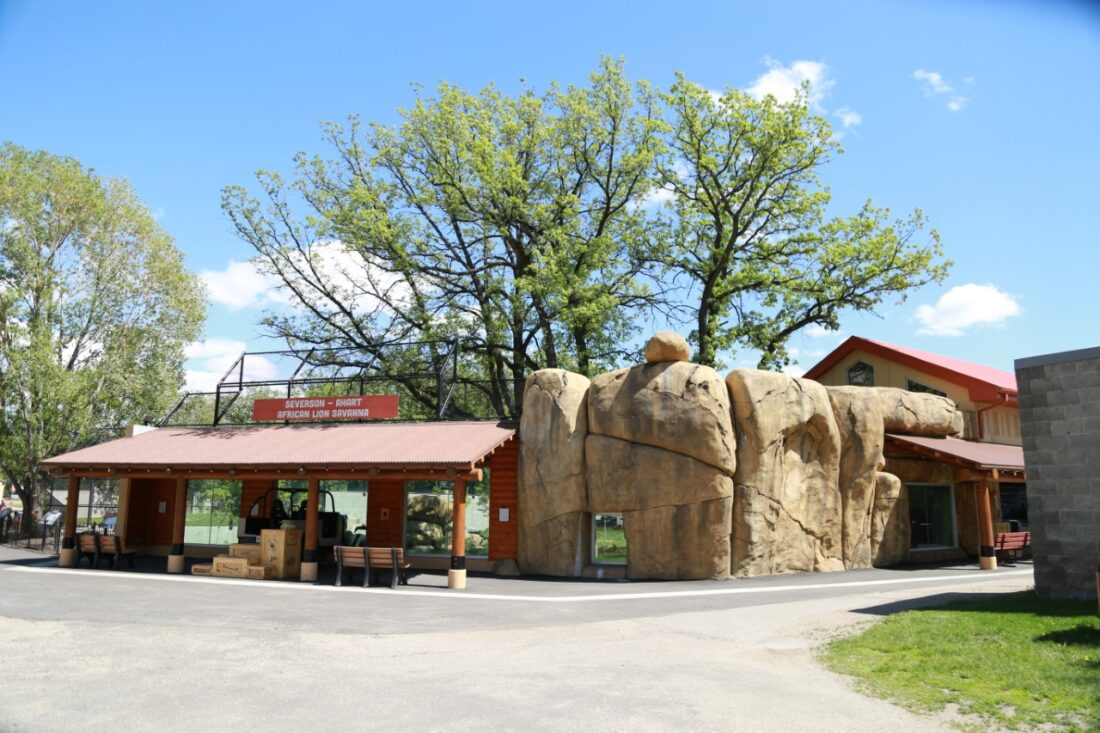
The Severson-Ahart African Lion Savanna, opening in September 2019, is one of three new habitats for big cats constructed at Roosevelt Park Zoo. The Amur Tiger River Valley opened in 2020. The new leopard habitat will open in May.
Progress at the Roosevelt Park Zoo comes in many forms, and each is as important as the other when it comes to improving the care of the animals and the guest experience.
For the past two years, the zoo has been working with the Mouse River Flood Protection Project group (MRFP) on the MI-7 phase that runs along Roosevelt Park and the main zoo campus. While this project is driving a lot of the changes affecting the zoo, it is not the only force pushing change. Along with the community that we answer to, as an accredited member of the Association of Zoos & Aquariums (AZA), we must also meet their standards that are constantly under review and being upgraded as we learn more about the animals that call the zoo home. Our next accreditation inspection may not be until 2025, but we work to maintain those standards of animal care and operational efficiencies throughout the process.
Starting this year and for the next three-to-four years, the zoo will be going through massive changes. As the Amur Leopard Habitat nears completion, so too does our big cats project that resulted in the creation of new habitats for the African lions, Amur tigers and the Amur leopards. These projects set the bar for everything that will follow. That bar is not necessarily set by the cost of the projects, but more by the increased ability to care for and manage these animals and offering guests a more pleasant and engaging experience.
Most changes will come about as a part of the MI-7 project, but the project has also hastened the need for construction outside of, but because of, the flood mitigation project. The most immediate need in the short-term will be the construction of the new African Plains Building that will be constructed adjacent to the existing giraffe barn. A large indoor space for the giraffes has been a goal for decades; the upcoming MI-7 construction makes it essential. Without this space to maintain the giraffes and others during the construction, the zoo would have no choice but to transfer the giraffes and others until everything is completed. At that point there would be no guarantee that we could bring them back to their current barn set-up as there are whisperings that AZA is looking closely at giraffes housed at northern climate institutions.
The African Plains Building has gone through many revisions and ultimately addresses several animal welfare concerns. It was initially proposed as an indoor enclosure for the giraffes to provide a large area for them to get more exercise during the winter. During the design process, staff asked about other animals sharing that same space during the winter months. First it was the zebras, then the ground hornbills, and then came the sulcata tortoises. The building is being designed for multiple species to call home, eliminating the need to construct new spaces for them. This project alone will create a new era of visitor engagement and provide spacious wintering habitats for years to come.
This project will be tied to various features that will fall under the MI-7 project. New habitats for many animals on the main campus, including the Okapi and Bactrian Camels along with a majority of new enclosures in the Roosevelt Park expansion that will be themed as Wild Dakota and exhibit many of our native species as well as heritage, and the Dakota Homestead that will serve as a children’s zoo area and gathering place to focus on the agricultural aspects of the region that helped to settle the west. These changes and more will be occurring simultaneously with the construction of the new flood wall, making the zoo one of the busiest places in town. The zoo is preparing for a progression of change for today and over the next few years.
Local News
Xcel Energy donates to Junior Achievement
The Minot Area Chamber EDC (MACEDC) has announced Junior Achievement of Minot has received a $3,000 grant from Xcel ...
New Town college sets retention, persistence records
NEW TOWN — Nueta Hidatsa Sahnish College (NHSC) has announced record-setting student retention and persistence ...
Minot library report shows busy year in 2025
High winds, hail batter region
Governor announces new strategy for Medicaid
BISMARCK – Gov. Kelly Armstrong recently announced North Dakota Health and Human Services (HHS) has launched a ...