23rd Bomb Squadron called on to respond to volcano in ‘30s
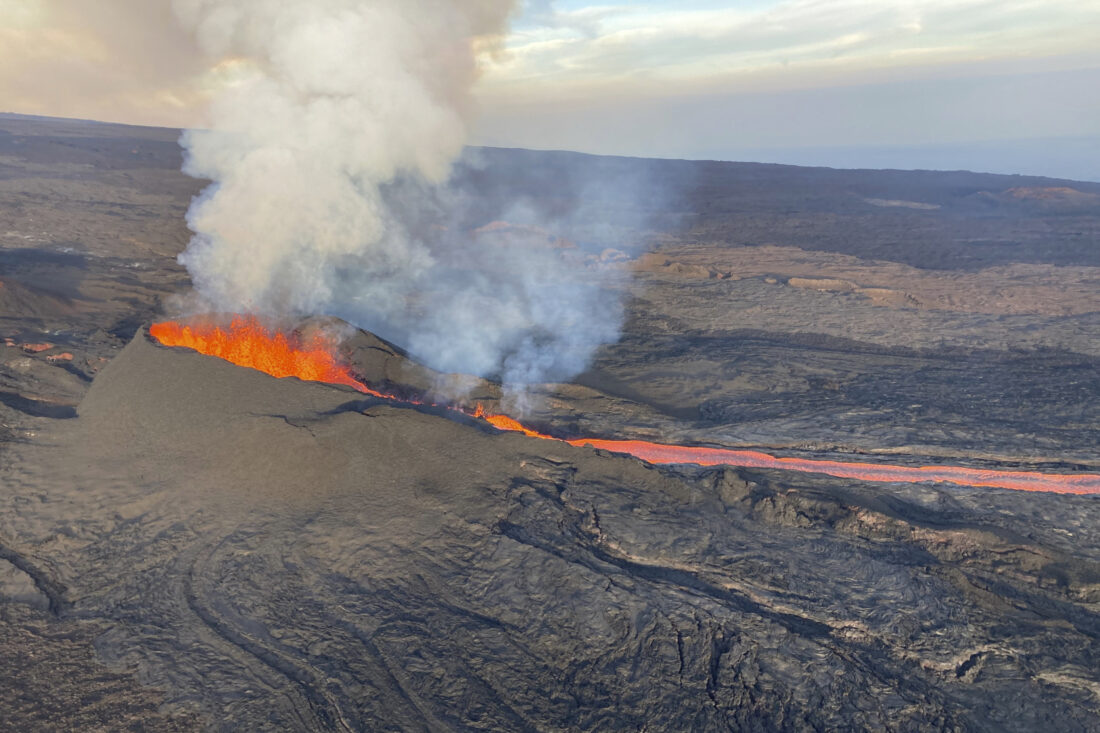
AP Photo ABOVE: Mauna Loa, a volcano on the island of Hawaii, began erupting in late November 2022. Years ago, the 23rd Bomb Squadron, now at Minot Air Force Base, was called on to drop bombs to divert the lava flow from this volcano.
The recent eruption of Mauna Loa, a volcano on the island of Hawaii, warrants a look back in history when the 23rd Bomb Squadron, now at Minot Air Force Base, responded with military action to stop the flow of lava when an eruption took place years ago.
It was the first aerial bombing of an active lava flow and a unique mission for the military.
Mauna Loa is considered the world’s largest volcano. In late November, Mauna Loa began erupting for the first time since 1984.
When Kilauea, another volcano on the Big Island was erupting on the island in 2018, Richard Hickman, a former B-52 bomber aircraft commander at Minot AFB, contacted The Minot Daily News about the patch and its story. Hickman, who lives in St. Petersburg, Florida, again visited during a phone call with The Minot Daily News recently.
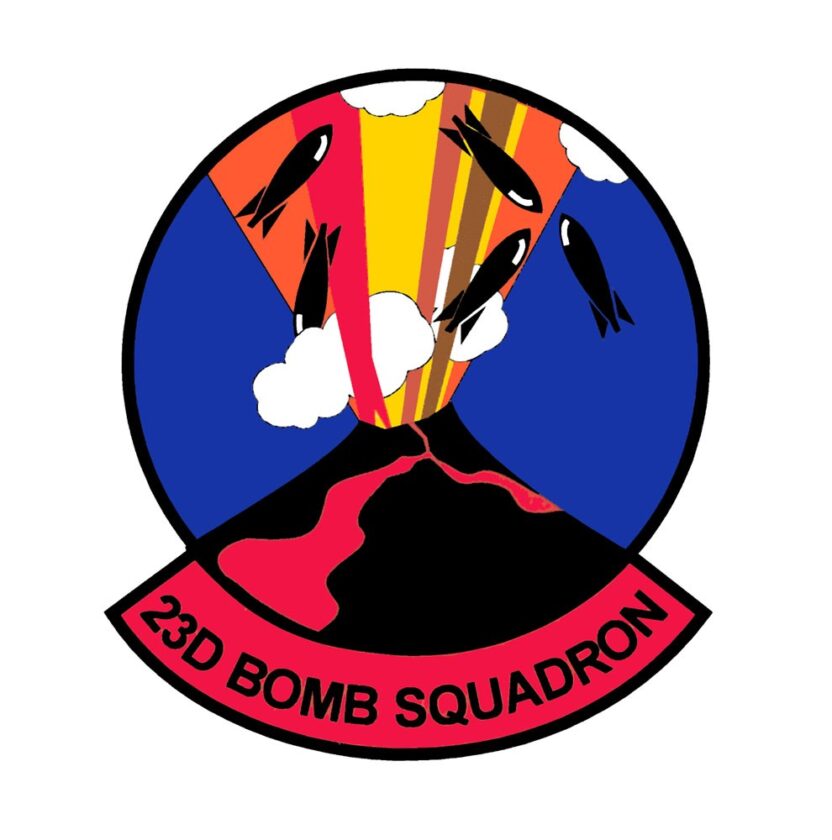
The squadron’s patch commemorates when the planes dropped bombs to disrupt the eruption of Mauna Loa volcano in the 1930s.
Hickman wore the patch when he was assigned to the 23rd Bomb Squadron at Minot AFB. He recalled in an earlier story that the incident occurred in the 1930s when B-52s dropped bombs to re-direct the flow of Mauna Loa to save a city in Hawaii.
Hickman was assigned to the 23rd Bomb Squadron from 1970-73 and had the rank of first lieutenant. His military career included a tour in Vietnam. He was discharged from the Air Force in July 1973 and began work as a pilot for Northwest Airlines, retiring in 2006.
The 23rd Bomb Squadron originated during World War I in Texas. It was assigned to Hawaii in the early 1920s. One of the oldest squadrons in the U.S. Air Force, it has had several name designations. The squadron moved from Travis AFB, California, to Minot AFB in 1968. The squadron’s name was changed from the 23rd Bombardment Squadron to the 23rd Bomb Squadron in 1991.
As the story about the 23rd Bomb Squadron and the volcano goes, according to the National Park Service, Mauna Loa began erupting on Nov. 21, 1935, and lava flowers were threatening the city of Hilo. In an attempt to divert the lava flows, Dr. Thomas Jaggar, founder of the Hawaiian Volcano Observatory, called on U.S. Army Air Service and Lt. Col. George Patton (who later gained fame during World War II) to send military planes to drop bombs near the eruptive vent in December 1935. Three Keystone B-3A and two Keystone B-6A bombers from the 23rd Bombardment Squadron based at Luke Field in Hawaii, conducted the bombing mission. The eruption ended six days after the bombing campaign.
Jaggar considered the operation a success and declared the bombing “helped hasten end of the flow” and that, “in a natural end, the lava would not cease so abruptly.” Other geologists have disputed if the bombing disrupted the lava flow. Nonetheless, the military bombers completed their part of the bombing mission.
To mark the 80th anniversary of the squadron using bombs to divert the lava flow from Mauna Loa, two B-52 Stratofortress with the 23rd Expeditionary Bomb Squadron (“expeditionary” is the name used when units are deployed abroad) assigned to Andersen AFB, Guam, for the U.S. Pacific Command’s continuous bomber presence, conducted a heritage flyover of the Mauna Loa volcano as part of a training mission.
Submitted Art
INSET GRAPHIC: The 23rd Bomb Squadron’s logo design on its patch shows a volcano in black silhouette with red lava flowing from the crater and black bombs falling over the volcano. Eighty-seven years ago the squadron took part in a bombing mission to divert lava flow from the volcano Mauna Loa in Hawaii.
Local News

Time capsule, sculpture highlight pioneer reunion
Defendant in Spirit Lake shooting pleads guilty
A Fort Totten man has pleaded guilty to two separate counts of assault and voluntary manslaughter in U.S. District ...

Moen Family musicians return to Frozen Fingers Festival
Accommodating growth

Discovery well anniversary