Two candidates seek council seat
-
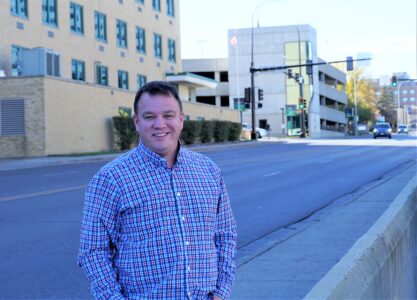
- Roscoe Streyle stands along Burdick Expressway in downtown Minot. The city council candidate sees potential in the city’s downtown.
-

- Scott Burlingame stands outside a downtown brewery that is part of the flavor of the community. The city council candidate says Minot has much to offer for a town of its size.
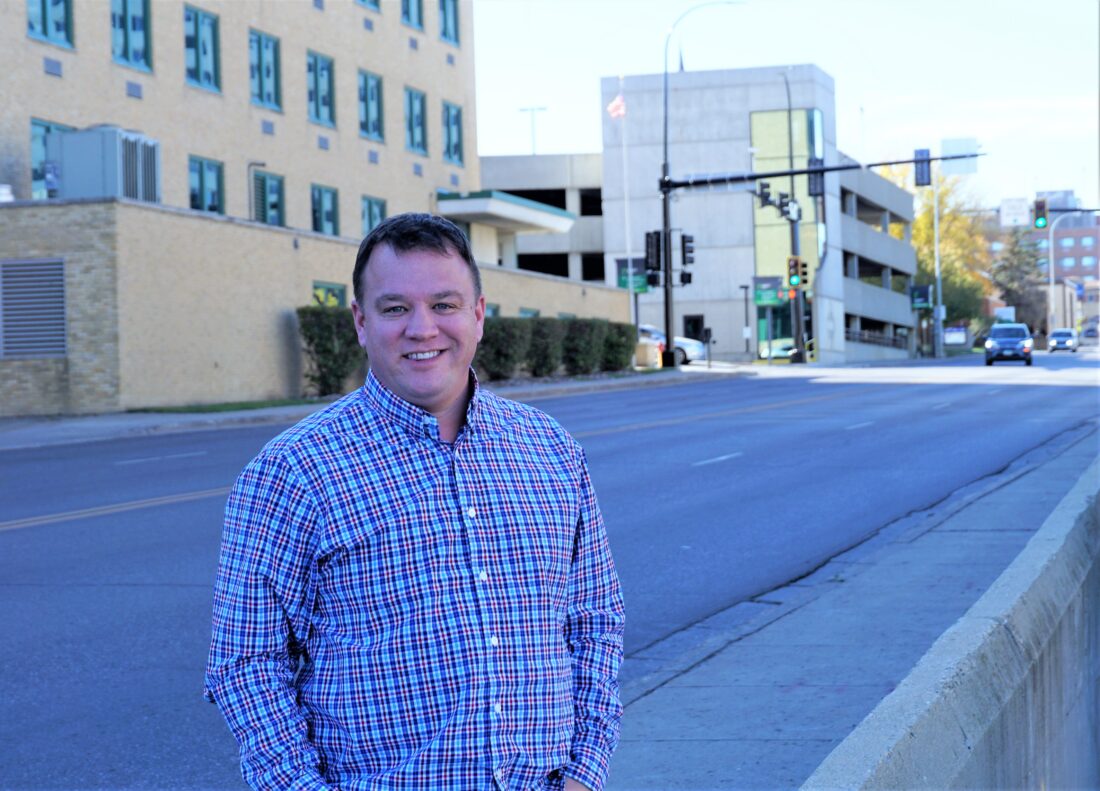
Roscoe Streyle stands along Burdick Expressway in downtown Minot. The city council candidate sees potential in the city’s downtown.
The two candidates for Minot City Council would bring somewhat different approaches to city government but both have backgrounds that uniquely equip them for the job.
Roscoe Streyle is a current council member, having been appointed in July to fill the vacancy created when Tom Ross moved from his council seat to mayor. The Nov. 8 election will fill the position for the remainder of the term, which ends in June 2024.
Scott Burlingame is a nonprofit leader who also had sought a council seat in June 2020. He said his interest in city government has remained strong in the past couple of years.
“As I continue to pay attention to it, it just became obvious that I do think that my skill set can help a little bit,” he said.
Burlingame, executive director of Independence, Inc., is president of the Minot Alliance of Nonprofits and a member of the Chamber-EDC Government Affairs Committee.
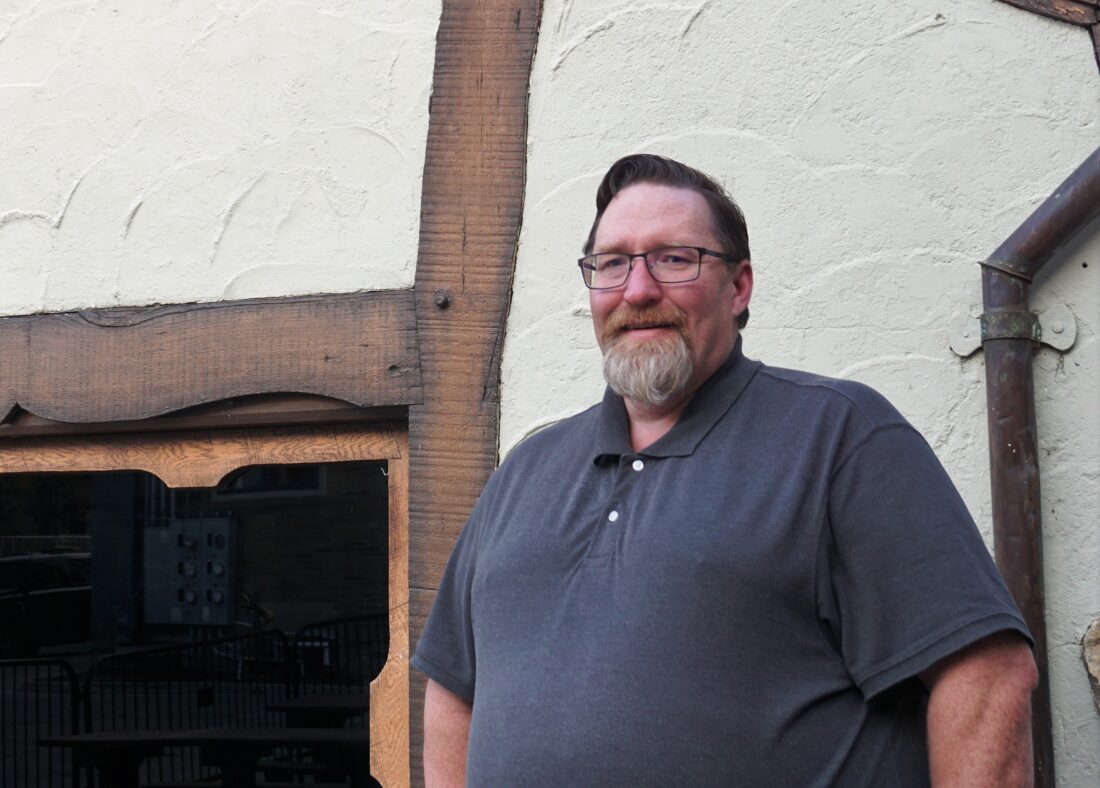
Scott Burlingame stands outside a downtown brewery that is part of the flavor of the community. The city council candidate says Minot has much to offer for a town of its size.
On the state level, he is president of Affordable Housing Developers Inc., a nonprofit community housing development organization, and has served on statewide commissions on employment, housing, education and home and community-based services.
Burlingame said he is familiar with working with local legislators and appearing at the Capitol on issues related to funding and community.
Nationally, he is past president of the Association of Programs for Rural Independent Living.
People sometimes say government should run like business, but Burlingame argues it should run like a nonprofit. A nonprofit must operate within a budget but it exists to provide a service, he said,
“Within the budget, we have to work very, very hard to provide the best possible services that we can. When we do that, we make this a better community to live in. And that helps all employers out with retention and it helps out with recruitment, so that we can fix our workforce problems and that we can be a place that people want to live in. So I think that’s one of the most important things that I really want voters to understand about this election,” Burlingame said.
Streyle, who very narrowly lost in June’s Republican primary for the District 3 House seat, said he is running for city council because he wants to serve and sees the council as another place where he can do that.
A Minot banker, Streyle represented Minot in the North Dakota House from 2011-18.
He said relationships built during his time in the Legislature would be valuable as Minot seeks state funding for flood protection. As a former member of the House Appropriations Committee and interim committee that oversaw water funding, Streyle said he understands what needs to be done to accelerate state flood protection funding from seven bienniums to five, finishing the project in 10 years and saving significant money for taxpayers. He estimates the savings at more than $50 million.
“That’s obviously a priority. I think the biggest issue Minot has had is just stagnant growth. Obviously, the last year has been pretty good,” he said, citing the new hospital and school under construction, some major business remodels and expansions and multi-use developments such as The Tracks.
“I’m incredibly optimistic for Minot. But we need to do a better job,” Streyle said. “I want Minot to be the best place to do business, and I don’t think it’s quite there yet, but I think we can get there. We need to use all the tax tools that we have at our disposal.”
A top issue for Burlingame is addressing the childcare shortage in the city. He believes the MAGIC Fund should help.
“I think we have to be more creative and innovative with that. I think that we need to start looking at economic development as first and foremost an employee issue. Because when we have employees, we can build economic development. And part of the way you start that is by starting with childcare,” Burlingame said.
He cited models that exist in other communities for using economic development dollars to provide loans and grants to reduce the cost associated with starting daycares.
He also would prioritize flood protection.
“Costs are going up all the time, and so the quicker we can get flood protection done, the better we will be,” Burlingame said.
Once the Northwest Area Water Supply Project is fully funded, the portion of sales tax going to that project should be quickly invested in flood protection, Burlingame said. Streyle also would move as much of the NAWS tax as necessary to flood protection.
In addition to accelerated flood protection, Streyle would like to see the council encourage development of land with existing infrastructure.
“Our biggest issue I see right now is there’s not a lot of housing in Minot,” he said. “It’s incumbent that the city council push super hard — the city push super hard — to sell ourselves to developers.”
That includes incentivizing construction of homes that qualify as affordable, he said.
“If we don’t have affordable places to live, the city’s going to be stagnant for the next decade,” Streyle said. “If we don’t have housing to fill, we’re not going to fill the jobs.”
The workforce shortage is serious enough that the city needs to think outside the box and take some risk, Streyle said. The city may need to invest in infrastructure or leverage the MAGIC Fund in aggressively promoting Minot as open for business, he said. The city needs to ask what it can do for developers rather than tell developers what they need to do, he said,
“We need to flip the narrative and go on the offense. I don’t think we’ve done that real well in the last decade. So that, to me, is economic growth. Broadening the tax base is the only way we can flatten property taxes,” he said.
Streyle said he wasn’t completely satisfied with the way the affordable housing dollars were spent in the resilience program and suggests the city get creative with the limited dollars remaining. The focus should be transitioning mobile home residents who will be displaced in future segments of flood protection construction, he said,
Streyle also considers the partnership with Minot Area Chamber EDC to be critical. The entire community needs to be on the same page regarding economic development, with more collaboration among the entities that are the main drivers of that activity, he said.
Burlingame said he has been pleased with the city resilience program’s affordable housing initiative and the success associated with the remodel of the Milton Young Towers, which serves seniors and people with disabilities. However, he noted the discussion on affordable housing really needs to be about workforce housing.
“That’s important that we have that so that we can fill those jobs. And when we have those people in our economy and when we’re filling those jobs, it helps to stimulate the economy and helps to create more sales taxes,” he said.
He shares Streyle’s concerns about the impact of buyouts on mobile home parks in east Minot.
“I really don’t think that we have much of a plan for where those people are going to go. We need to begin that conversation now. Those are, again, your working folks,” he said. “Not only do we need those folks, but we need more people like those folks. And so we’ve got to get in front of that issue.”
Burlingame also has been involved in the effort to bring a family homeless shelter to Minot.
“When folks experience homelessness, it is often the worst time of their life, and the last thing we need to do is to rip families apart during that time. So being able to establish that and being able to provide better services and to help people get back into housing and get back to employment, it’s the right thing to do for our community. So I’m really looking forward to seeing that completed,” he said.
On recycling, both candidates favor a volunteer curbside program.
“When workforce comes here, and they see we don’t have recycling, we don’t look like we’re being good stewards,” Burlingame said. He would look for ways for businesses and multi-family residences to have access to the recycling made available to homeowners.
“An important part of this is, obviously, our landfill is getting full. Creating a new landfill is going to be very expensive. So the longer we can get life out of that landfill, the better it is for our taxpayers,” Burlingame said.
Relocating the landfill may not be a viable option given the costs and difficulty in finding a new location, but Burlingame said he is willing to have the conversation.
Streyle said he wants a recycling program to be easy to participate in, with costs kept as low as possible.
”Recycling is expensive,” Streyle said, “but if it’s done, and it’s accepted by the community, it’s going to save money in the long run, just because the landfill costs are so expensive, and it’ll give us more time — a lot more time, potentially decades more time out of the landfill.”
Streyle said the cost, regulations and the difficulty in identifying a new landfill location make a move almost impossible.
“So we have to make do with what we’ve got, and there’s been some stumbles along the way, but I think it’s probably headed in the right direction now,” he said.
Regarding wayfinding signage, Burlingame said he supports welcoming community visitors with signage to help them get around, but he also shares the public’s concerns about the price tag.
Streyle said the first phase of wayfinding signage, approved by the council using economic development sales tax dollars, is worthwhile. He said future phases will depend on community response.
Other issues identified by Streyle include investments in city streets. The city budgeted an extra $2.5 million for street maintenance in 2023.
“With inflation, you’re not going to get two and a half million. Unfortunately, you’re going to get less, but at least we’re plowing some money back into maintenance because the maintenance curve hasn’t looked good,” Streyle said. ”If we can keep pushing it, we’re going to bend that curve, where we’re not going to be behind the eight ball. So to me, that’s really important.”
Communication in the budget process is important to Burlingame. The council should set direction but rely on its staff professionals for recommendations if cuts or investments are necessary, he said.
“From an outsider’s perspective, that wasn’t happening enough. There’s a little bit too much micromanagement from city council and not enough collaboration,” Burlingame said. “There may be times when hard decisions have to be and I’m certainly not afraid to make hard decisions. I’ve spent my entire life living under a limited budget and trying to make the best decisions. I’m not afraid of any of those decisions. But at the same time, I just think that the more that you can involve the experts as you’re making that decision, the better it is.”
Both candidates see a bright future for Minot.
“I’m super optimistic,” Streyle said. “I actually don’t think it’s a negative that Trinity is leaving downtown. I think it could be huge positive actually.”
He sees room for more housing and a student presence that goes beyond the proposed career and technical center.
“Downtown is turning the corner,” he said. “I think there’s a lot of upside.”
“There’s so many examples of us doing things right in Minot,” Burlingame said, citing the arts, local dining options and the recreational and sports activities. “We’re a smaller community, but we packed a lot of bang within that community. So I’m just so excited about the potential.”
Local News

Time capsule, sculpture highlight pioneer reunion
Defendant in Spirit Lake shooting pleads guilty
A Fort Totten man has pleaded guilty to two separate counts of assault and voluntary manslaughter in U.S. District ...

Moen Family musicians return to Frozen Fingers Festival
Accommodating growth

Discovery well anniversary