Minot’s Animal Control has its hands full
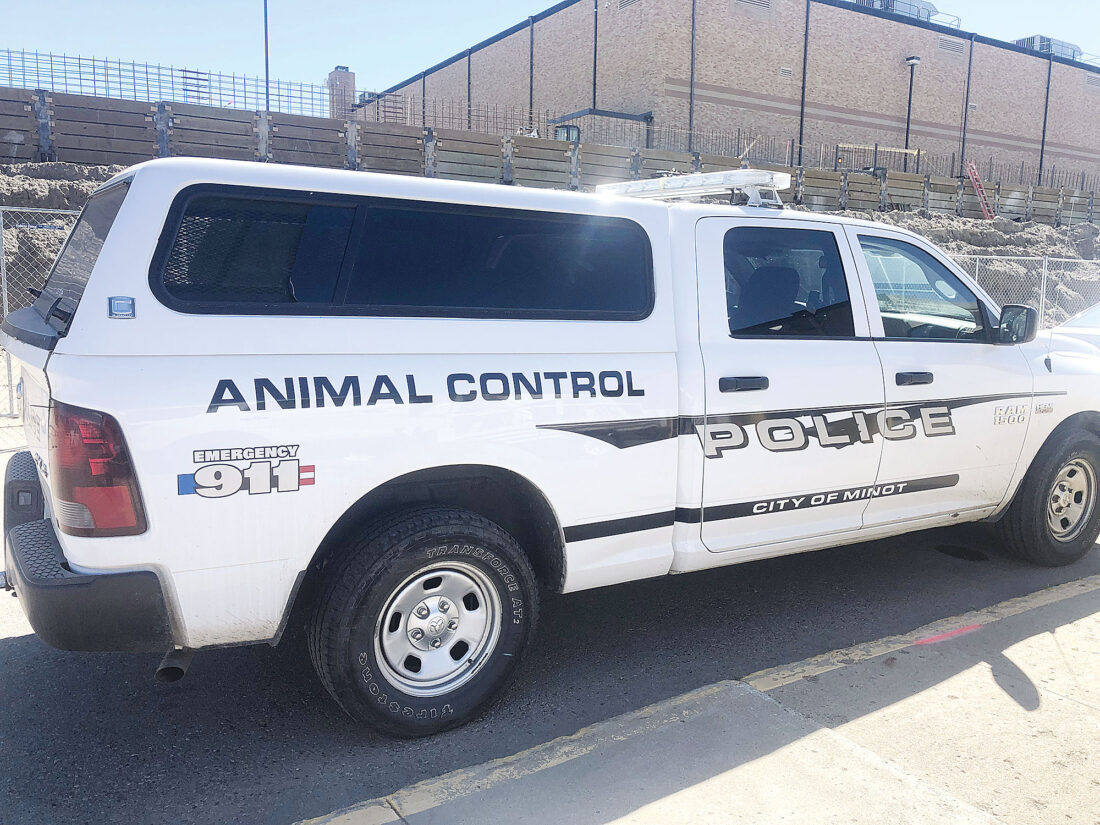
Charles Crane/MDN The Minot Police Department’s Animal Control officers have been kept busy this year, with more than 500 animals processed through the city pound in the first three quarters of 2022.
America is a nation of animal lovers, and North Dakotans are no exception.
Everywhere you look there’s no shortage of listings, signs, and postings advertising a new litter of something for sale, and they usually go quick. The unfortunate reality is that as animals, our four-legged friends sometimes misbehave, can be hard to control, or are experienced and committed escape artists. Sometimes these animals wind up on the street, incompatible with their would-be owner and without a home.
Who are you supposed to call when your manic Husky has kicked into hyperdrive and bolted through your open front door or a strange aggressive dog is chasing you on your morning walk with bared teeth and an unhinged look in its eyes?
The answer is simply to contact local law enforcement or an Animal Control officer (ACO). Their distinctive white vehicles are visible throughout the Minot metro from dawn until dusk, as they address everything from loose dogs to random wildlife wandering through town. There are two Animal Control officers in the Minot Police Department who work two shifts, Bobby Roberts and Mary Lovro. All animal-related calls made after 11 p.m. are handled by regular patrol officers.
Bobby Roberts has been on the job for nearly 20 years. After moving to Minot from California in 2004, Roberts decided to jump at the opportunity when a spot opened up in Animal Control. The work of Roberts and his partner often involves a great deal of interaction with pet owners and their neighbors, who often clash around concerns over barking or compliance issues.
“My main purpose is to just simply explain things to educate you, hopefully to get it corrected so I don’t have to do more. The dog is barking, and I just need you to try to keep your dog quiet,” Roberts said.
Half of the battle with even addressing complaints like barking and bites, Roberts believes, is the lack of follow-through by those calling them in. Local social media pages often spotlight and signal boost such stories about loose dogs roaming and biting people, but there is very little an ACO can do if individuals who call it in don’t sign a complaint, and testify in court.
“I’m not the one who has to deal with that dog coming back and biting you again or that dog barking at 12 o’clock at night. You are,” Roberts said, “If it just sticks with talking, there’s a reason some people never change because nothing ever happens.”
Such frustrations are not new in law enforcement but have only been exacerbated by gossip and chatter online over perceived inaction to address such concerns around unleashed animals and the presence of banned breeds like pit bulls and their many variations.
“Until somebody says, ‘Okay, now you go and see a judge for it,’ then you have no reason to stop,” said Roberts, “I want to be able to help, but when you say you don’t want to (go to court), it’s like you’re cutting me off at the knees.”
While most encounters with loose animals result in a quick return to their owner, a growing number are strays or abandoned. Such animals are taken to the Minot City Pound, which has shared space at the Minot Veterinary Clinic since the 1990s. The city pound is paid for through the City of Minot’s budget, who contracts the Minot Veterinary Clinic to collect fees and provide care for the animals brought into the pound.
What happens to the animals once they are picked up by an ACO has been a source of misconceptions and controversy for many in the community. The pound can house up to 10 animals and holds them for three full business days. During that time, the animals can only be picked up by their owners, some of whom are locked up themselves. After the three days are over, the animals become the property of the Minot Veterinary Clinic. The majority are taken in by local animal rescues. The city pound does not handle adoptions and has a working relationship with local animal rescues to facilitate them.
While animals that don’t land somewhere else after three days are euthanized, according to Roberts, simply looking at the numbers of euthanized animals and condemning it is missing the context behind each individual case. Euthanized animals are often considered beyond intervention, and therefore poor candidates for rehabilitation and rehoming.
“The ones who get put down, you don’t want to be near. They’ve been court ordered because they’ve been involved in bites or they’re aggressive and unsafe, or they have health issues,” Roberts said, “A lot of that stuff doesn’t actually pop up when you do a numbers request on how many were put down this week. I have found even when you tell people exactly why something happened, it’s never good enough.”
To be classified as a “no-kill” facility, at least 90% of animals must leave alive. Of the four major shelters in the Minot metro, all of them maintain that 90% rate. Even the pound’s numbers put it in the “no-kill” designation as of July 2022.
“On paper, there are no-kill shelters, but what they’re really doing is passing the burden off on somebody else to do the job,” Roberts said, “If we don’t have anywhere to put them then we don’t have a choice anymore.”
Roberts urges people who are interested in getting a dog or cat to look at shelters and rescues first before going to a pet shop. While the City may not have the resources to properly vet and rehabilitate animals for rehoming, shelters and rescues do, ensuring as many animals as possible are adopted and integrated into homes.
Even with all of the support and activism coming from the various shelters and rescue organizations, the number of animals running through the pound this year has increased a great deal. 2021 had around 700 total for the year, with 2022’s numbers already over 500 at the end of this month. Roberts estimates that the final numbers could reach as high as 1,000 animals by the end of the year.
“If someone is bitten by a dog, I need to be able to pick up the dog and take it somewhere. I don’t have the option of just letting it run until a spot opens up,” Roberts said, “These rescues can’t just keep the dog forever. But if you bring it in and then send it out because there’s a family looking for a dog, the less we have to put down.”
Local News

Time capsule, sculpture highlight pioneer reunion
Defendant in Spirit Lake shooting pleads guilty
A Fort Totten man has pleaded guilty to two separate counts of assault and voluntary manslaughter in U.S. District ...

Moen Family musicians return to Frozen Fingers Festival

Accommodating growth

Discovery well anniversary