Fund is important way for people to help ND wildlife
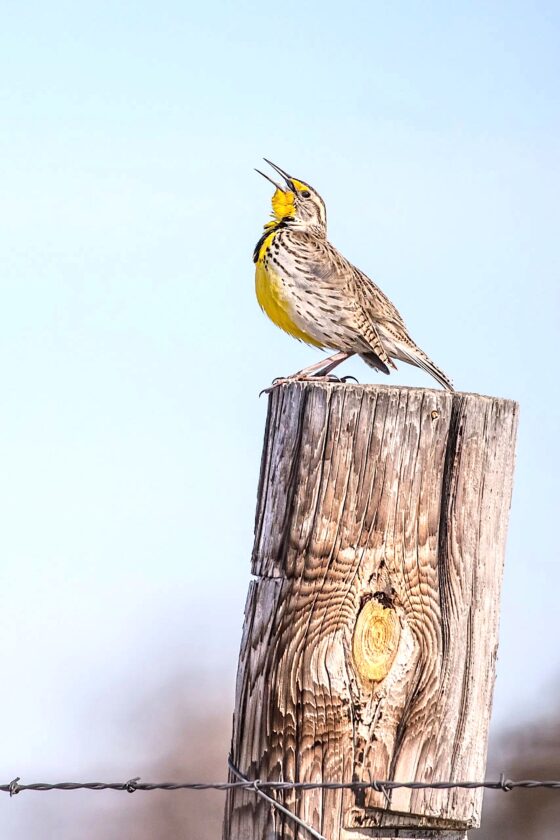
Submitted Photo While game species often get the headlines, it’s the nongame wildlife – the bulk of North Dakota’s fish and wildlife – that quietly fills the prairies, coulees and river bottoms. Photo from NDGF
Almost 40 years ago, legislators heard from folks who wanted to do a little more for the critters most of us don’t see every day. While game species often get the headlines, it’s the nongame wildlife – the bulk of North Dakota’s fish and wildlife – that quietly fills the prairies, coulees and river bottoms.
What came out of that push was the Nongame Wildlife Fund, a simple but important way for people to lend a hand. It allowed conservation-minded citizens to support nongame species, and it gave the Game and Fish Department the footing it needed to build a program focused on animals that don’t fall under hunting or fishing seasons.
The fund’s purpose is straightforward: enable conservation work, learn more about nongame species, protect those at risk, and help people connect with the wildlife they don’t always notice.
And just like the mission, the way to contribute hasn’t changed. The Watchable Wildlife checkoff on your state tax form is still the easiest way for anyone to support nongame conservation. It’s voluntary whether you get a refund or not.
“When the fund was enacted in 1987 it really allowed us to add to our nongame budget in North Dakota,” said Patrick T. Isakson, conservation supervisor for the department. “Since then, other funding sources have helped boost research, but back then the Nongame Wildlife Fund was the cream of the crop.”

Doug Leier
These days, the checkoff brings in around $20,000 each year. It’s steady, and as Isakson notes, it matters: “There just aren’t a lot of funding sources for nongame species and watchable wildlife. Even today, the fund supports some great projects.”
One of those projects in recent years involved long-billed curlews in southwestern North Dakota. Researchers fitted males and females with GPS and satellite transmitters to get a better handle on where they travel and how they use habitat here and across the landscape.
The fund also helped with the development of Clairmont Family Conservation Park in Bismarck – an urban spot designed to make wildlife and wildlife habitat more accessible. Trails, interpretive signs and open space help visitors understand the nongame species using the area.
The roughly $20,000 donated annually isn’t spent right away. “Many times we set money aside for a few years so we can make a bigger impact,” Isakson said. “Sometimes that means paying for a full project after money builds up. Other times it helps fill gaps when a project comes up short on funding. That’s where the nongame fund really shines.”
Years ago, the department promoted the checkoff with a poster featuring the winning image from the Watchable Wildlife Photo Contest. While the poster has faded into history, the contest is alive and well.
“I’m always impressed with what people are seeing outdoors,” Isakson said. “Those photos show that people are out there enjoying wildlife beyond hunting and fishing. We’ve got hundreds of species in this state, and many folks appreciate them.”
For Game and Fish, that focus is central. “We’re responsible for all wildlife in the state,” Isakson said. “So, it’s important we continue supporting and managing species people don’t necessarily hunt or fish for. The fund helps us do that.”
Doug Leier is a NDGF biologist and a Williston native. He began his career at Lostwood NWR and was a game warden in Bottineau.
-
- Submitted Photo While game species often get the headlines, it’s the nongame wildlife – the bulk of North Dakota’s fish and wildlife – that quietly fills the prairies, coulees and river bottoms. Photo from NDGF
-

- Doug Leier
Outdoors
Fund is important way for people to help ND wildlife
Almost 40 years ago, legislators heard from folks who wanted to do a little more for the critters most of us ...
Importance of private land for wildlife, hunting In ND
North Dakota Outdoors: Why high-grading isn’t legal in ND
North Dakota Outdoors: Shed hunting brings about concerns

North Dakota Outdoors: ND outdoors’ goals ensures programs for generations