North Dakota Outdoors: Program’s goal is safe hunters
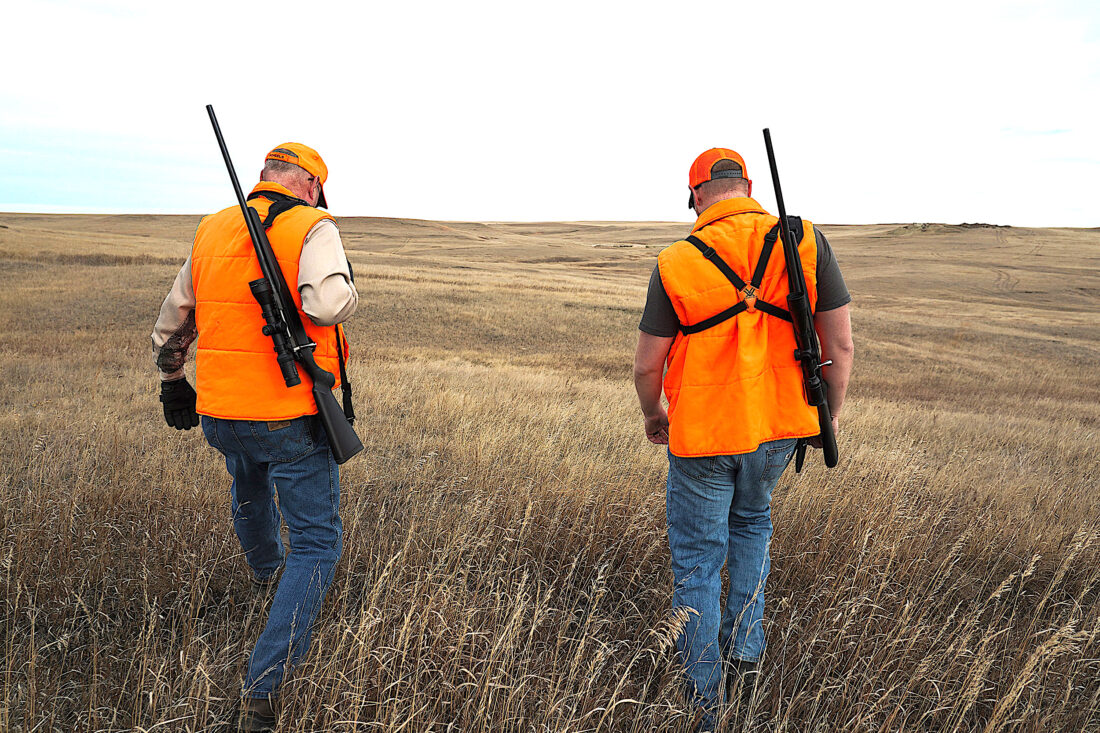
Submitted Photo At its core, hunter education is about firearm safety. Photo from NDGF.
The North Dakota Game and Fish Department’s hunter education program passed a milestone last year, graduating roughly 250,000 students since its inception in 1979, which is a remarkable number for a state with fewer than 1 million residents.
Hunter education is required in North Dakota for anyone born after Dec. 31, 1961. The program has become the foundation of safe, responsible hunting across the state.
Reaching a quarter-million graduates didn’t happen by accident. According to Brian Schaffer, the department’s hunter education coordinator, the credit belongs largely to volunteers spread across North Dakota, from Grand Forks to Bowman. Some of those instructors have been teaching since the program’s early years.
“It’s really quite the accomplishment,” Schaffer said. “In a state our size, to have more than 250,000 people go through hunter education means we’ve made hunting safer, not just for hunters, but for everyone in North Dakota.”
Hunter education programs began appearing around the country in the 1950s, largely in response to hunting-related accidents and fatalities. North Dakota adopted the concept through state law more than 40 years ago, with safety as the primary goal.
“The original focus was reducing fatalities, and nationwide it’s done exactly that,” Schaffer said. “At its core, hunter education is about firearm safety.”
For many students, hunter education is their first exposure to firearms. Schaffer stresses that while the class provides a foundation, safe firearm handling is a lifelong responsibility.
“You don’t master firearm safety in 14 hours,” he said. “It’s something you commit to for the rest of your life. Sometimes that’s just having a conversation with the people you’re hunting with, or taking a moment to think before you load a firearm and head into the field.”
While firearm safety remains the centerpiece, the curriculum also introduces students to wildlife conservation, landowner relations and basic field safety – all essential parts of being a responsible hunter.
North Dakota offers two ways to complete the hunter education requirement. The traditional option consists of 14 hours of in-person instruction taught by volunteer instructors over several days. The second option, which has grown in popularity, combines online learning with two required in-person sessions.
The home study option begins with an initial classroom meeting focused on North Dakota-specific regulations and hands-on firearm safety. Students then complete the online coursework at their own pace over about two weeks before returning for a final session where they must pass the same written and practical exams as traditional students.
Most courses are offered between mid-January and June, a schedule that developed around hunting seasons and the deer lottery.
“In smaller communities, there might only be one or two classes a year,” Schaffer said. “And in larger cities like Bismarck, Minot, Fargo and Grand Forks, classes can fill quickly.”
He encourages people who need hunter education to start looking early and to keep checking the online course listings, which only show classes a few weeks in advance.
Behind it all are the volunteers who keep the program running. Some have decades of experience, while others are new, but the department is always looking for more help.
“If you have a passion for hunting and education, there’s a place for you,” Schaffer said. “Even helping out on test night makes a difference. This program is built on community involvement, and we appreciate every bit of it.”
Outdoors
North Dakota Outdoors: Managing coyotes is about understanding them
Fund is important way for people to help ND wildlife
Almost 40 years ago, legislators heard from folks who wanted to do a little more for the critters most of us ...
Importance of private land for wildlife, hunting In ND
North Dakota Outdoors: Why high-grading isn’t legal in ND
North Dakota Outdoors: Shed hunting brings about concerns