
Our American Story: Feeding a nation: Agriculture, cooperation and civic duty
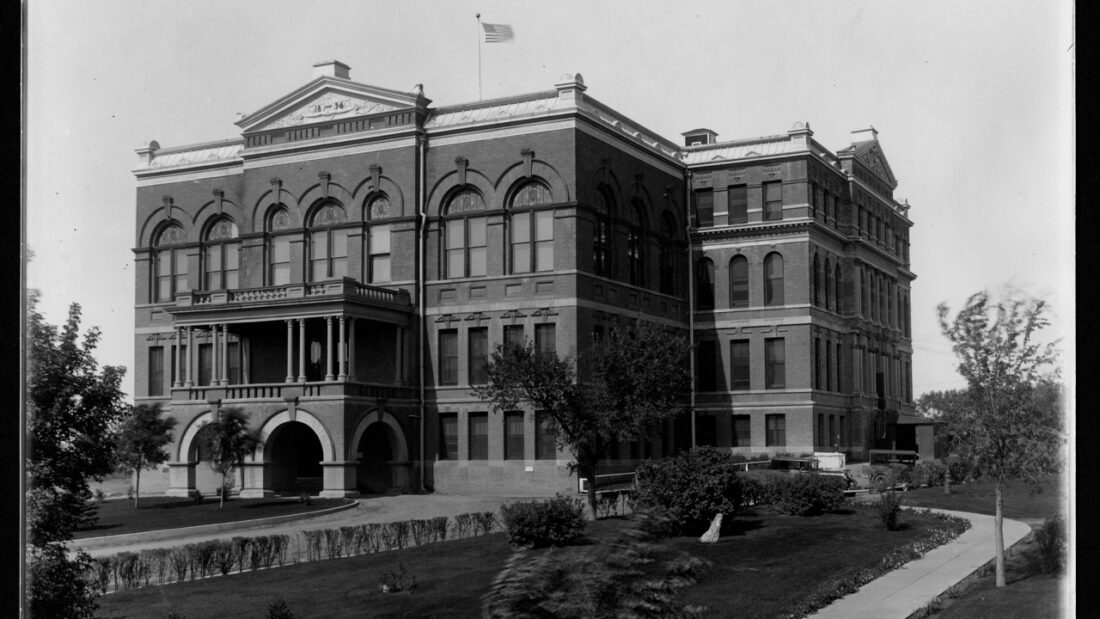
Submitted Photo The Bank of North Dakota was created in 1919. Credit: SHSND C0914-00001
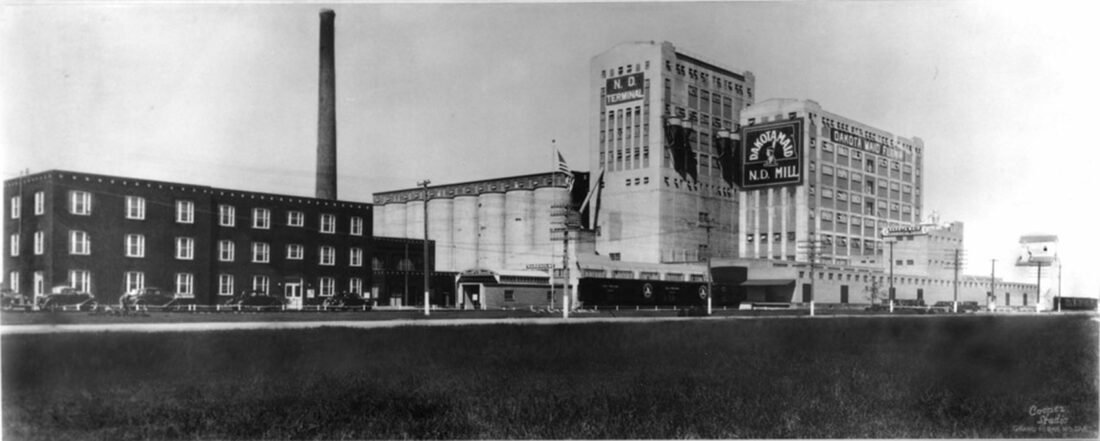
Submitted Photo The North Dakota State Mill & Elevator was created in 1922. Credit: SHSND E0935
Submitted Photo The Bank of North Dakota was created in 1919. Credit: SHSND C0914-00001
Submitted Photo The North Dakota State Mill & Elevator was created in 1922. Credit: SHSND E0935
Trending
Throughout 2026, the ND250 Commission, administered by the State Historical Society of North Dakota, is leading the state's commemoration of the 250th anniversary of the founding of the United States. Through meaningful, inclusive, and inspiring projects and events, the commission celebrates North Dakota's rich history, diverse people, and bright future while honoring the state's heritage, individual values, and spirit of community.
With spring seeding underway across North Dakota, it's a timely reminder that agriculture has always been more than a livelihood. It has been a foundation for national leadership, helping feed a growing nation while shaping how communities organize, cooperate, and govern.
North Dakota has a rich history in agriculture. We can go back nearly 2,400 years and find records of people who lived near the Red River and the James River who began harvesting wild seeds and growing plants for the harvest of food and fiber. Additionally, around 800 years ago the Mandan and Hidatsa Indians were the first to begin farming as a business. It's clear that from the earliest days North Dakota was one of the most productive agricultural regions in the country. And as settlements grew, fertile soils, expansive land, and determined farmers positioned the state as a national leader in crops such as wheat, barley, and flax and later canola, pulses, and sunflowers.
But production alone was not enough.
Farmers could grow the crops. The challenge was everything that came after.
Distance from markets, railroad shipping costs, grain grading systems, and limited access to capital often left producers at a disadvantage. North Dakota farmers were helping feed the nation, yet they saw little profit for the crops they produced.
That reality became the driving force behind one of the most defining characteristics of North Dakota agriculture: cooperation.
In the late 19th and early 20th centuries, farmers began organizing locally to solve these challenges together. Early cooperative elevators such as Valley United in Reynolds (1899), Hoople Farmers Grain Company (1906), and Finley Farmers Grain & Elevator (1911) allowed producers to market their own grain, improve pricing, and gain more control over their operations.
By the 1910s, the cooperative movement had taken hold across the state. These were not just business ventures. They were community institutions, owned and governed by the people they served.
This spirit of cooperation extended beyond economics and into civic life.
During the early 1900s, many North Dakota farmers faced mounting financial pressure. In response, they organized politically through the Nonpartisan League, a grassroots movement that sought to give farmers more control over their economic future.
Their efforts led to the creation of two of the most unique public institutions in the United States: Bank of North Dakota in 1919 and the North Dakota State Mill & Elevator in 1922. Both organizations were designed to keep more value within the state and support local producers.
As agriculture expanded, so did the need for larger-scale coordination. Cooperatives extended beyond grain marketing into fuel, supplies, and infrastructure. Farmers Union Oil Companies, now known through the Cenex brand, began as local buying groups, helping producers access essential inputs at competitive prices as early as the late 1920s.
These systems built the foundation for a resilient agricultural economy and strong local communities.
Grower-owned cooperatives also advanced value-added agriculture. Organizations such as American Crystal Sugar Company and Golden Growers Cooperative allowed producers to share in the returns of processing and marketing their crops, expanding North Dakota agriculture beyond production and into long-term economic leadership.
At the same time, agricultural organizations helped unify farmers' voices. North Dakota Farmers Union and the North Dakota Farm Bureau were two of many that emerged to advocate for producers, strengthen rural communities, and influence policy.
At its core, cooperation was not only an economic strategy. It was a civic one.
Farmers who helped build cooperatives often served on school boards, township boards, and held local leadership roles. They understood that strong communities required participation, shared responsibility, and long-term thinking.
This reflects a broader American principle first introduced in 1776 -- that government derives its authority from the people. In North Dakota, that principle took shape through agriculture, where individuals worked together not only to produce food, but to build systems that supported entire communities.
Today, North Dakota remains a national leader in agriculture, consistently ranking at or near the top in the production of numerous commodities. The state's farmers continue to feed communities across the United States and around the world.
More than a century later, the systems built by North Dakota farmers; grower cooperatives, organizations, and institutions continue to ensure that agriculture thrives not just for one generation, but for many.
As part of ND250, North Dakotans are encouraged to reflect on their role in the American story and on the people and industries that shaped not only the state's economy, but its civic identity.