
Christmas season tradition
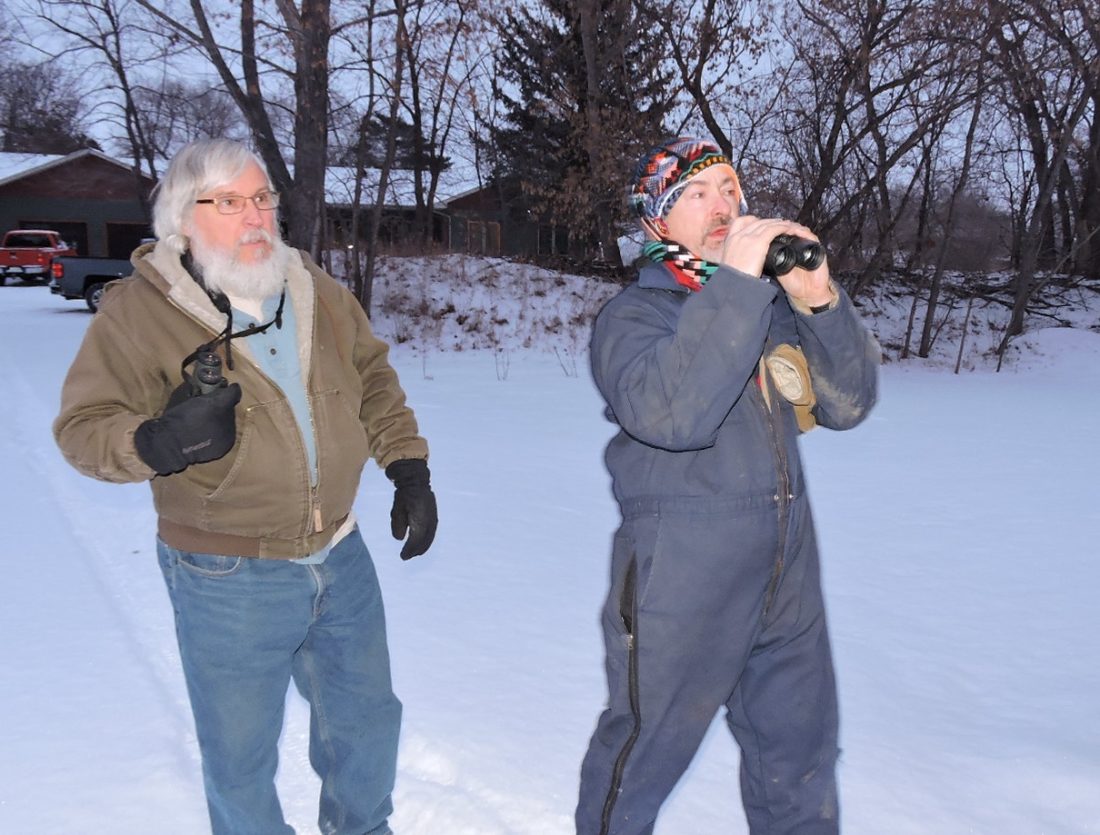
Kim Fundingsland/MDN Ron Martin, left, and Joe Super, both Minot, were among those getting an early start to Minot’s Christmas Bird Count held last Sunday. The count has been held every year since 1981.
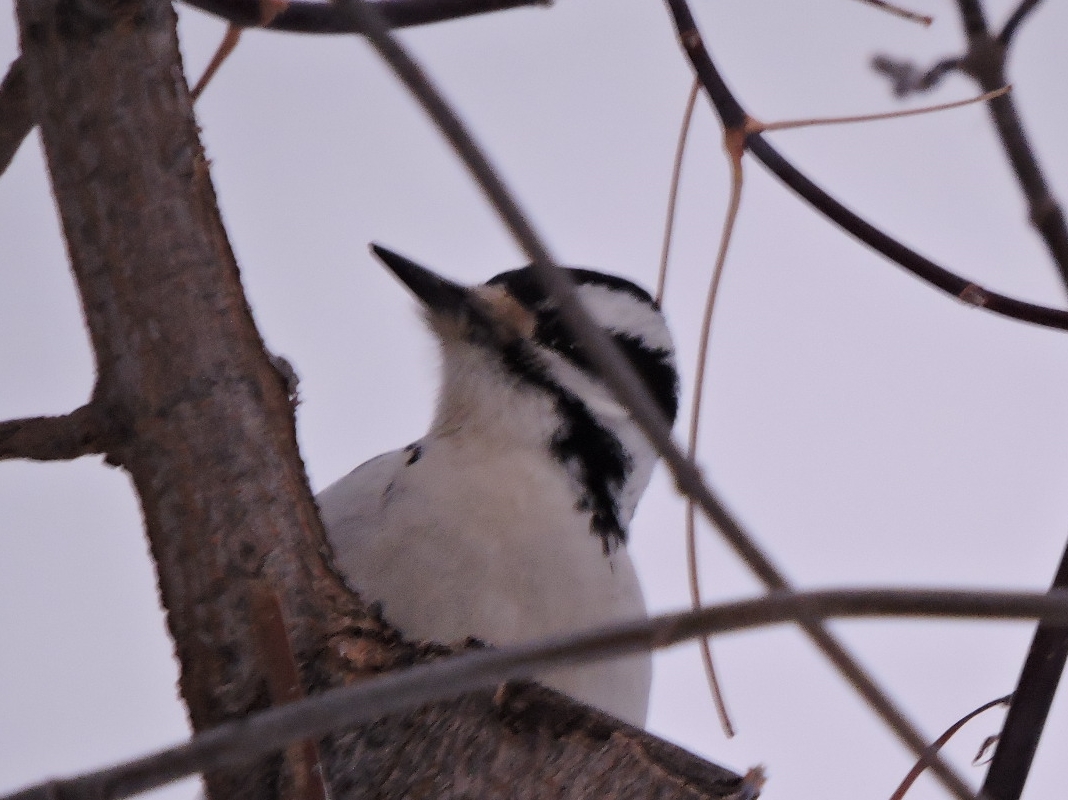
Kim Fundingsland/MDN This hairy woodpecker was spotted on Minot’s west side last Sunday. The smaller downy woodpecker also winters in the region.
Kim Fundingsland/MDN Ron Martin, left, and Joe Super, both Minot, were among those getting an early start to Minot’s Christmas Bird Count held last Sunday. The count has been held every year since 1981.
Kim Fundingsland/MDN This hairy woodpecker was spotted on Minot’s west side last Sunday. The smaller downy woodpecker also winters in the region.
Trending
It might be the sound, or the pattern of flight or even their surroundings. All are important indicators regarding the identity of many birds and are well known to bird enthusiasts.
Many area birders have been putting their knowledge and enthusiasm to the test this month by participating in annual Christmas Bird Counts. Results of the counts are submitted to the National Audubon Society who uses the data to compile the status of thousands of species of birds throughout the world.
Minot's Christmas Bird Count was held this past Sunday. The count was originally scheduled for last Saturday but a forecast of strong winds, which causes birds to take shelter rather than expose themselves to the elements, caused organizer Ron Martin make the decision to wait an extra day. It was a good choice. Nearly perfect conditions for bird watching was the result.
"We've been doing this since 1981 here in Minot," said Martin. "It gives us a nice comparison to see where things are going these days."
Martin and fellow birders have seen many changes in both the number of species observed and total birds counted since those first Christmas Bird Counts. The trend of bird numbers has been spiraling downward.
"When I first started doing this, 35 years ago, we'd go out in the fields and there would be thousands of birds. It was so hard to count because there was so many," said Sherry Leslie, Minot. "Now we're down to just a very few. Not only are the species down but the numbers too."
A dozen bird watchers participated in last Sunday's Christmas Bird Count in Minot and the surrounding area. Earlier counts were held at Garrison Dam and Lostwood, Des Lacs, J. Clark Salyer and Upper Souris National Wildlife Refuges.
A few oddities, birds seldom seen in North Dakota, included a lone varied thrush and four long-tailed ducks. The range of the varied thrush is generally limited to the forests of the Pacific northwest. The breeding ground of long-tailed ducks is north of the Canadian provinces and its wintering area is centered on the Great Lakes region. Long-tailed ducks making an appearance in North Dakota is very rare.
While unique and uncommon sightings add to the enjoyment of bird watchers participating in area counts, it is the long running compilation of species and numbers counted that remains the most important contribution to the annual project.
"The Christmas Bird Count has been a great phenomenon, a citizen science project that has made such a difference," said Joe Super, Minot, a high school biology teacher and participant in last Sunday's count. "It's a great thing to carry on. I bring high school students out to get them interested. I've had some go on to get their PHD's, so I've been really blessed to be a part of it. It's what Audubon would have identified as a great thing to do."
Birders of all ages and experience levels work together for a common cause during the Christmas Bird Counts, and they share a common value.
"The thing about bird watching, I feel, is that the study of birds kind of tells you about the whole state of the environment," said Rod Fossen, Minot. "By knowing about birds you can know about the picture of the total environment."
Birds respond to climate conditions. Some move to different habitats, if available. Others suffer from declining numbers. During harsh Canadian winters some birds are forced south into North Dakota.
"If there's no forage up north then we get a ton of birds here. The redpolls will be here," noted Super.
"Be it winter or human habitat removal, birds are really the first thing effected in an environment," added Clare Super while taking part in the bird count west of Minot. "This sort of thing is really important to learn what birds are being effected in your area."
For those wishing to learn more about bird watching or become a participant in an area count, there's one opportunity remaining on the calendar. A Christmas Bird Count will be held at the Denbigh Experimental Forest on Saturday, Dec. 29. Anyone interested in participating is asked to meet at the Towner Cenex at 7:45 a.m. that day. The compiler and contact is Ron Martin. He can be reached at 720-1001.