
Boosting the economy
Minot AFB adds $580.4 million to local area
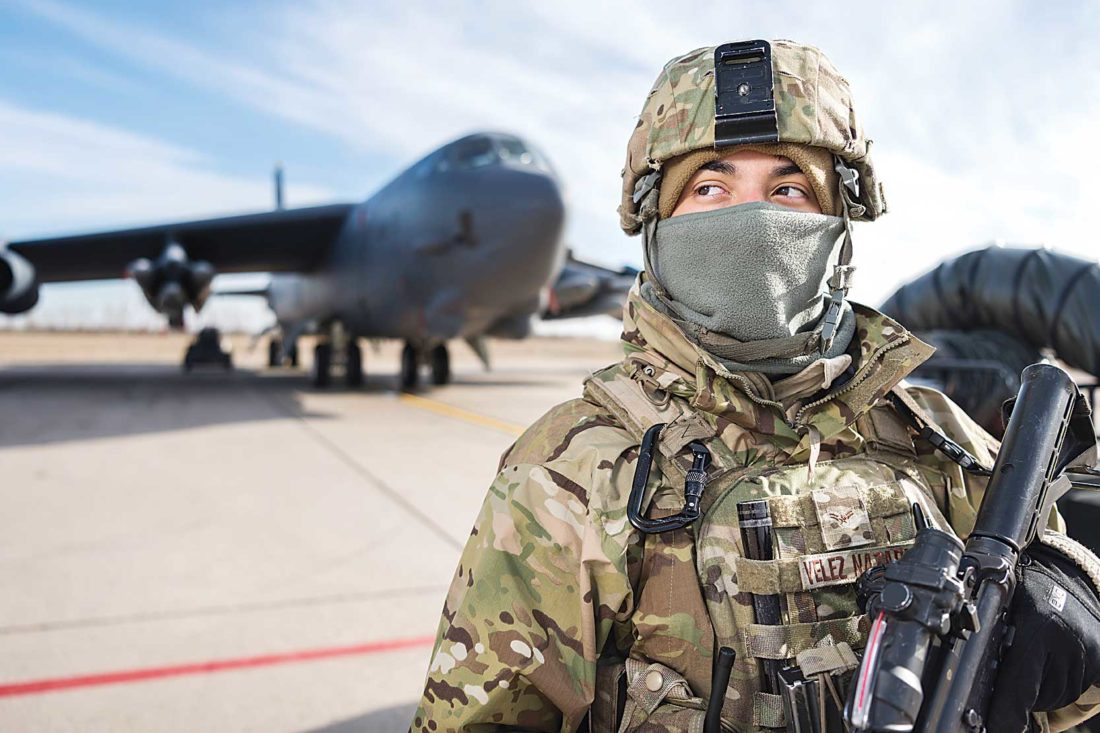
Submitted Photo Airman 1st Class Reinaldo Velez-Nazario, 5th Security Forces Squadron, stands guard at Minot Air Force Base, Oct. 31, 2017, during Global Thunder 18, an annual command and control and field training exercise, shown in this photo by Senior Airman J.T. Armstrong. Minot AFB has more than 5,500 military members.
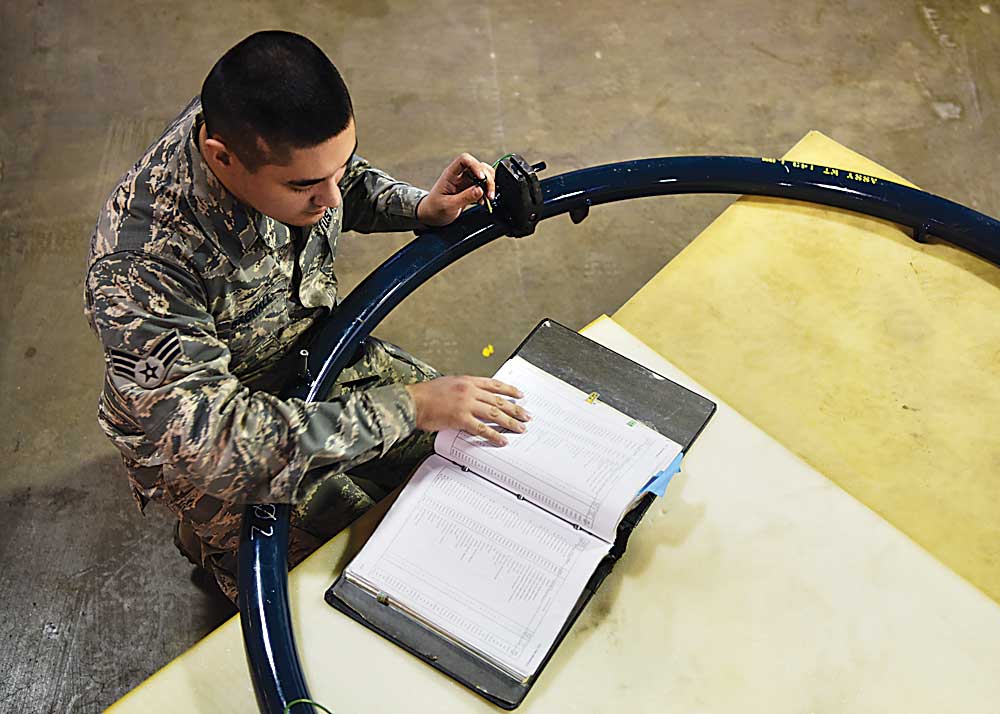
Submitted Photo Senior Airman Nicholas Bagnall, 791st Maintenance Squadron vehicles and equipment section technician, inspects part of a hoist assembly for the Minuteman III intercontinental ballistic missile at Minot Air Force Base, Jan. 8, shown in this photo by Airman 1st Class Dillon J. Audit. The 791st Maintenance Squadron resource flight is operated by 38 airmen who ensure equipment remains operational. Minot AFB’s pay for military members during the past fiscal year amounts to a total of more than $322 million.
Submitted Photo Airman 1st Class Reinaldo Velez-Nazario, 5th Security Forces Squadron, stands guard at Minot Air Force Base, Oct. 31, 2017, during Global Thunder 18, an annual command and control and field training exercise, shown in this photo by Senior Airman J.T. Armstrong. Minot AFB has more than 5,500 military members.
Submitted Photo Senior Airman Nicholas Bagnall, 791st Maintenance Squadron vehicles and equipment section technician, inspects part of a hoist assembly for the Minuteman III intercontinental ballistic missile at Minot Air Force Base, Jan. 8, shown in this photo by Airman 1st Class Dillon J. Audit. The 791st Maintenance Squadron resource flight is operated by 38 airmen who ensure equipment remains operational. Minot AFB’s pay for military members during the past fiscal year amounts to a total of more than $322 million.
Trending
MINOT AIR FORCE BASE - Minot Air Force Base continuously contributes more than half a billion dollars to the local area's economy.
In fiscal year 2017, the base's economic impact came to $580.4 million, slightly lower than the 2016 economic impact of $591.5 million.
Maj. Douglas Bauer, commander of the base's 5th Comptroller Squadron, said some of the key factors for the slightly lower economic impacts in fiscal year 2017 was the decrease in construction projects. However, offsetting that was a 10 percent increase in other procurements such as healthcare services and educational services.
Bauer presented the annual economic impact analysis report at the Minot Area Chamber of Commerce's Military Affairs Committee meeting Thursday in Minot.
He said the report shows the economic impact of Minot AFB has on the local area in terms of payroll, purchases and jobs created. It also shows the level of investment the Air Force is making in sustaining operations at Minot AFB, he said.
"Obviously it takes a great deal of manpower and resources to operate and maintain all the assets associated with the base," Bauer said.
The economic data is calculated by Air Force guidelines and is current as of Sept. 30, 2017.
The total economic impact for fiscal year 2017 is calculated by combining the annual payroll of military members, federal civilians and other civilians employed at the base (more than $381.6 million), annual expenditures (more than $96.9 million); and the annual dollar value of indirect jobs created (more than $101.8 million).
"Many dollars are spent in the Minot community to keep the base running," said Bauer.
The base commissary and exchange spent more than $1.9 million, and medical claims paid to local medical facilities through the TRICARE system totaled more than $11.8 million.
The amount paid to local schools, including for many airmen for off-base education, came to $9.2 million.
Construction expenditures were down in fiscal year 2017 - $46.4 million - compared to the previous fiscal year when construction expenditures amounted to $64.4 million.
Indirect jobs show how base money ripples through the local economy.
An estimated 2,063 indirect jobs were sustained in the Minot area in fiscal year 2017. The number of indirect jobs is determined based on an average annual pay of $49,348, resulting in an estimated annual dollar value of jobs created at $101.8 million.
The base has a fluctuating total population around 12,000 people - military members, family members and civilian employees.
As of Sept. 30, 2017, the base's total population was 12,195, a 1 percent increase. Of that population, 5,551 are military members (2,173 living on base and 3,378 living off base); 5,584 family members (1,268 living on base and 4,316 living off base); and 1,060 civilians in the workforce at the base.
In addition to the figure but not part of the economic model is retired military pay, Bauer said. He said military retirees make up 3 percent of the permanent Minot population and receive a combined income of $32.5 million.
The Minot area has 1,454 military retirees and the majority of them are Air Force retirees along with Army, Navy, Marine Corps and Coast Guard retirees.
The base's economic impact has remained at more than half a billion dollars for several years.
"The overall trend is fairly consistent," Bauer said.
He said a dormitory construction project and other construction along with the increased focus on the nuclear force will continue to provide positive support for FY18.
"The bottom line is Minot Air Force Base will continue to have a positive impact on the city of Minot and surrounding communities in FY18 and beyond," Bauer said.
Minot AFB Yearly Economic Impact
(Fiscal Year)
-- 2012: $522.6
-- 2013: $583.9 million
-- 2014: $577.8 million
-- 2015: $561.3 million
-- 2016: $591.5 million
-- 2017: $580.4 million
The yearly economic impact reached $513.7 million in fiscal year 2010 but dropped the next year - fiscal year 2011 - to $493.3 million, then went up to $522.6 million in 2012 and has remained at half a billion dollars each year since.