
Bright futures ahead
Minot High students plan for STEM careers
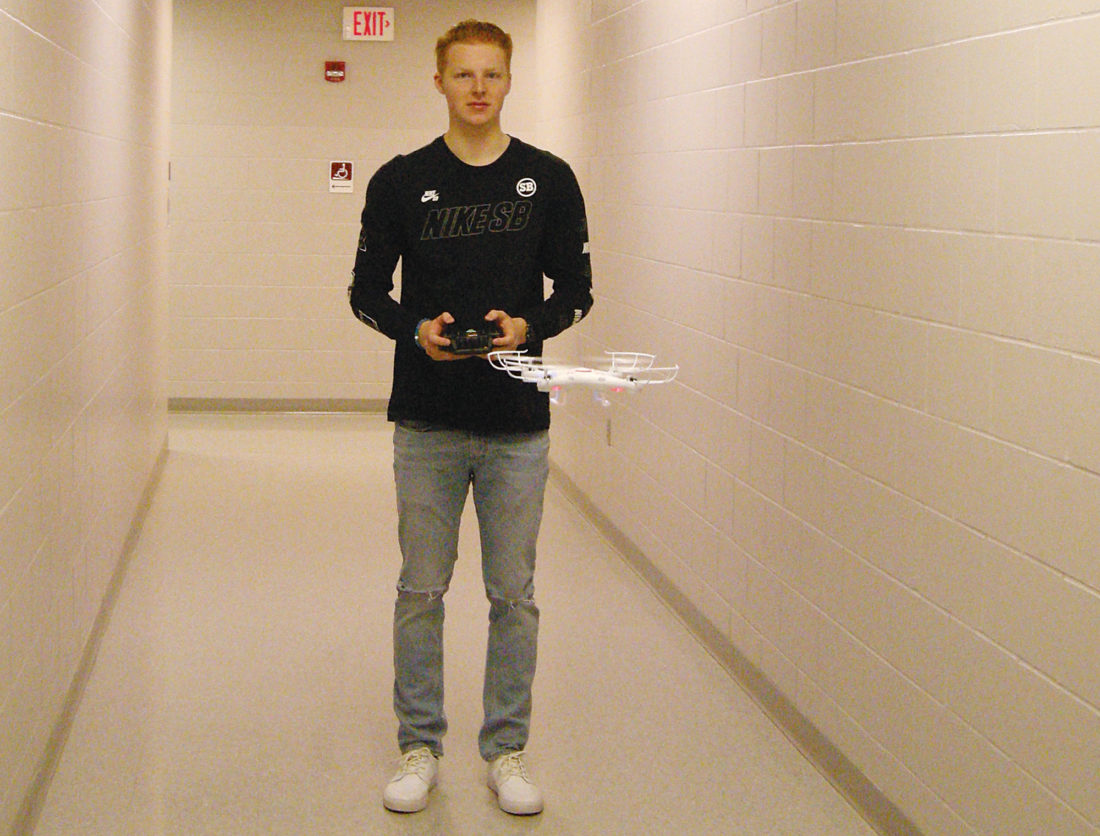
Andrea Johnson/MDN Minot High School-Magic City Campus senior Tyler Vallely flies a drone plane at the school on Jan. 19.
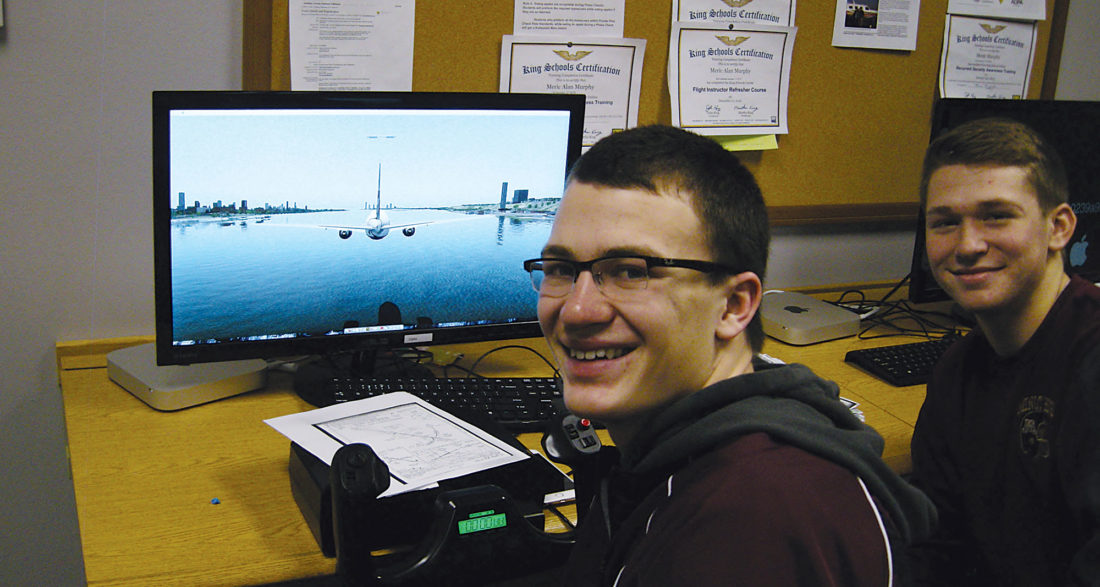
Andrea Johnson/MDN Magic City Campus students Brett Lunde and Noah Tate practice the famous “Miracle on the Hudson” landing on a simulator on Jan. 19.
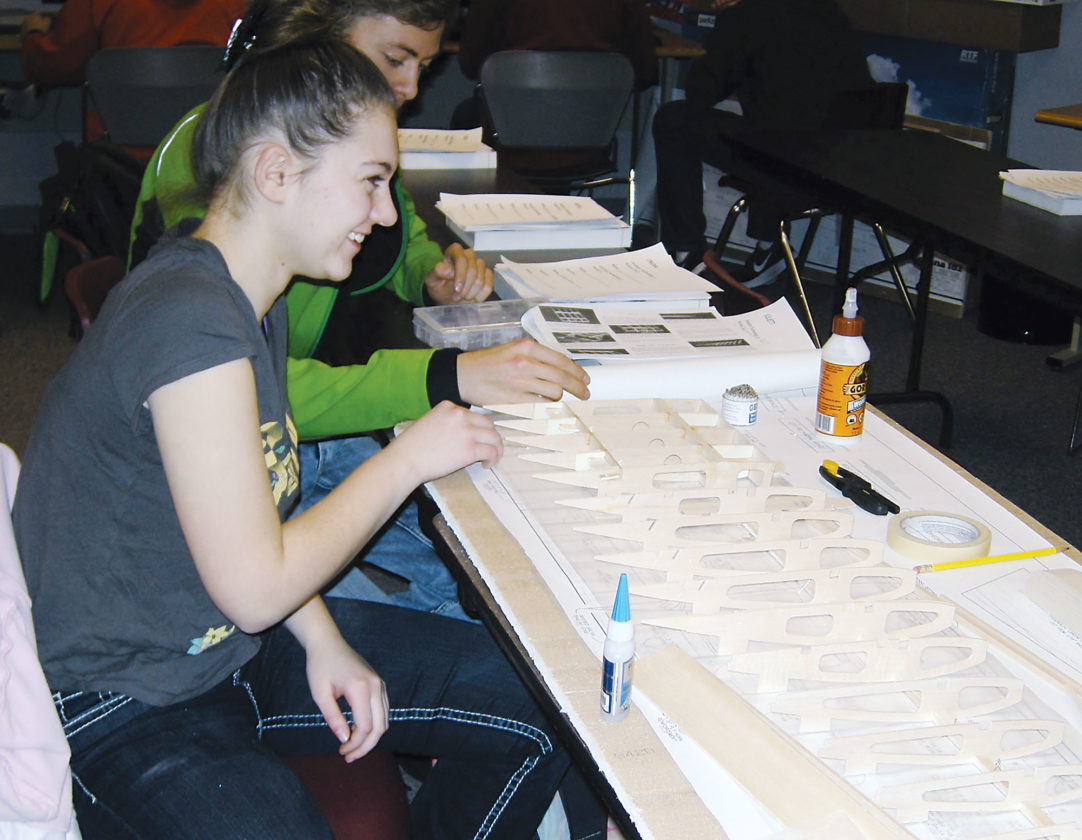
Andrea Johnson/MDN Senior Kelsey Mindt works on a model airplane.
Andrea Johnson/MDN Minot High School-Magic City Campus senior Tyler Vallely flies a drone plane at the school on Jan. 19.
Andrea Johnson/MDN Magic City Campus students Brett Lunde and Noah Tate practice the famous “Miracle on the Hudson” landing on a simulator on Jan. 19.
Andrea Johnson/MDN Senior Kelsey Mindt works on a model airplane.
Trending
Careers in science, technology, engineering and mathematics are growing and Minot High School students are learning the skills they will need to be successful.
In the principles of biomedical science class at Minot High School, students like Paolo Panales and Hannah Zaderaka hear speakers, explore different possible careers and learn more from doing than they probably ever would from books.
"I'm liking the innovative side, where you have to come up with creative ways to problem solve," said Zaderaka.
She is interested in biomedical engineering. The growing field combines engineering along with the medical and biological sciences. Practitioners design and create equipment or devices that can be used in health care.
Zaderaka said she would like to find new materials that can be used to design medical products like prosthetics more cheaply and make them more widely available for people in Third World countries.
According to the Bureau of Labor Statistics, the median pay for a beginning biomedical engineer in 2015 was $86,220 per year. The field requires a bachelor's degree in biomedical engineering, or a bachelor's degree in another engineering field along with additional classes in biology.
In 2014, there were 22,100 jobs and the field was growing much faster than average, showing a 23 percent growth rate.
In the first year of the class at Minot High, students learn about forensics. Different classes work to solve the death of the fictional Anna Garcia, a woman who was found dead under somewhat suspicious circumstances.
Was her death due to foul play? After all, her former husband had seen her the night before she died. Or was it one of her underlying medical conditions like Type 1 diabetes or sickle cell anemia?
Each class investigates different scenarios and students come up with different theories. During the unit, students also hear from speakers in different fields. A police officer might talk to the kids about investigative work and the role of fingerprints or DNA analysis in solving crimes.
Potential careers in forensic science might include forensic technicians, like those seen on the TV show "CSI," or DNA analysis or computer forensics or arson investigations, among others, according to forensiccolleges.com.
Students learn about forensics and have heard from speakers who discussed investigative work or DNA analysis.
Paolo Panales, a sophomore at Minot High School, took the class and is now enjoying the opportunity to explore other science careers in the second year of the class.
Panales said he is interested in a career in the medical field, perhaps neurosurgery.
"I do like the brain," he said.
Some of the teenagers in the aviation technology class at Minot High School are already pilots or are studying to become pilots.
One day in class last month, students Brett Lunde and Noah Tate were on a simulator practicing the "Miracle on the Hudson" landing, based on the amazing landing of U.S. Airways Flight 1549 made by Chesley Sullenberger on the Hudson River on Jan. 15, 2009. The simulation even mimics the flight of Canada geese that disabled the plane and forced an emergency landing. No one was hurt or killed when Sullenberger landed the plane.
Using the simulator, students can take turns guiding in an aircraft from a control tower, approaching an airport or flying different types of aircraft such as a helicopter.
Seniors Gabe Hegstad, Kelsey Mindt and Cole Brose were working on a meticulously detailed model of an aircraft. When finished, it will join the other aircraft models hanging from the ceiling in the classroom. Building the model helps the students better understand the parts of the aircraft and the technology behind it.
Mindt, the only girl in the class, wants to be an aircraft powerplant mechanic and work on real aircraft. Mechanics will be in high demand in the future.
Pilots will be in great demand too, said instructor Meric Murphy, a pilot who is retired from flying planes for Trinity Hospital.
Many of the pilots flying today will be nearing retirement age within a few years and there will be a need for young pilots to fill those slots.
Students in the class also practice flying drone aircraft, which they say will have all kinds of uses in the future.
Tyler Vallely, a senior, has a drone plane at home as well. An iPad can be attached to the drone plane and can be used to film or photograph sights around town as the drone flies.
Murphy said the class enables students to explore many different career options that are open to people interested in the aviation field.