
Years of development
Minot got its start with railroad pushing through area
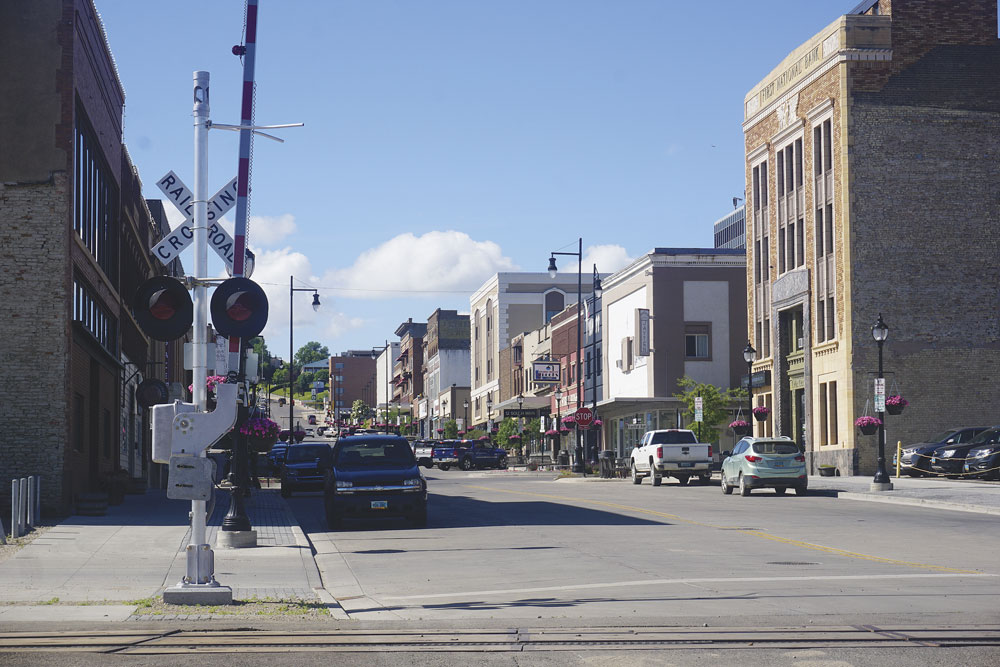
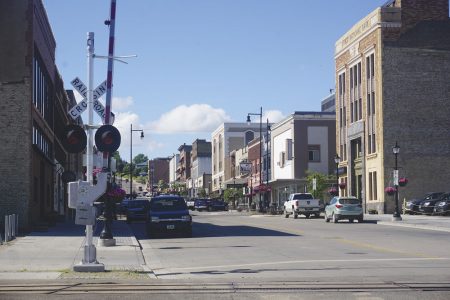
Jill Schramm/MDN The railroad has had an important role in Minot throughout history. This photo is looking south on Main Street in downtown Minot in this June 2020 photo.
Minot, in the valley of the Souris River, or the Mouse as some prefer to call it, got its name through the influence of the Great Northern Railway “Empire Builder” James J. Hill whose railroad pushed through this area in the late 1880s as it moved westward.
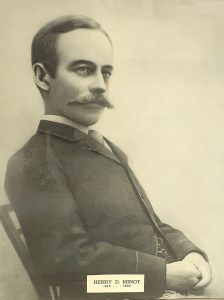
The city was named after a Bostonian, Henry Davis Minot, who tragically lost his life in a railroad accident when he was 31 years old.
Henry D. Minot was an eastern investor and associate of Hill. He reportedly never set eyes on the Mouse River Valley. He was also an ornithologist and friend of Theodore Roosevelt.
Minot, a rather “young” city compared to many others in the United States, “has grown from wild and woolly, devil-may-care formative years to an age its constituents herald as respectable and progressive” wrote the late Bob Anderson of The Minot Daily News in a story published in a June 30, 1964, issue of the newspaper commemorating North Dakota’s 75th anniversary of the admission of North Dakota to the Union.
The story went on to explain:
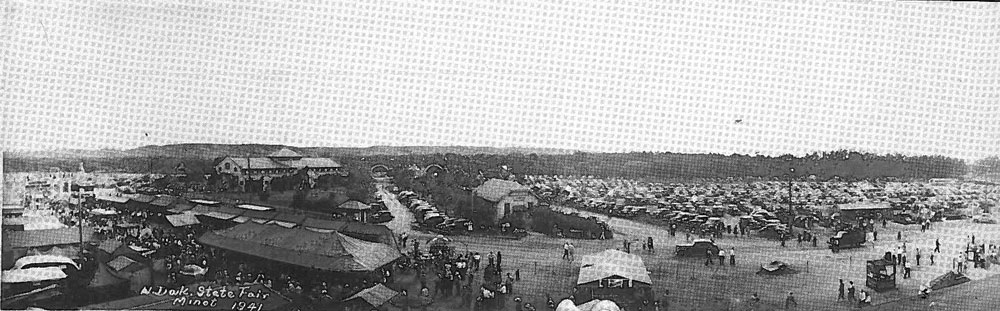
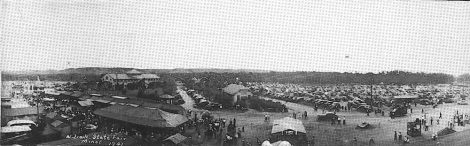
Submitted Photo This photo shows the Minot fair in 1941. 1966 marked the first year of the official North Dakota State Fair held in Minot.
“Business and building followed the railroad boom. Tarpaper shacks grew into Main Street buildings substantial dry goods and general stores grew into being, carbon lights illuminated the streets, the few there were.
“The homesteaders were here making their claims and enhancing the growing business of the community.
“In 1907, Minot labeled itself as “Northwest North Dakota’s largest commercial center.”
(In 1890, a year after North Dakota became a state, the population of Minot was 575. In 1962, when a special federal census was taken Minot’s population was 33,477. Other population totals have been: 1900, 1,277; 1910, 6,188; 1920, 10,476; 1930, 16,099; 1940, 16,577; 1950, 22,032; and 1960, 30,604. Counting Minot Air Force Base and developed areas immediately outside the city limits, it’s estimated that between 45,000 and 50,000 persons now reside in Minot and nearby, according to the June 30, 1964, edition of The Minot Daily News.)
Minot was growing by leaps and bounds, and new businesses were continually being erected.
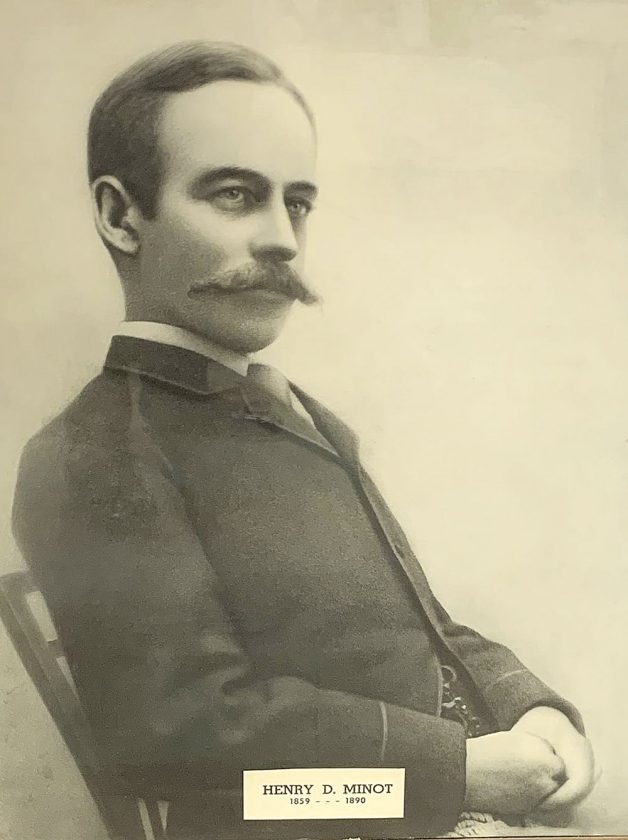
MDN File Photo Minot was named for Henry D. Minot, an associate of Great Northern Railway “Empire Builder” James J. Hill,
The story continued:
“It was still the railroad influence for the city. As the city grew, so did the railroad, which now has its $6 million Gavin Yard east of Minot.
“Prohibition had its effect on the city and, whether good or bad, brought some money into the area. Minoters resorted to their “blind pigs” and the city gained somewhat of a reputation as “Little Chicago.” It was on the gin mill run from Chicago and Minneapolis to Regina, Saskatchewan.
“Maybe that railroad conductor wasn’t all wrong when he used to yell ‘Minot, next stop. Prepare to meet your God.’
“Carbon lights and neon lights weren’t all the lights Minot had. It had its share of red lights. Minot’s “Third Street” with its houses of ill repute was known throughout a wide area.
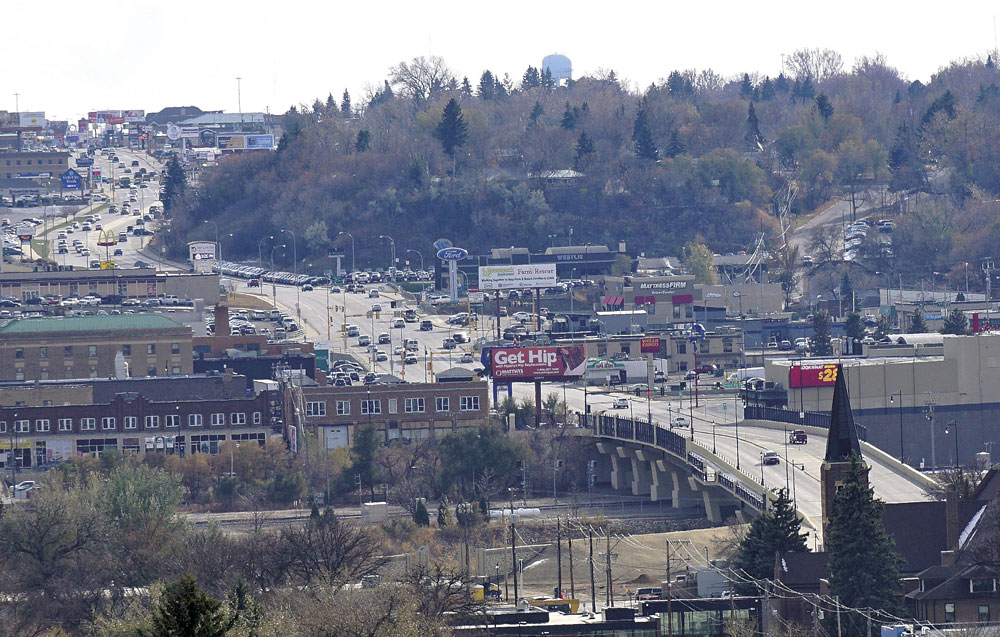
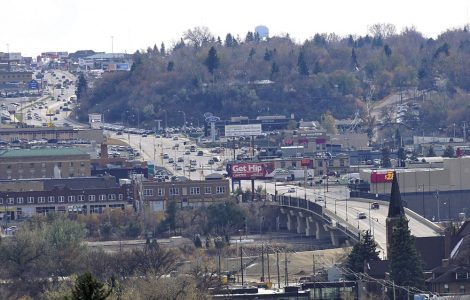
Jill Schramm/MDN Minot’s Broadway has had numerous changes over the years. This photo shows Broadway in October 2020.
“Through the efforts of the Junior Chamber of Commerce, highway construction and the city’s illuminating the area, ‘Third Street’ today is but a memory a past history of a rather rambunctious youth.”
Minot civic leaders looked toward the future and “knew that in order to attain a unity of effort, there must be agreement.”
The 1964 story reported:
“They have proved that principle in grabbing the first major military installation to come to North Dakota, the multi-million Minot Air Force Base. They gave inspiration to others for development of the Garrison diversion project. They’re still fighting the federal government for a new federal building, unwilling to take a new post office and a revamped federal building for an answer.
“Minot grew from a one-street railroad boom town in 1887 to a broadening eight-story high business boom town of 1964, termed as early as 1949 as a ‘metropolis.'”
The 1964 story in The Minot Daily News related:
“A Saturday Evening Post writer in a series of articles on ‘America’s most colorful cities’ said, ‘The word ‘metropolis’ can be applied, oddly, to at lest one town of only 25,000 people, Minot, in northwestern North Dakota. The town serves as a capital of a region larger than most states … united by economy, geology and rough weather…
“Today, Minot blandly claims that its trade area reaches 600 miles east and west, 350 miles north and south.
“At population of 35,000 plus, ranking as the largest North Dakota city west of the Red River Valley, Minot as the mature adult, pounds its chest with pride.
“The arms of the city reach wide and long, full of strength.
“They encompass a major lignite mines area: they develop the city as an important center for grain marketing and as a livestock market center; they carry petroleum and petroleum products pipelines.
“In line with the ‘Why Not Minot?’ philosophy, civic promoters have diligently launched a campaign to get the single North Dakota State Fair in Minot, pointing with pride to the Minot fair plant and noting Minot draws the biggest fair crowds in the state, totaling 110,000 plus in a week.”
(1966 marked the first year of the one and only official North Dakota State Fair held in Minot.)
Since that 1964 story and North Dakota’s 75th anniversary, Minot has been through floods including two major ones in 1969 and 2011. Work in the city is continuing as a result of the 2011 flood.
The city has also gone through a deadly train derailment on Jan. 18, 2002. The derailment occurred at 1:40 a.m. on the western outskirts of Minot and resulted in a massive anhydrous ammonia leak. Thirty-one rail cars derailed in the incident.
An oil boom in recent years brought many people to Minot and area communities. A new airport terminal was built in the city, officially opening in February 2016, and numerous hotels were constructed along with numerous new businesses, apartment buildings and houses. Minot’s population soared and hit around the 50,000 mark.
When the 2011 flood hit, hundreds of homes and businesses were extensively damaged. Housing became tight. The aftermath of the flood brought another wave of construction to the city as homes and businesses were reconstructed and others newly built.
The drop in oil prices a few years ago led to the closure of some businesses and some people who had worked in the oil field were laid off from their jobs left the city.
Besides the North Dakota State Fair and the State Parade held in Minot each July, the city also is home to Norsk Hostfest, a major Scandinavian festival, held in the fall.
The city also is home to Roosevelt Park Zoo, the oldest public zoo in North Dakota; the Dakota Territory Air Museum with World War II aircraft and other displays and events honoring the men, women and machines that have impacted the rich history of aviation; and the Railroad Museum of Minot with stories and displays about railroading in the area. The Magic City Discovery Center for children is moving forward with construction this year. There’s also a wide range of events and other activities in the city.
Many facilities and events or other activities were not held or open due to the COVID-19 pandemic.
Minot also has a wide range of educational facilities from Minot State University to public and parochial schools.
The city’s current population hovers around slightly over 47,000, according to 2019 U.S. Census estimates.
What’s ahead for the future of Minot is yet to be seen.
-
- Jill Schramm/MDN The railroad has had an important role in Minot throughout history. This photo is looking south on Main Street in downtown Minot in this June 2020 photo.
-
- Submitted Photo This photo shows the Minot fair in 1941. 1966 marked the first year of the official North Dakota State Fair held in Minot.
-
- MDN File Photo Minot was named for Henry D. Minot, an associate of Great Northern Railway “Empire Builder” James J. Hill,
-
- Jill Schramm/MDN Minot’s Broadway has had numerous changes over the years. This photo shows Broadway in October 2020.