What should Trump say at State of the Union?
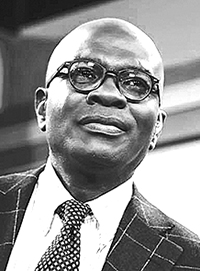
Armstrong Williams
America is tired.
Not tired of debate. Not tired of conviction. Americans can handle disagreement. What they are weary of is perpetual combat. They are weary of the temperature always being set at boiling. They are weary of economic anxiety, cultural distrust and political trench warfare that seems to reward outrage more than results.
If President Donald Trump truly wants to secure not only victory but legacy, this is the moment for a different kind of speech on Tuesday.
Not a rally speech. Not a grievance speech. Not a score-settling speech. A governing speech.
He should begin with humility — not weakness, but strength under control.
He should say plainly, “I know this country is divided. I know many Americans — Republican, Democrat, independent — are struggling. And I am the president for all of you.”
That sentence alone would shift the national mood.
Across the board, Americans are feeling squeezed. Housing costs remain high. Groceries are unpredictable. Insurance premiums are punishing families. Small businesses face borrowing constraints. Young Americans feel locked out of ownership and stability. Retirees worry their savings will not stretch far enough.
The president should acknowledge this without defensiveness.
He should say, “If you are working harder but falling behind, I see you. If you own a small business and feel crushed by regulation and rising costs, I see you. If you are a single parent trying to keep up, I see you.”
Then he should outline clear relief:
— Targeted tax relief for working- and middle-class Americans
— Regulatory reform that lowers costs without sacrificing safety
— Incentives for domestic manufacturing and energy independence
— Real housing supply expansion — zoning reform incentives, public-private partnerships
— Student loan reform tied to workforce outcomes
Economic relief must not be ideological — it must be practical.
Immigration is a legitimate national issue. Border security matters. Sovereignty matters. Law matters. But tone also matters.
The president can secure the border without dehumanizing those here.
He should say, “We are a nation of laws, and we will enforce them. But we are also a nation of dignity. Our immigration enforcement will prioritize criminals and threats to public safety. Families who are contributing members of society deserve fairness and due process.”
He should clarify that deportation efforts will focus on violent offenders, traffickers, cartel affiliates — not long-settled families whose children are American citizens.
The rhetoric should move from mass punishment to measured enforcement — strength without spectacle.
Political maturity means tolerating disagreement within your own ranks. If a Republican member agrees with the president 90% of the time but dissents on 10%, that is not betrayal — that is representative government.
The president should publicly affirm this.
The American people do not wake up asking which party “won” the day before. They ask whether their lives improved.
The president should say, “To my Democratic colleagues: Where we agree, let us move quickly. Where we disagree, let us debate vigorously — but respectfully. The American people expect results, not performance.”
The president sets tone. Markets react to tone. Allies react to tone. Citizens react to tone.
He should say, “We can disagree without hating one another. We can compete without destroying one another. The future of this nation is too important for permanent hostility.”
He should reject violence and political intimidation from all sides — explicitly. No ambiguity. No winks. No plausible deniability.
A single sentence could calm the waters:
“There is no place for violence or harassment in American politics — from anyone.”
If he delivers a speech grounded in empathy, discipline, constitutional respect and bipartisan pragmatism, he will not lose his base. He will expand it.
Americans are not demanding perfection. They are asking for relief, stability and a break from constant escalation.