
Local foods movement builds support
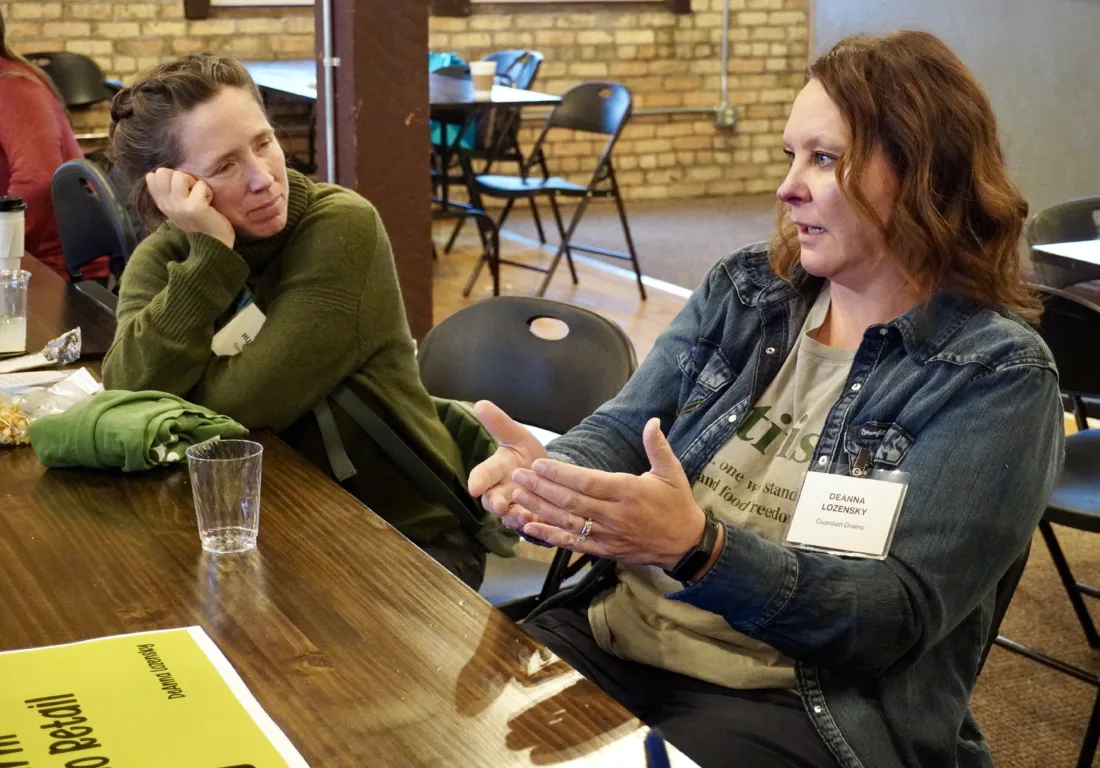
JILL SCHRAMM/MDN DeAnna Lozensky of Guardian Grains discusses the process of getting local products into retail distribution with participants in a small group discussion at the Taste & Talk Summit in Minot Wednesday, Nov. 18. The participant at left is Becca Rudebusch
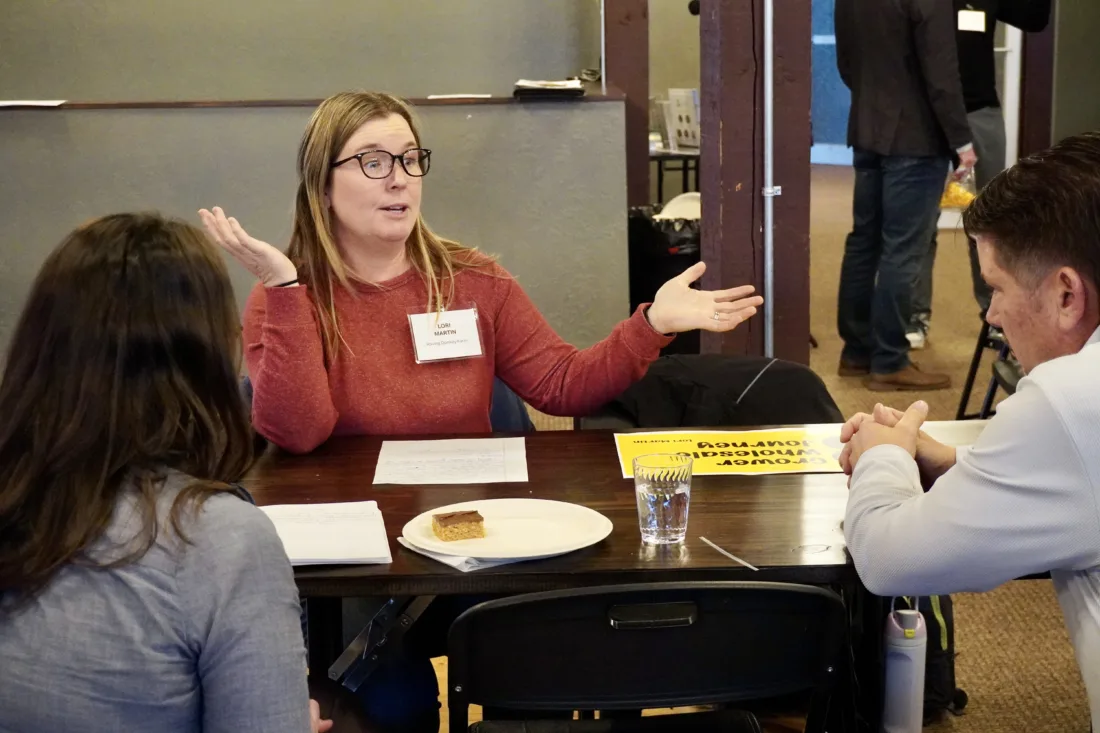
JILL SCHRAMM/MDN Lori Martin of Roving Donkey Farm, Bismarck, talks with participants at the Taste & Talk Summit Wednesday, Nov. 18, about aspects of marketing local foods.
JILL SCHRAMM/MDN DeAnna Lozensky of Guardian Grains discusses the process of getting local products into retail distribution with participants in a small group discussion at the Taste & Talk Summit in Minot Wednesday, Nov. 18. The participant at left is Becca Rudebusch
JILL SCHRAMM/MDN Lori Martin of Roving Donkey Farm, Bismarck, talks with participants at the Taste & Talk Summit Wednesday, Nov. 18, about aspects of marketing local foods.
Trending
Regional producers, buyers and others interested in the local foods movement gathered in Minot Wednesday, Nov. 18, to share ideas and build support for a food hub initiative in Velva.
"The local foods movement is growing in Minot," said DeAnna Lozensky with Guardian Grains of Minot, who co-chairs a local foods committee. "It's important to us as a company because we want to help develop a more localized food system."
Wednesday's "Taste & Talk: Growing Markets Summit & Local Food Showcase" served to educate, build relationships and aid the efforts to establish a distribution hub designed to get local foods into rural grocery stores.
"The buyers and the growers and the aggregators were all in one place, which is what we need to propel this forward," Lozensky said. "Distribution is extremely expensive, and it’s too expensive for the rural grocers to buy from us individually. So, by having a local food hub aggregate all of these local foods, then distribute from there, that will help the rural grocers save on distribution, giving us as the grower or the producer of the food a better market, a more consistent market.
"It creates consistency for the grower, and for the buyer," she added, "because they know what’s coming and that they’re going to get a consistent product coming out of the hub, which is one of the concerns that rural grocers have in working with local food producers. They need to make sure that those products are retail ready."
Rebecca and John Adam, with Legendary Greens, a microgreens and sourdough products company in Mandan, said they would like to expand across North Dakota but struggle to realize the dream because of distribution challenges.
"I’m hoping this food hub will come into fruition, and they can maybe help out more producers throughout the state," Rebecca Adam said. "That’s kind of the end goal. I think we all kind of have the same issues in our little businesses, and we all want to get our products out there and everywhere."
Ashley Bruner of Dakota Angus in Drake said starting a food hub is challenging but it can bring a lot of benefits.
"I'm a huge proponent of it. I think it’ll be great for consumers," she said. "There are a lot of people doing a lot of really cool things and making a lot of really great consumable products in North Dakota, and so I think the food hub will help facilitate bringing those products to consumers and letting consumers in the area know that they even exist."
Dakota Angus has built a strong customer base over the past five years, running monthly delivery routes and developing partners through wholesaling, but Bruner sees opportunities to do more.
"I’m hopeful that it will open more doors," Bruner said of a food hub, "but also maybe make things easier for us as far as distribution. Right now, we run three delivery routes across the state, and that’s all going good. But as we scale, it sure would be great if, logistically, we can partner with others."
Karalyn Pitner of Pitner Provisions, Norwich, who started as a hobby gardener, is looking for new markets to grow her operation.
"Having a wholesale market is great, so that you’re not having to make many, many individual sales," she said of the food hub concept. "The relationships that you build through direct-to-consumer are wonderful, but in terms of time and labor and the things that it takes to be at the farmers market or selling on your own property, just having a wholesale market, with a central location like a grocery store, is a great opportunity to get good, locally grown produce into more people’s hands."
Pitner also said the summit offered valuable content for both producers and buyers.
"It’s just really great to get the people in the same room that are the parts that need to make these things happen. So, getting those people around the same tables and having some good feedback conversations and just making different connections was really helpful," she said.
"As small as our state is, there’s still plenty of people that don’t know we are here," Lozensky said. "So, the local food movement helps us do that, and find partners to help us do that with the rural grocery stores and the food hub initiative in Velva. So, it’s an exciting time for local foods and for the area."
The summit, funded with a Bush Foundation grant, was sponsored by North Dakota REC's Rural Development Service and FARRMS.