
Homebuilders seek to navigate costs
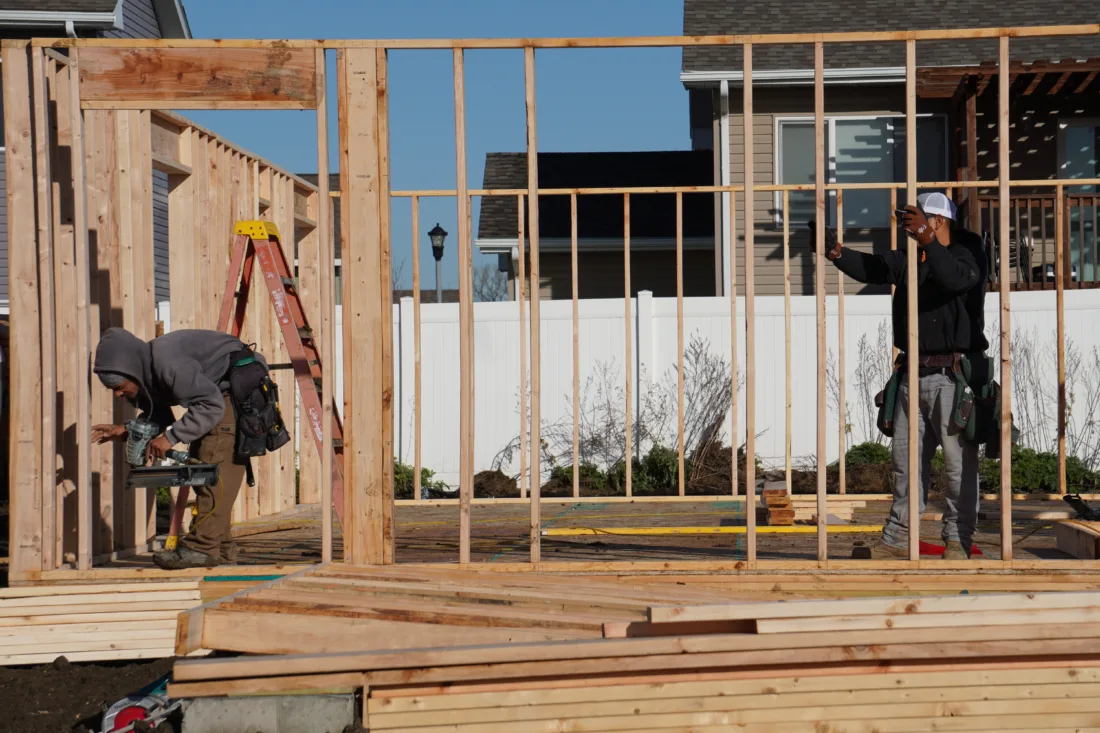
JILL SCHRAMM/MDN Construction workers frame a house Nov. 4 in the Stonehaven development in southeast Minot, where Next Gen Builders of Minot is building lower cost homes.
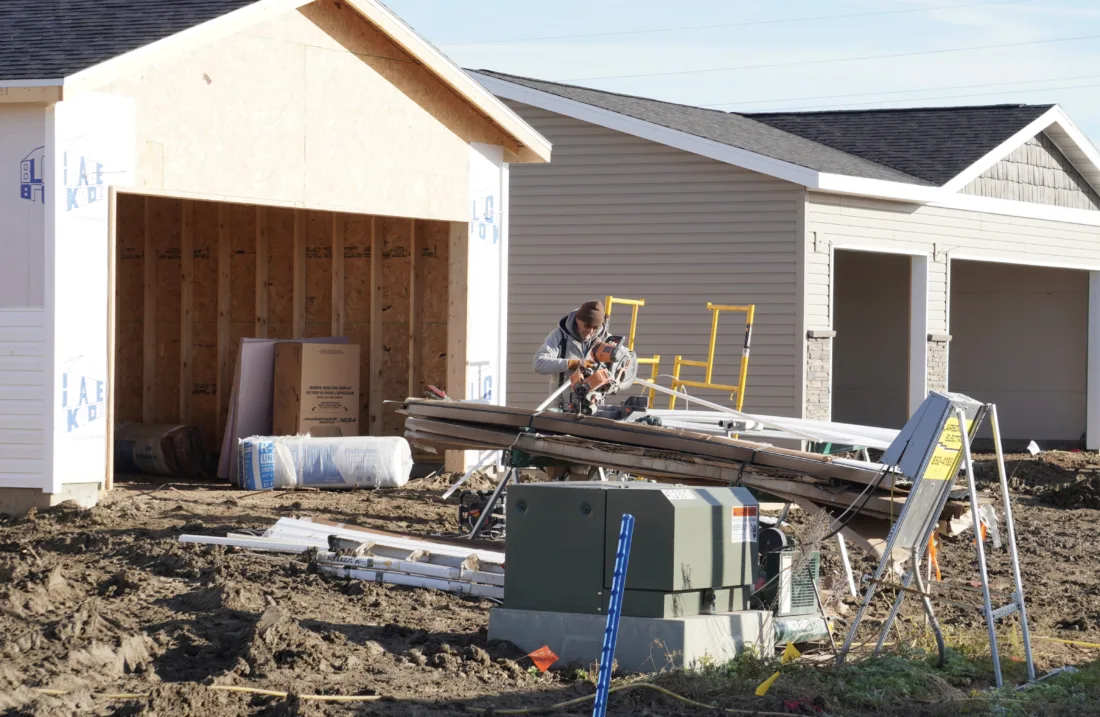
JILL SCHRAMM/MDN A construction worker is on the job Nov. 4 in the Stonehaven development, where a couple of new homes take shape behind him.

Mike Hayes

Nate Applegren

Joe Hillerson
JILL SCHRAMM/MDN Construction workers frame a house Nov. 4 in the Stonehaven development in southeast Minot, where Next Gen Builders of Minot is building lower cost homes.
JILL SCHRAMM/MDN A construction worker is on the job Nov. 4 in the Stonehaven development, where a couple of new homes take shape behind him.
Mike Hayes
Nate Applegren
Joe Hillerson
Trending
The high costs of development, building materials and labor are challenges to constructing more homes in Minot, particularly affordable homes, according to a local builder who has been finding ways around the obstacles.
Mike Hayes, a long-time contractor, now retired, has been working with Next Gen Builders of Minot on an affordable, single-family housing project in the Stonehaven development along 55th Street Southeast. The 1,150-square-foot homes being built in Stonehaven are proposed to sell for $275,000 in a statewide market in which new stick-built single-family homes haven't been selling for less than $300,000, according to Hayes.
"People ask how we can sell for what we do. It's because of working together with everybody in the process," Hayes said. "Affordability is going to have to be a joint venture between developers, builders, subcontractors, suppliers and incentive programs. They all work together on projects."
Hayes said the reason affordable single-family homes aren't being built in Minot is multi-faceted. It starts with a diminished supply of lots because previously low interest rates fueled demand and depleted stock.
"Now interest rates are going up. Nobody is moving or selling, and not as many builders are building," Hayes said.
Other reasons he cited include the doubling or tripling of land costs in the past five years, inflationary costs in development and building materials, burdensome bonding requirements, significant upfront funds needed to install utilities and a lack of skilled workers that drives up labor costs.
These are not necessarily just Minot problems.
Nate Applegren of Applegren Construction, Grand Forks, president of the North Dakota Association of Builders, and NDAB secretary Joe Hillerson of Boulder Homes in Bismarck identified similar problems statewide while in Minot for the association's state conference Nov. 3.
Applegren Construction has been working with a nonprofit group to build houses in small towns on donated lots with special state financing, and those cost reductions make a big difference, Applegren said.
"But, for a normal builder, you don't have access to that," he said. "It's tough, but we try. The sad part is, I feel, sometimes what you can do to make the house less expensive, they (buyers) don't want."
"They don't want laminate countertops. They want quartz. They just don't want cheap," Hillerson added. "I think part of it, too, is we're just not building enough to keep up with some of the demands. There's only so much capacity for labor in our city. Every single market is probably short labor, which keeps the cost high."
Hayes noted temporary housing for outside labor crews is a temporary solution.
"It doesn't give you the same long-term employees," he said.
Hayes and Next Gen have sought to tackle costs from various angles.
Next Gen has 90 shovel-ready lots in Stonehaven on which it is building single-family homes on smaller lots made possible with recent City of Minot zoning changes.
In addition to smaller lots, the key to keeping costs down, Hayes said, is regularly price checking to ensure input costs are kept as low as possible. At Stonehaven, it has meant working with utility companies to ease upfront costs on utility installation. Establishing relationships with subcontractors willing to hold the line on costs in exchange for steady business helps, he said. Additionally, money can be saved by taking advantage of perks, such as volume purchase deals, seller rebates, credit card points or the state sales tax cap on large purchases.
"We just watch those pennies," Hayes said.
Hayes listed ways the City of Minot can assist in getting more homes built and on the tax rolls without spending a lot of money. They include offering certain infrastructure inspections that now require developers to hire engineers, funding public fixtures such as street lights or signs and rethinking some of its policies, such as requiring developers to donate a spare light post to the city on every project.
Another option is a temporary property tax freeze on land acquired for development on the condition the developer improves the property within a set period of time, Hayes said.
Hillerson and Applegren agreed local government regulations can continually raise costs.
However, swapping stories with builders at national events, Hillerson said North Dakota builders are fortunate to have local officials they can talk to and work with cooperatively.
"In our area, they are pretty easy to work with," he said. "But that doesn't mean there's not layers of costs on top of what we have to work with and the hoops we have to jump through."
Applegren said his company builds only a few houses a year but has sought to control costs by seeking out vendors who offer more affordable products without sacrificing quality or new subcontractors willing to take a little less to get started in the industry.
"We're constantly being hit with increases, not decreases. So, just holding the line is the challenge," Hillerson said of managing costs. "Just holding the line is a win in housing right now."
Boulder has built 25 houses so far this year, including some twinhomes that were needed in the affordable market, Hillerson said.
"Increasing our housing stock is important because it's been short," Hillerson said. "Housing is short everywhere, so construction has to happen."
Builders say they are seeing a disruption in the natural progression of people buying up into more expensive homes and freeing starter homes for first-time buyers.
Applegren said there's a reluctance by many homeowners to make the step up because they would give up low-interest mortgages for interest rates that are more than double.
"Those older houses that are your starters, now people are just remodeling them and staying in them," he said.
The shortage of affordable homes and the cost of buying vs. renting are among factors behind a National Association of Realtors statistic showing the average age of a first-time homebuyer today is 40 years old, Hillerson said.
To keep mortgage costs from holding back buyers, Next Gen is looking into a potential program to buy down the mortgage rates on its affordable homes. It would mean giving up a portion of the project's profit but there's also savings associated with getting properties off the books rather than holding houses and waiting for them to sell, Hayes said.
It's all part of Next Gen's strategy that, if proven successful as Hayes believes it will, could lead to more developments like Stonehaven. Looking ahead, Hayes said the company owns additional lots in southeast and north Minot where a similar concept could have potential.