
Volunteer lineworkers to electrify Guatemalan village
Trending
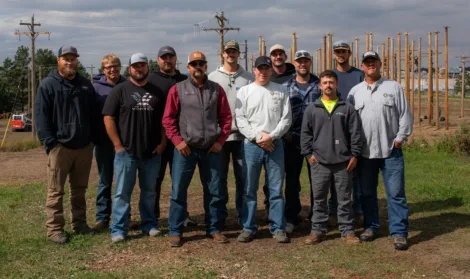
MANDAN - Twelve North Dakota lineworkers will travel to Central America in November to bring electricity to a remote village. The project will transform daily life in the village of San Luis Palo Grande, in north central Guatemala, where agricultural work must be done by hand, cooking over an open fire can be dangerous and life essentially stops after sunset, according to the North Dakota Association of Rural Electric Cooperatives (NDAREC).
Over the 17-day humanitarian mission, the lineworkers will build about two-and-a-half miles of power lines, install three transformers and connect more than 50 homes and a school. Participating cooperatives have been fundraising for the project from electric cooperative partners and vendors.
Among the volunteers selected to make the trip are Colton Maruskie with Burke-Divide Electric in Columbus, Conner Moe with McLean Electric Cooperative in Garrison, Remington Berentson with North Central Electric Cooperative in Bottineau and Hunter Bowker and Kyle Jessen with Mountrail-Williams Electric Cooperative in Williston.
Capital Electric Cooperative General Manager Paul Fitterer is spearheading the effort.
The volunteers will stay near the project site and work alongside the local community to prepare for this transformation. After construction is complete, the local municipal electric utility will take over. Residents will pay monthly electric bills at a fraction of the cost they currently spend on candles, expensive alternative fuel sources and batteries.
To plan and organize this project, Capital Electric is working with NRECA International, a non-profit rural development organization founded by the national trade association for electric cooperatives. The project is part of an ongoing effort to develop sustainable, reliable and affordable electricity for rural communities worldwide. By partnering with volunteer groups in various states, its programs are powering communities in Africa, Asia and Latin America, reaching 48 countries and more than 200 million people.
Although the lineworkers will travel more than 2,700 miles to electrify a village, the mission hits close to home for North Dakota.
"Like our forefathers that homesteaded across the country, electricity wasn't available. Well water had to be pulled up by hand, grains were ground by hand, there was no refrigeration, women cooked over a fire, and there was no light at night other than a candle or lantern. Life wasn't easy," Fitterer said.
When rural America was electrified in the 1930s and '40s, communities discovered efficiencies to strengthen productivity, earn higher incomes and live more fulfilled lifestyles. Similarly, NRECA International has revisited other Guatemalan villages that have benefited from these projects to grow business, improve communication and reduce the physical toll of manual labor.
NDAREC offers the public an opportunity to show their support by donating to a campaign that will purchase electric stovetops for kitchens in the village. By reducing the amount of cooking that happens over an open flame, the stovetops can have an immediate effect on the community's health and safety. The risk of respiratory infection and disease is high in these communities, along with the risk of severe burns or fire outbreaks. A $40 donation will purchase one electric stovetop. Donations can be directed to NRECA International through NDAREC at NDAREC, P.O. Box 727, Mandan, ND 58554-0727 or visit ndliving.com to make an online donation.