
Trending
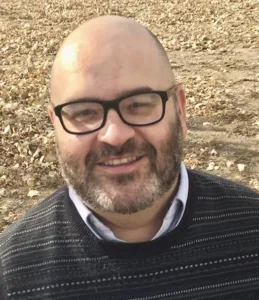
Minot attorney Andrew Schultz wants to apply his legal experiences of the past 26 years to the Ward County State's Attorney's Office. He is running unopposed for the four-year term as state's attorney in the Nov. 3 general election.
Schultz graduated from Berea College in Kentucky before receiving his law degree from St. Louis University in Missouri in 2009. He enlisted in the Army but due to his discharge for an injury in training, he altered course and came to North Dakota, where his wife was stationed at Minot Air Force Base.
He has been licensed as an attorney in North Dakota since 2010.
Schultz worked for local firms in Minot before opening his own office in November 2011. He said criminal defense has been a significant part of his practice, giving him frequent opportunities to appear before district court judges and magistrates. It provides a good background for the state's attorney's position, as does his past experience in serving as Surrey city attorney, he said.
He ran for state's attorney in 2018 against incumbent Roza Larson. Although not successful, he said, the campaign was a great learning experience and encouraged him to try again. Larson will be retiring at the end of her term. Schultz became the only candidate running with the withdrawal of Ward County assistant state's attorney Christopher Nelson.
Schultz said one of his motivations for running is the leverage the state's attorney's position offers to address the impact of drugs and violent crime on society. The increase in homicides and issues with opioids, particularly fentanyl, concern him. Growing up in an eastern Kentucky community that dealt with a lot of opioid issues left an imprint, he said.
"The things that my home went through back then are not the things that my home should go through now. So, I feel a sense of responsibility, as someone who’s seen that kind of thing before, to actually do something about it from both ends of the equation," Schultz said.
On one side of the equation, he would like to see Minot stand up a committee on addiction again to address services for people seeking help. On the other side, he favors the courts taking a tough stance on drug sales. Drug dealers and people who possess child sexual abuse material belong in prison as a public safety matter, he said.
His general approach to justice, though, is that it be as individualized as possible, Schultz said. He supports creating what is known as solution-focused rehabilitation, which establishes social supports that give people in drug recovery a sense of community belonging that can counter the risk of relapse.
Schultz added he would approach the management of the state's attorney's office with cost effectiveness in mind.
"One of the things that I've always appreciated is this outlook of trying to be as efficient as possible with other people's money," he said. "There very much is a public trust in that position to make sure you're not wasting money and you're maximizing results."
He would like to see the office become more open in publicizing its successes, suggesting social media might be a way to accomplish that.
"You are answerable to the voters, so the voters should know what's going on and what you're doing," Schultz said.
Schultz said he would look to streamline activities in the office but also pursue legislative changes to offload some workload to free up prosecutors to focus on the cases that demand their time.
For instance, he said, statistics show at least 20% of court appearances involve unpaid fines and fees. Authorizing collection agencies and their private attorneys to deal with these as open civil judgments would eliminate the need to issue bench warrants and tie up the time of law enforcement and the state’s attorney's office.
"We can be more efficient with our time and save some taxpayer money, too," Schultz said.
Schultz said he appreciates Larson for inviting him to get acquainted with activities in the office to aid in the anticipated transition.
"She believes in continuity of government and making sure that the good services, and the things that they do, carry forward with as little interruption as possible," he said. Following the Nov. 3 election, he said, the hope is to become an unpaid special assistant in the office to further aid with the transition to occur on Jan. 1.