
Panelists explore energy’s horizon
Trending
North Dakota is at the precipice of a new era in energy production, according to state energy leaders at the Western Dakota Energy Association annual meeting in Minot Thursday, Oct. 22.
State Sen. Dale Patten, R-Watford City, acknowledged the looming challenges in speaking to an audience of local government and school officials at the conference.
"Many of you are going to be on the front line as we deal with these issues," Patten said.
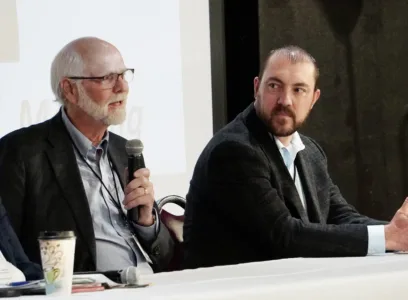
Patten joined Jonathan Fortner, president of the Lignite Energy Council, and Brian Giggee, director of Electric Systems with Montana-Dakota Utilities, on a WDEA panel to discuss the energy horizon.
Researchers' forecasts predict a naturally occurring decline in North Dakota's oil production as wells gradually slow their output. Patten said this decline is coming within the next five to 10 years unless ways are found to counter it.
"The challenge is, we have to do things right now to be in the right position within that 10-year window to make sure that it doesn’t happen," Patten said.
Fortner said carbon dioxide emitted from North Dakota's coal-fired power plants could offer part of the solution. Using CO2 to pressurize declining wells could add life to their production while also responding to ever-changing federal emissions regulations on power plants, he said.
The recently announced Bakken 2.0: Crack the Code research initiative, led by Sen. John Hoeven and the Energy & Environmental Research Center in Grand Forks, is eyeing CO2 as it looks to double oil recovery rates in the Bakken.
"We have about 30 million tons of CO2 that come out of our five facilities on any given year," Fortner said. "The estimates are, today, that they would need roughly 100 million tons per year to really, truly get the output that's available there. But if we take our 30 million tons, send it over there, we are reducing our regulatory threat."
Another immediate challenge centers on the state's natural gas production, which needs to be captured as part of oil production.
"Either we use the gas here, we ship it out of state or we shut our production down," Patten said.
"And what are we going to do with the power? Are we going to ship it somewhere else or are we going to use it within our state? There's three options within our state - value-added ag, value-added energy and value-added technology. That's going to be the big consumers," he said. "You'll have to decide whether it's going to happen in your community or if it's going to go right by you."
Fortner said the future opportunities are immense for North Dakota's lignite industry, whether it's responding to new electricity demand or potentially mining critical minerals from the coal, which is a subject of current research.
"We're out there every day trying to find new uses of our coal," Fortner said. "Hundreds of millions of dollars have gone into research, not only on how to operate the plants more efficiently but how to produce new products and uses."
He cited innovations such as making concrete blocks of coal that are lighter than concrete and fire resistant, along with new materials for roof shingles and roads. Coal Creek Station near Washburn already recycles the ash from burning coal for electricity, shipping the ash to Minnesota for road construction.
Increased tonnage mined and power produced means more tax revenue for local communities and a boost to the economy, Fortner said. However, Giggee added the state needs to ensure users of large electrical loads pay their fair share for electricity and transmission upgrades and not burden other users.
"You have to have certainty, too, from these data centers that they're going to be there - actually show up if you do build the infrastructure," he said.
Giggee raised concern about whether transmission can get out in front of development, given the lead times required to get transmission projects built. He said planning probably should have started a few years ago.
One of the biggest issues around transmission is the patchwork of regulations as lines are built across townships and counties. He urged more conversation around building consensus among political subdivisions to provide for consistency in permitting.
The North Dakota Legislature is also looking at opportunities in nuclear energy. For nuclear to become real in North Dakota, it must eventually become cost competitive and it must have a community willing to host it, said Patten, who chairs two legislative committees on the topic. Additionally, North Dakota needs to have a use for it, he said, because to build a nuclear plant to ship energy to Minnesota would be a hard sell.
Nuclear waste disposal is another issue, and Patten said he plans to introduce legislation in the next session to remove the state's prohibition on nuclear waste storage as an important step in advancing the nuclear energy option.
Fortner also suggested the state, at all levels of government, develop a regulatory and business climate that attracts opportunities and enables communities to work through the process of finding the right projects to support their growth.
"So we're making sure we're taking care of all the potential issues, but we're still seizing the opportunity when it's right in front of us," he said.