
Our American Story: More than a vote: ND’s tradition of citizen leadership
Trending
Throughout 2026, the ND250 Commission, administered by the State Historical Society of North Dakota, is leading the state's commemoration of the 250th anniversary of the founding of the United States. Through meaningful, inclusive, and inspiring projects and events, the commission celebrates North Dakota's rich history, diverse people, and bright future while honoring the state's heritage, individual values, and spirit of community.
Imagine telling someone from another state that North Dakotans don't register to vote.
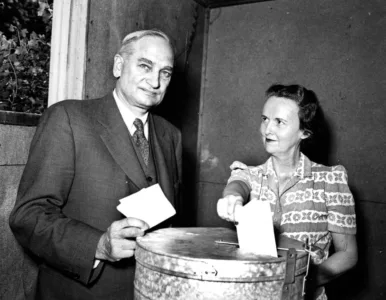
Most people assume you've left out an important step. Yet North Dakota remains the only state in the nation without voter registration. Instead, eligible voters present identification at their polling place, where election officials verify their eligibility.
North Dakota has repeatedly reinvented how citizens participate in democracy. For more than a century, citizens have supported an unusually direct role in shaping our government and communities. From expanding access to the ballot to giving citizens the power to place laws and constitutional amendments before voters, citizens have built a unique tradition of participation.
That tradition began long before modern elections.
When North Dakota was still part of Dakota Territory, new immigrants and homesteaders shaped the places they called home, investing in decisions that still impact the state. Elections determined everything from local leadership to schools, roads, and public services.
As the state matured, so did opportunities for citizens to participate.
In 1892, North Dakota women were only permitted to vote on matters involving schools. But they helped elect the first woman as the state Superintendent of Public Instruction, who also happened to be the first woman in the United States to win a statewide office election.
In the early 1900s, reformers across the country sought ways to give ordinary citizens a stronger voice in government. North Dakota helped lead that movement by adopting the initiative and referendum process, allowing citizens to propose state laws, initiate constitutional amendments, and challenge certain laws passed by the Legislature through petition. Today, only about half of U.S. states allow citizens to place statewide initiatives on the ballot, and less provide all three of these forms of direct participation. North Dakota's Constitution empowers citizens to have a voice in government.
That same approach inspired one of the most influential grassroots political movements in American history.
In 1915, North Dakota farmers organized the Nonpartisan League to advocate for policies they believed would strengthen rural communities and create greater economic opportunity. Within a few years, the League helped establish the Bank of North Dakota - still the nation's only state-owned bank, along with the North Dakota Mill and Elevator, the nation's only state-owned flour mill. Both institutions continue serving North Dakotans, demonstrating how citizen-led ideas can leave a lasting legacy.
North Dakotans have continued to shape state government. Since statehood, citizens have approved over 100 amendments to the state constitution, illustrating a long tradition of refining government through the voice of the people.
Every day, North Dakotans strengthen their communities by serving on local boards and organizations.
North Dakota's story reminds us that self-government is built by citizens who stay informed, volunteer their time, participate in local decisions, and work together to strengthen their communities and state.