
ND Children’s Cabinet outlines next steps
Trending
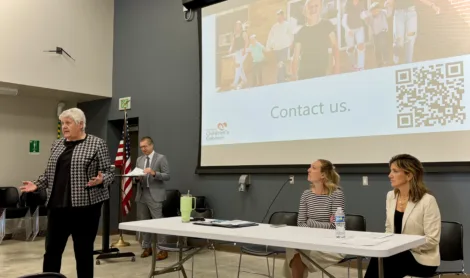
The North Dakota Children’s Cabinet visited Minot on Tuesday, Oct. 6, to discuss and learn more about the regional needs and problems regarding the well being for those ages birth to 20 during its roadshow.
Lt. Gov. Michelle Strinden, cabinet coordinator Jason Callahan, Sen. Kathy Hogan and cabinet Chief of Staff Maria Neset outlined their subcommittees and strategies to address the challenges educators and families currently face.
"We've had the privilege to see amazing shining stars throughout the entire state," Strinden said. "Many in the early childhood space. There is also other regional work that's exceptional between different groups of providers within our system. But what we've also heard is some real challenges that all of you are chasing, and some real challenges that our children are facing. Gaps in access and availability of services, inconsistencies and a need for earlier intervention, particularly for children with developmental delays. So we need to ask a bigger question, 'What does it mean for a child to thrive today?'"
The roadshow was planned to share the results from the cabinet’s 2025-2026 year, hear feedback and to better focus on the state’s individual needs. The cabinet sectioned cities into eight regions.
“You’re the people who work with kids. You’re the people that actually do the work in families, so we believe we have to start from people with direct experience first,” Hogan said. “That’s why we started at the local levels. Not top down, but bottom up. We decided that the overall being, we want any response we have to be locally led, state supportive, with shared accountability. It’s a model significantly different than our current model of safety and rules. We interpret them and influence them. We’re trying to change the balance of power, so we’re encouraging people who work with kids to have a place.”
The Early Childhood subcommittee, explained by Strinden, focuses on improving outcomes for children zero-five, especially in school readiness, childcare access, quality, early interventions and setting up potential partnerships to survey and collect data on young children. The group is working on a model for a statewide kindergarten readiness check to evaluate, better understand and close growing gaps. Strinden said they are taking into account states that have successful checks and evaluations for reference.
The Youth With Complex Needs Subcommittee discussed children who need support from multiple systems and issues they run into. Hogan said they are recognizing education along with cultural sensitivity, trauma informed approaches, economic stability, health, safety and coordination between schools, behavioral health and child welfare. She identified regional strengths and weaknesses and highlighted better collaboration and crisis response.
The Strategic Planning Subcommittee explained it is creating a long-term plan for the cabinet and is working to narrow down priority issues for measurable outcomes, especially for legislative sessions. Both Neset and Strinden explained setting the cabinet up for sustainable work beyond Gov. Kelly Armstrong’s administration is important. It also looked at child well-being, shared goals, accountability and making sure the group stays solutions-based.
The cabinet held time at the end of the event for questions, concerns and feedback. A few participants voiced childhood behavioral needs such as self regulation, parent behavior and family function. Furthermore, technology beyond phones was briefly discussed by Strinden, addressing behavior and a child’s readiness for pre-K and kindergarten.
“What we’re learning in every region we’re going to, is that it is impacting every one of these levels,” Strinden said. “So keeping that in mind, social-emotional skills, how to use those skills, language, literacy, immersion, science and development, physical and activities in daily life. So, what we’re seeing is how that has change quite dramatically in the last 8-10 years. Largely it could be due to screen usage by our kids. We’re going to be partnering with the department to implement a readiness check in the kindergarten and in the kindergarten years statewide. That would help give us a picture so we can start to address what we need”
Hogan said the cabinet was taking a community input approach rather than top-down. Participants discussed with Hogan the unique needs of families, such as adoption and homeschooling and organization in developing policies and services to aid the situation.