
Native American Club celebrates heritage
Trending
On Oct. 6, Gov. Kelly Armstrong proclaimed Oct. 9 as First Nations Day and November as Native American Heritage Month. The proclamation encourages the continued cooperation and relationship between the state and tribal nations, according to the North Dakota Indian Affairs Commission.
Amberlee Medrud, a member of Minot State University’s Native American Club, said Native American heritage expands beyond the history of the past as Indigenous people continue to practice their culture today.
"I think a lot of people think we're gone," Medrud said. "It's difficult for some people to realize that Native Americans do still exist. We're still very actively participating in our culture, living on our land and it's important to realize that this didn't just happen like years and years ago. A lot of the history with boarding schools is very recent. It's important to educate and let them know that we're still here."
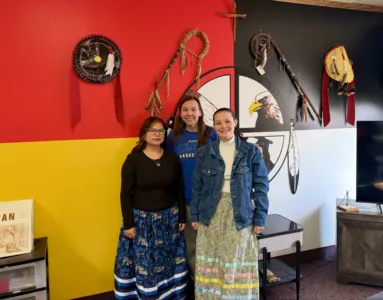
The Native American Club at MSU has organized community events throughout the year, including Orange Shirt Day and speakers for both Indigenous and non-Indigenous community members. The club also helps with the Native American Cultural Awareness Center’s annual spring powwow.
Geneva Tait, the club’s vice president, said Native American Heritage Month provides an opportunity for people outside of the Indigenous communities to learn about their culture, but that learning should be continued throughout the year. Support can look like attending an event or taking the time to ask questions for education.
"We're always learning and getting together in community," Tait said. "We're trying to do things to connect with our culture and each other. I think it's important to have this month so people outside of the indigenous community can come together and learn about us."
Medrud added, "It's our life. An everyday thing. It doesn't just end at the end of November. The thing about being Indigenous is you're always learning, you never stop. You're always gaining knowledge and I think it's important for people to recognize that even though for them it might just be one month. For us, it's our whole lives."
For many younger Indigenous generations, maintaining a connection to their culture means reclaiming past traditions that were once prohibited for previous generations and practicing them openly today.
"We were stripped from our ceremonies, our powwows, language and everything was taken from us," Tait said. "Even my grandparents weren't allowed to really practice their culture. Us taking it back is showing the country that we're still here and this belongs to us."
Medrud added how restrictions on Indigenous practice affected generations. She said the American Indian Religious Freedom Act passed in 1978 and established federal policy protecting their traditions.
“My parents are older, but when they were born it was against the law to practice ceremony in America,” Medrud said. “For my grandparents and parents’ whole lives practically, it was literally against the law. Some Native Americans had to go hide way up in the bushes to do ceremonies and it was something quiet. Now, it’s not. We get to be open and free about it and you won't get in trouble. It's crazy to me that we were born into a new generation where we get to reclaim all that and it doesn't have to be in the dark. We get to bring it to the light”
The effects of cultural disruption due to laws have made it difficult for some families to pass down certain traditions. At MSU’s Native American Cultural Awareness Center, students help one another learn cultural practices that might otherwise be lost between generations.
"We're lucky that we have each other. We have a lot of students who might not know how to bead, so it’s important that we have members like Amberlee who’s willing to teach other students. It's special that we have each other and can lean on one other."
The Native American Cultural Awareness Center also provides support for Indigenous students to navigate higher education, especially for those who are the first in their families to leave and attend college. Beautifull White, the club’s president, said her experience growing up motivated her to work toward her education and set an example for her siblings.
"It makes me work harder. It shaped me to work better and hard for what I want. I'm a first generation and I want my brothers to know that they can go to college. It's breaking a cycle," she said.
Medrud added, "We're lucky if we get a high school diploma. High school graduation is the biggest thing. College is a big deal and the Native center is what drew me here because I was so scared to leave my community. I found a place here and I met lots of people. It’s just so special having this center here."
The center brings together students who come from different tribal nations across North America, giving them opportunities to share traditions and learn about practices beyond their own communities. White said some non-Ingenious people can misunderstand that their language, customs and ways of life are different from one another.
"There's so many different tribes and so many ways people do it," White said. "I want more people to understand that there’s not just a few tribes, there might be 100 tribes and they all have different ways of doing things. Some look at Natives like we're all the same and they think we speak the same or do the same things."
The club members said they hope that their involvement in the club and putting on events will encourage younger Indigenous students to pursue higher education and to take pride in their identities.
Tait said having Indigenous children attend their events gives them an opportunity to envision themselves participating and continuing their education.
"One of my favorite things is whenever we do community events, we have Native students from local middle and elementary schools," Tait said. "They get to see us and say 'Oh my gosh, we can go to college or university and we can do fun stuff.' I know Jim Hill (Middle School) has a Native club, but it’s nice for them to see that there’s more gatherings and events."
Tait said continued connection and practice of their traditions reflects the strength that Indigenous communities have despite historical efforts to suppress their ways of life.
"I think our resilience as a people is really something I take a lot of pride in," Tait said. "It's important for people to be able to reflect on this group of people that has been through multiple attempted genocides, but has continued to persevere and survive."
Along with preservation, club members are working to make Indigenous culture more visible across campus through events and education opportunities.
"I've seen a lot of people be more curious about our culture and I think that has to do with us planning more events like our Orange Shirt Day," Tait said. "We had a lot more people asking questions which was really nice. We have students all around campus who are Indigenous and non-Indigenous who enjoy using the center and come to our events and meetings. I think that's really special and important to hold onto."
While interest grows, there are still misconceptions and stigma surrounding expression. White said language is an area where negative attitudes can affect how openly and confidently many Native people feel about speaking. "A lot of people don't know any language and when they do hear you speak, they judge and make fun of you. I wish more people knew more about it so more would be comfortable speaking our language to each other and not having to worry," she said.
Medrud added, "It's almost like it’s taboo, like if you went to a ceremony or you went and spoke your language. It was like "Oh my gosh,' and they'd try to paint it like witchiness when it’s just a way of our life. Just because we didn't fit a certain blueprint, they thought that it was wrong. It’s getting people to realize that it's a way of life for people and it’s not something to be scared of or worry about, and that's why we want people to learn about it."
Preserving culture to the Native American Club means ensuring that younger generations can learn their traditions and language without feeling ashamed.
"It's important to carry on (traditions), so your culture doesn't die out, especially our language," White said. "My whole family knows our traditions and language, so it's nice to be with my family because I can speak my language to them. I also love teaching other people how to do something, even if they're not Indigenous, you can still learn. For Indigenous youth, being confident and having the mentality of not doing anything wrong just by loving the way you live, you don't have to be ashamed of it."
Tait added, "They were trying to strip all of our culture away from us and I think we're living proof that they weren’t able to. That’s very special and I don't take for granted how lucky I am to be born in this generation where I'm able to be myself and share my culture. I think that's something to instill in future generations that being Native American is something to be proud of. You have these traditions, ceremonies, this way of life and that's going to help you survive."