
Methane rule rollback proposed
Trending
BISMARCK - North Dakota's congressional delegation has welcomed the Trump administration's announcement this week that it plans to end a Biden-era rule aiming to cut emissions of methane from oil and gas field operations.
The delegation has raised concern about the rule's impact on domestic energy production, particularly on smaller operators and marginal wells.
U.S. Sen. Kevin Cramer, R-ND, applauded the Environmental Protection Agency's proposal for repeal, saying, "America should be making it easier - not harder - for domestic producers to meet our nation's needs."
President Donald Trump said Tuesday, Oct. 27, during a campaign rally in Texas that the change would save companies and consumers billions of dollars and unlock 210 million barrels of oil, according to the Associated Press, which reported the additional production would be equivalent to about 10 days of U.S. petroleum consumption.
Cramer said elimination of the rule would save $45 billion in costs for consumers and businesses while unlocking 210 million barrels of oil and 1.41 trillion cubic feet of natural gas. He said the proposal targets costly, one-size-fits-all mandates that producers have warned could force wells to shut down and discourage new production.
The Biden administration finalized its methane rule in 2024, with costs initially estimated at $18 billion. However, EPA's estimate failed to account for the full financial burden on producers and the risk of well closures, Cramer said.
"When energy costs rise, American families and businesses feel it everywhere - from the gas pump and utility bill to the price of putting food on the table. Affordable, reliable energy is essential to keeping our economy moving and our communities thriving," Cramer said in a news release.
U.S. Sen. John Hoeven, R-ND, said the Biden-era rule is duplicative of the gas capture goals set by the North Dakota Industrial Commission (NDIC) without providing the same regulatory flexibility. Under the NDIC goal, North Dakota's gas production grew to record levels while operators achieved a gas capture rate of 95%.
"We appreciate EPA Administrator (Lee) Zeldin for working with us to roll back the Biden-era methane rule, which imposed unworkable mandates that would have forced the shutdown of existing oil and gas wells and severely hampered the development of new wells. That would mean decreased revenue to state and local governments, the loss of good-paying energy sector jobs and a less energy-secure nation," Hoeven said in a news release. "We demonstrated clearly in North Dakota that we can achieve greater gas capture without imposing burdensome, one-size-fits-all rules. By restoring flexibility, this proposal will strengthen U.S. domestic energy production, help reduce costs for producers and consumers and empower states and operators to employ cost-effective solutions to capture more natural gas and reduce flaring."
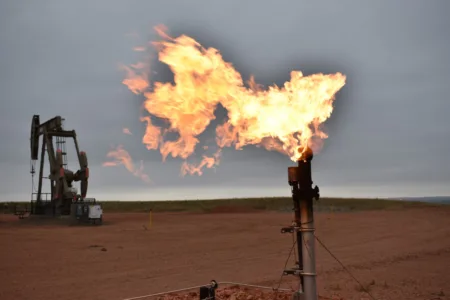
The Associated Press reported scientists estimate methane is responsible for about a third of planet-warming greenhouse gas emissions. Cuts in methane emissions have emerged in recent years as a global priority to slow the rate of climate change. Oil and gas operations are the largest industrial source of methane.
The EPA under the Biden administration had indicated that by 2034, the methane rule was projected to yield $98 billion in benefits. That figure was derived by calculating the future "social costs" of greenhouse gas emissions on public health and the environment, an approach rejected by Trump's EPA, according to the AP.
Dakota Resource Council spoke out against weakening federal methane emissions standards for the oil and gas industry, saying the EPA proposal will relax leak monitoring requirements for aging, low producing wells and eliminate the Methane Super Emitter Program, which gave communities and independent monitors the ability to track and report major leaks.
Despite producing a small fraction of the nation’s oil, aging marginal wells account for roughly half of the industry’s methane emissions, DRC noted.
"The Trump administration's move to weaken methane pollution standards is another example of putting oil company profits ahead of people's health. On Fort Berthold and across western North Dakota, our communities have suffered for decades from oil and gas pollution. Our children, elders, and families deserve clean air, not more toxic emissions," said state Rep. Lisa Finley-Deville, D-Mandaree, a DRC member. "These standards hold oil companies accountable for pollution they create. Weakening them allows wealthy corporations to increase profits while communities bear the consequences."
The EPA will accept public comments for at least 45 days after the proposal is published in the Federal Register and will hold a public hearing.