
Magic City Cadets begin search, rescue training
Trending
The Civil Air Patrol Magic City Composite Squadron kicked off its first weekend in a three-part, annual Search and Rescue training series on Friday, Oct. 2.
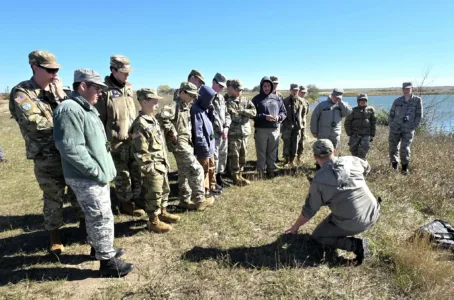
Eighteen cadets, seven adult CAP volunteer members, guest educators and classic North Dakota weather all showed up in full force. Over three days on the windswept shores of Lake Audubon, cadets took on the elements, built a working camp from the ground up and jumped straight into the skills they'll need for real-world search and rescue missions.
The GTM3 weekend blended hands-on field instruction, wilderness skills, medical training, and mission-focused teamwork, giving cadets a real and unforgettable introduction to CAP ground operations. It was teamwork built under pressure, exactly where future Ground Team members are made. The Magic City GTM3 program builds youth leadership, community readiness and career-ready skills for future paths in science, aviation, engineering, emergency response and public service.
Paramedic and CAP volunteer Brian Eveleth led a comprehensive medical block. Under Eveleth's guidance, cadets learned how to safely administer inhalers and EpiPens, why these tools matter in emergency response, and how to recognize and treat hypothermia and frostbite. They practiced stabilizing gashes and broken bones, applying tourniquets correctly and understanding internal injuries, building the medical readiness required for real-world search and rescue operations.
"Brian doesn't just teach skills. He makes lessons stick,” said Cadet Master Sgt. Jeannie DeHaan. “He teaches with such creativity and exhilarating energy; he always has our attention. We gained the kind of knowledge that helps us not only on missions, but in everyday life. Safety is everyone's responsibility, and this training gives us the confidence to step up when it counts.”
Survival and land navigation training was led by a team of specialists from Minot Air Force Base. Tech. Sgt. Brett Darby, a SERE instructor, took the lead, assisted by Civil Air Patrol leaders Capt. Zach Haun, Capt. Matt Merkel and Flight Officer Ian Scott. Cadets learned topographical map reading, pace counting, natural navigation, and edible plant identification.
Cadet Jack May captured the spirit of the class, saying, "Sergeant Darby was a really memorable instructor. He sent us out into the field and said, 'Return with something edible.' I'll be laughing years from now that I ate a grasshopper."
Maj. Nolan Hulick and Capt. Moira Conley provided hands-on communications training. Cadets practiced proper radio etiquette, learned how to reduce interference and conducted live transmission drills across the training grounds. By the end of the session, cadets were communicating with clear, structured radio discipline essential for search and rescue operations. Haun completed classes on chain of command and Scott taught logbook procedures.
"Providing trained ground and air search crews is one of the many ways that Civil Air Patrol serves communities across North Dakota,” said Maj. Ben Conlin, North Dakota Wing director of cadet programs. “Hands-on training not only improves response capabilities across the region but provides essential skills to our volunteer members from ages 12 and up while developing teamwork and leadership abilities."
The GTM3 weekend also was supported by community partners, including Tom Leshovsky of Wold Engineering, who provided a topographical map for logistics training; Willoughby Wood Company of Burlington, whose firewood kept meals and morale steady; and A-1 Evans Portable Toilet Rentals, the weekend’s unsung hero.
"Our families play a huge role as well," said Robyn Stoner, assistant deputy commander for Cadets. "One cadet's father cooked for more than 25 people on an open fire throughout the entire campout, keeping our team fueled and energized. Another family delivered fresh corn on the cob to camp, and another arrived with homemade brownies and cookies that disappeared almost instantly. All of this support brought comfort, community and heart to a demanding weekend of training.”
Cadets will continue their GTM3 training in the classroom over the winter months, learning the science behind the communication tools, navigation techniques, emergency medicine, survival principles and search-clue identification skills they will put into action during field operations in Sessions 2 and 3 this spring. The squadron expects to graduate its GTM3 cadets at the end of April.
"Cadets will complete their classroom instruction during our weekly squadron meetings, along with three full-weekend field training sessions, and we're hoping to include a mock search and rescue exercise in the spring,” said Haun, deputy commander for Cadets. “When they finish this program, our teens will be qualified and ready to participate in real ground search and rescue missions and disaster response alongside local agencies. Our cadets build confidence and real-world capability. They learn hands-on problem solving, to think critically, communicate clearly and work as a team in challenging environments, and they're discovering that they can make a real contribution to our community."
The squadron intends to offer the course annually as certified cadets advance and new cadets pursue their first qualification. A GTM3 certification is the base line. From there, cadets can earn GTM2 and GTM1 qualifications. When they turn 18, they can qualify as Ground Team Leaders.
"We are so fortunate to have skilled USAF active-duty search and rescue volunteers and a certified paramedic on our roster,” Stoner said. “Our cadet program is entirely self-funded, and staffed 100 percent by volunteers who are incredibly generous with their time in supporting our next generation of responders. We are so lucky to be able to expand our cadet program in this direction."
"I'm really excited to see the squadron waste no time this year getting out in the field and taking to search and rescue," added Maj. Jeff Slocum, squadron commander. "Our volunteers have put in a great amount of work and it's great to realize how much the cadets, and the whole team, can get out there ready to serve the community."