
County hears concerns over shared courtroom
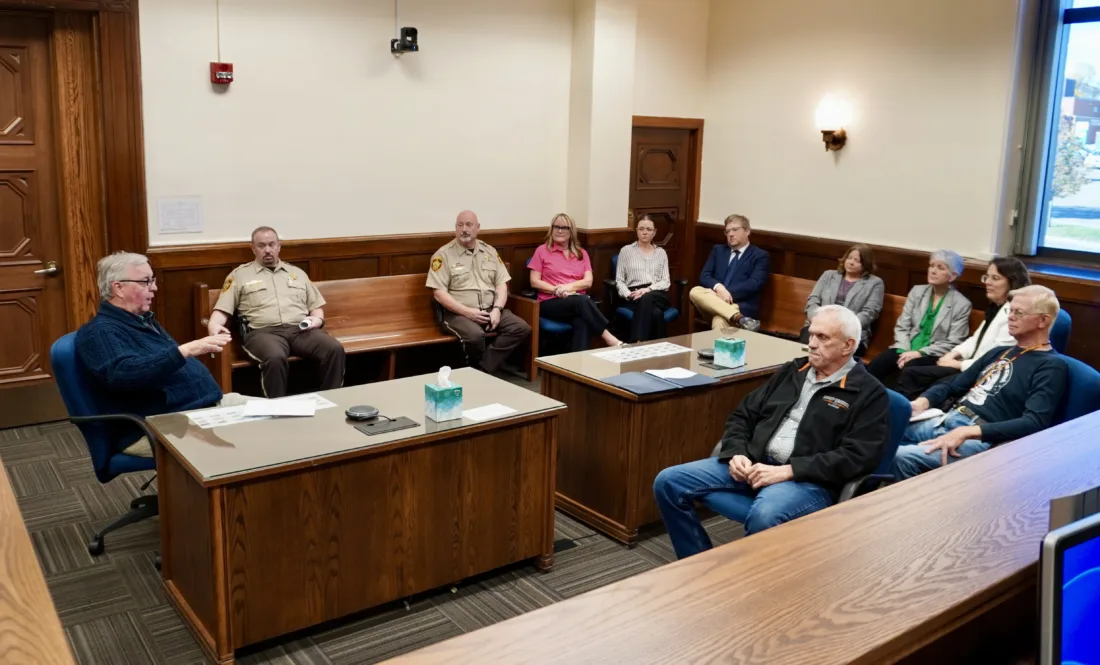
JILL SCHRAMM/MDN North Central District Court Judge Gary Lee, far left, presents information during a meeting of court personnel and county officials Wednesday, Oct. 7, in Courtroom 100. The courtroom had been proposed for shared use with Minot Municipal Court.
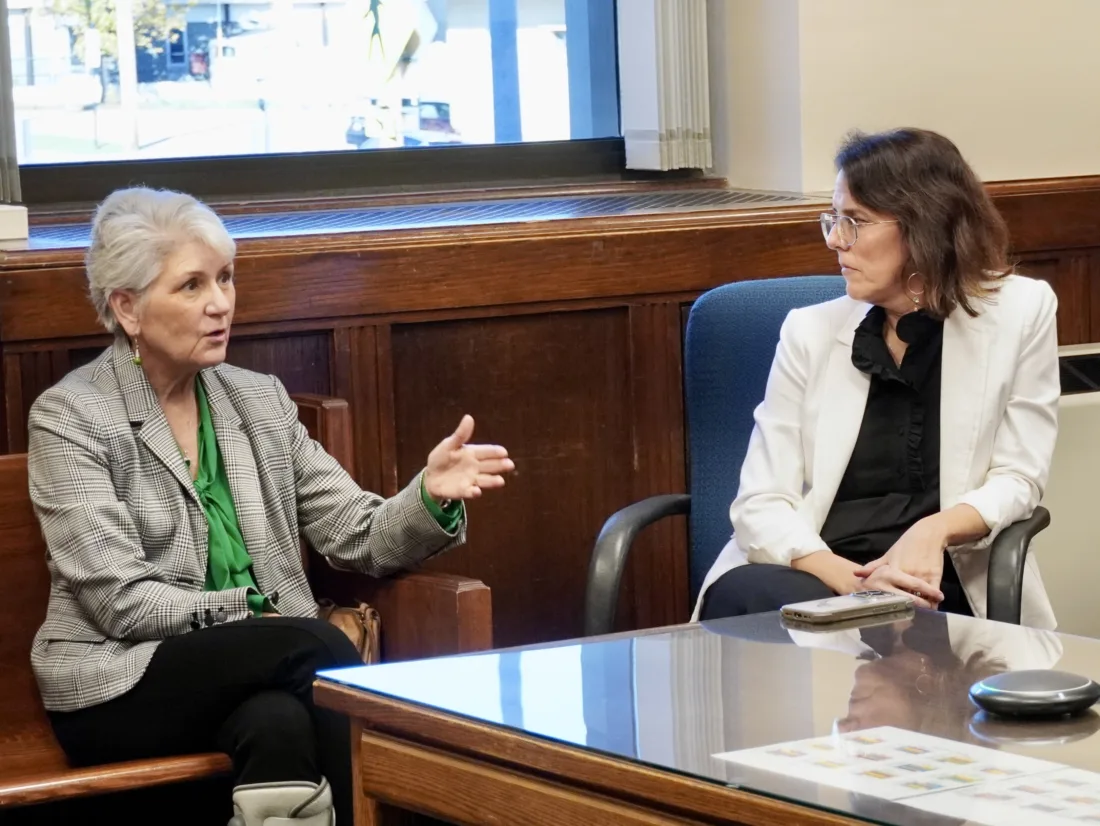
JILL SCHRAMM/MDN North Dakota Supreme Court Chief Justice Lisa Fair McEvers, left, speaks at a meeting of a meeting of the Ward County Commission’s Building Committee meeting Wednesday, Oct. 7, which was attended by district court representatives, including Judge Stacy Louser, right.
JILL SCHRAMM/MDN North Central District Court Judge Gary Lee, far left, presents information during a meeting of court personnel and county officials Wednesday, Oct. 7, in Courtroom 100. The courtroom had been proposed for shared use with Minot Municipal Court.
JILL SCHRAMM/MDN North Dakota Supreme Court Chief Justice Lisa Fair McEvers, left, speaks at a meeting of a meeting of the Ward County Commission’s Building Committee meeting Wednesday, Oct. 7, which was attended by district court representatives, including Judge Stacy Louser, right.
Trending
A meeting with the Ward County Commission's Building Committee on Wednesday, Oct. 7, didn't serve to remove objections of North Central District Court staff to a proposed courtroom sharing arrangement with Minot Municipal Court. However, efforts to find a way for the county to accommodate municipal court aren't over.
"We don't have to do this as a county, but we house inmates for all the communities and we make that work," Commission Chairman John Fjeldahl said. "It seems logical this could work, too."
Fjeldahl and Commissioner Jim Rostad with the building committee, along with the county's facilities manager, technology director and Sheriff's Department representatives, met in Courtroom 100 with district court staff, who were joined by visiting Supreme Court Chief Justice Lisa Fair McEvers and Supreme Court Administrator Sally Holewa.
Ward County and the City of Minot had worked out a plan to allow Minot Municipal Court to use Courtroom 100 part time. The city is looking for a better facility for its court than the current quarters in Minot Municipal Auditorium. Safety and security is a major reason. The Courthouse has entrance security provided through the Ward County Sheriff's Department.
According to court representatives at the meeting, the foremost concern is security of the district court's computers and other electronics in the room. Scheduling issues came up as another major hurdle.
Municipal court normally would have need of the room from 8 a.m.-10:30 a.m. three days a week, with a fourth day at times, Rostad said. A nearby file room would be converted to a municipal court office for use from 8 a.m.-4:30 p.m.
Holewa said displacing district court from Courtroom 100 even for a few hours a few days a week creates problems in scheduling. Displacing just 20 cases a week adds up to more than a thousand impacted cases a year, she said.
"It's not the space alone that makes the difference. It's what you do on a timely basis," she said.
"My concern is the loss of district court time. It's a major concern to lose courtroom space and time," Fair McEvers said. "I'm not understanding how a city court's issues have now become a county issue."
Fjeldahl explained the decision to work together to save tax dollars. Moving municipal court to the Courthouse is the most cost effective and best suited solution identified by the city for replacing current municipal court quarters.
"State law is that the county's responsibility is to provide adequate space to the court - the state court. You have no responsibility to provide for municipal court," Judge Gary Lee said. "That's strictly a city problem. But now, you're making it a three-party problem. I'm not trying to be adversarial, but you're chipping away at our time and space, and what does that mean for the adequacy of the courtroom facilities?"
Facilities Management Supervisor Brian Vangsness said other areas in the Courthouse and Administration Building have been considered by the city for its court. Typically, other areas have had drawbacks or lacked features that would be costly to add, compared to moving into an established courtroom, he said.
Judge Stacy Louser suggested security may be less of an issue with Minot Police Department's acquisition of a magnetometer machine, useful as a metal detector. The police would be able to provide municipal court security, eliminating the security component that has been a factor in narrowing site selection to the Courthouse, she said.
Sheriff Robert Roed said providing security for added traffic with municipal court shouldn't be an issue. He also noted the need for local governments to seek cost savings, given the state's 3% cap on their taxing authority.
"We've got to start working together to save money. We've got to start learning how we can make this work instead of figuring out how we can't," Fjeldahl said.
Fair McEvers said she doesn't disagree, but based on the district judges' information, her concern is the loss of courtroom time and the impact that will have on case scheduling.
The county established additional courtrooms after the Administration Building was constructed and offices moved. The courtrooms were added to meet the need, and that need hasn't changed, according to District Court Administrator Carolyn Probst.
"That's where we're coming from. It's not cooperation or the lack thereof. It's the reality of the situation," she said. "It's not that we don't want to cooperate."
"I think everybody is open to possible solutions," Louser added. "But the impact of how it will stall cases is tremendous."
There was discussion around continuing to study potentially usable space other than Courtroom 100.
"Our number one concern is the courtroom," Probst said. "Losing a courtroom is just the worst option here."