
Veterinarian steps into new director role
Trending
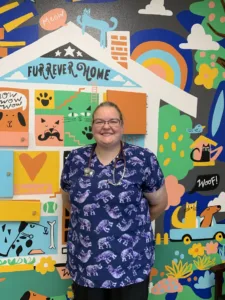
Dr. Amanda Doll is the Severson Ahart Community Clinic's new director of Veterinary Medicine, overseeing the medical team and bringing her love and experience for animal care to the Minot community.
Hailing from south central North Dakota, Doll has always been surrounded by animals and veterinarians, which influenced her decision to choose veterinary care. Currently, Doll has two horses and says she can't imagine working anywhere else but her home state.
"I grew up in rural North Dakota, my family has always had animals. My mom is a big animal lover and worked as a veterinary technician, which contributed largely to the number of animals we owned," Doll said. "My dad is a cattle rancher as well, so I was exposed to a lot of situations many children never get the chance to experience. These experiences are mainly what influenced my desire to go into veterinary medicine."
Doll attended North Dakota State University for undergraduate studies and graduated from Kansas State University for her professional doctorate degree. North Dakota colleges currently don't offer Doctor of Veterinary Medicine (DVM) programs, therefore those who study undergrad at universities like NDSU have to transfer out of state in order to work toward their doctorate. Being so far from home, Doll said it was difficult at first, but after she found her circle it became easier.
"NDSU was great. They gave me the tools I needed to get into veterinary school. For most people, becoming a veterinarian is a minimum of eight years of college, just like any other doctor," Doll said. "Given that it takes so long just to get a professional degree, many people will go straight from undergraduate school into their professional programs if they are able to do so. I was one of those people who was fortunate enough to get into veterinary school with my first application, so I went."
Aside from having zero DVM programs in the state, North Dakota much like other rural states are facing a shortage of veterinary care. Despite the American Veterinary Medical Association reporting that the issue will cease within the next 10 years, that doesn't take away from pet owners who often have to travel to other cities and sometimes states to get pet care due to long waits and shortage of specialty services. Doll explained that she has seen and experienced this first-hand.
"It was almost a daily topic of discussion at my previous place of employment, as our clinic saw a lot of overflow from Minot. We were getting 5-10 new clients calling per day looking for care, and not just from Minot, but also from areas as far away as Bottineau, Devils Lake and Jamestown," Doll said. "It's incredibly sad to see a larger community like Minot struggle to find veterinarians, especially with access to many amenities that a more rural community cannot offer."
Even though this issue is frustrating for pet owners, veterinarians additionally feel the stress. At the moment, clinics are dealing with the surge in pet ownership that rolled over from the pandemic, and not enough current graduates to fill the places of older veterans, burnout cases and economic challenges.
"Burnout and compassion fatigue are major issues within the veterinary community, and I would bet most veterinarians have felt this at some point in their career, including myself," Doll said. "SVAS is going above and beyond to set up protocols and manage scheduling to keep our new team from experiencing these effects."
As a pet owner who grew up taking care of animals, and being around veterinary practice, Doll understands the stress that many of her patients’ families face. She understands the finance decisions and struggles that sometimes are complex and says that it is the most difficult part of her job. Furthermore, Doll said that veterinary care is on the rise with pet insurances and plans for emergency situations.
"To many people, their pets are their family, and even for some, they are all that they have. When these pets are not doing well, it can be scary and frustrating when owners can't get access to the care they need," Doll said. "This can lead to negative interactions between veterinarians and pet owners, but people must remember that veterinarians are only human and can only do so much in a day. In a field that is already struggling with mental health, being patient and kind goes a long way."
Even though the job is hard sometimes, Doll is still committed to bringing her very best to the role. The most rewarding cases she says are those of which animals in the poorest conditions recover and respond to treatment, eventually getting to go home with their families. Her passion in the field includes making veterinary care accessible.
Before joining the clinic inside Souris Valley Animal Shelter, Doll practiced mixed animal medicine and her favorite areas include small-animal soft tissue surgery. Doll’s favorite memory in her field was at her previous place of employment where she was given an opportunity that she had never envisioned.
"I had the opportunity to perform insurance exams on elk and bison at my previous place of employment," Doll said. "I never envisioned doing that while I was going through veterinary school. It was a cool experience."
Doll said she is looking forward to meeting the community and getting to know everyone and their furry families when the clinic opens back up soon. She said the community response to her arrival has been kind and supportive. One thing Doll is looking forward to is the clinic’s fall activities.
"SVAS is participating in a pumpkin walk this fall where the shelter and clinic staff carve and decorate pumpkins. I haven't carved a pumpkin in a long time though," Doll said. "Is using surgical instruments to carve a pumpkin appropriate?"