
Trending
Minot, similar to many rural counties across the U.S., is facing a growing shortage of veterinary practices due to the surge in pet ownership and not enough new graduates to fill the places of older veterans, burnout cases and economic challenges. Long waits, limited services and higher costs for pet and livestock care may be a few of the issues owners are facing.
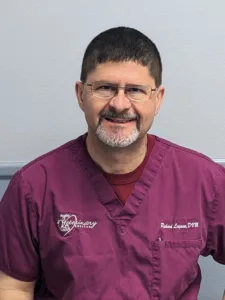
“There is an incredible shortage of veterinarians in rural areas, and not just for large animals, but also small animals,” said Dr. Richard Lagasse, practice owner and veterinarian for The Rugby Veterinarian Service. “I know there are vet clinics closing down left, right and center because they can’t find anybody to hire or can’t find anyone to buy their practice. More and more, there are veterinary clinics that are not able to take in new clients, so that creates a problem for new people moving in the area. It just seems to be getting worse and worse.”
The veterinary shortage is an interconnected problem with no one size fits all solution. The severe shortage of livestock and rural veterinarians can be traced back to the post-World War II era, however, the issue intensified significantly during the 2000s, according to the National Conference of State Legislatures.
With a growing demand, many animal hospitals, vet techs and veterinarians are taking on bigger work loads leading to burnout, harder to fill hours and a scale back on different specialties due to clinics and hospitals having to account for the growing number of patients and their needs.
“The (COVID-19) pandemic did seem to make things worse because there were a lot of people that got pets that may not have had them before. But even before that, we were certainly as busy as we wanted to be or could be,” Lagasse said. “Now, it’s kind of gotten worse and we’re trying to do the same work with fewer veterinarians out here. There’s a lot fewer veterinarians within a 60 mile radius of us now than there was 10-15 years ago, so that’s a problem.”
When Lagasse first graduated with his Doctor of Veterinary Medicine (DVM) degree, he said veterinarians were expected to work 50-60 hour weeks. Now with a cultural shift towards a more work-life balance approach, especially in the veterinary industry to try and prevent early retirement, high-stress and burnout, practices are trying to find new ways to take care of their staff to prevent future issues.
The CDC and the American Veterinary Medical Association reports that veterinarians are between two to four times more likely to die by suicide than the general public.
“When I came out of veterinary school, it was expected and normal for us to work 50-60 plus hours a week. Our society has changed, there’s more of an emphasis on work life balance, which is not a bad thing,” Lagasse said. “There’s a reason why veterinary medicine as a profession has one of the highest suicide rates in the country. Some of it is because of the stress that goes along with the job. One of the things that we are really trying to do now - we put in extra hours - but we want to make sure that everybody gets some time off to get recharged because otherwise they get burnt out and people tend to retire early, or they move someplace else where they’re not getting burnt out or they leave the profession all together.
That’s a serious risk and that’s happening all over the place. We are really trying to make sure people get that time off that is needed for them. Sometimes that does mean that we can see fewer patients during the week but in the long run, what we’re trying to do allows us to keep our staff for a longer period of time, and it benefits the community in the long run.”
In 2024, the American Veterinary Medical Association reported that the number of graduates from existing U.S. veterinary colleges is likely enough to meet demand by 2035.
North Dakota's closest veterinary school is the University of Minnesota College of Veterinary Medicine in St. Paul, Minnesota. North Dakota does not have any in-state professional veterinary college that awards the DVM. North Dakota State University only offers undergraduate pre-veterinary medicine and technology pathways.
Some states like South Dakota offer a 2+2 program to address not having a DVM program. North Dakota does not have the 2+2 program, but it does offer the Veterinarian Loan Repayment Program to help pay off student debt for large-animal vets practicing in rural areas of need, according to the North Dakota Department of Agriculture.
For large-animal ranchers in the state, the veterinary shortage is affecting the care that they can receive. Clinics have had to turn down calls due to the high number of small animal cases occurring during the week. Lagasse describes the problem as “heartbreaking” because veterinarians, at the end of the day, don’t want to turn down ranchers who need assistance. The growing shortage of help has caused some ranchers in the area to downsize their livestock as a result.
“We are really torn a lot of the time. When we’re getting really swamped here at the office and we get a call from a rancher that needs help out on the farm, it’s really hard. Sometimes heartbreaking because we simply can’t leave what we’re doing here to go out and service them,” Lagasse said. “That does create a problem and I know in the past few years, there’s been at least a couple of practices in our area that used to do cattle work, that’s no longer, or if they do, they do very little.
“It creates areas where there is no veterinary care within a reasonable distance for them. Is it going to get worse? Probably. I hope not. I do know that they have a program where they have a loan forgiveness program for veterinarians serving certain rural areas. They kind of focus on mostly livestock.”
According to the North Dakota Soybean Council, livestock agriculture contributes roughly $2.6 billion to $3 billion annually in economic impact to North Dakota, with beef continuing to be the largest livestock segment in the state.
Furthermore, livestock contributes $287 billion to $303 billion annually in direct cash receipts to the United States economy, “serving as one of the twin pillars of American agriculture,” according to the USDA.
As the lack of veterinary care throughout America continues to grow, Lagasse said he understands how frustrating it can be for pet and livestock owners. He said the shortage in service didn’t happen overnight and his clinic staff are doing everything they can to continue providing the best care.
The Rugby Veterinary Service is now offering a triage service to help with potential emergencies or care instructions for animal owners who find themselves needing help after-hours.
“I understand the frustration when people can’t get in. There have been cases where they can’t get in because we don’t have a doctor available to take their case,” Lagasse said. “We understand the frustration of not having that access to care, whereas at one time, care was always there. I have had cases where I might be here for several hours in an emergency and I know my phone is ringing, but I just can’t get to it because I can’t abandon the patient I’m currently working on. People get understandably frustrated. We’re also trying to do the best we can do and still maintain it to avoid burnout.
“We don’t want to get to a point where we don’t want to do this job anymore, because if that happens, then there goes another doctor that is available to help. One of the struggles with rural care is that we try to take care of our own patients for emergency care, but many of us are still taking emergency cases from outside of our practice areas. We only have one emergency clinic that’s 24-hours. That is in Fargo. I ensure you, we’re doing the best we can. It’s not all of a sudden after 30 years we decided to start becoming lazy. We’re trying to maintain our sanity, but still provide the best care we can.”