
Drought drives deer behavior
Trending
Drought is a prevalent problem this year and is affecting crops and wildlife across the region, according to Chris Asmundson, agricultural research technician at the NDSU Research Extension Center, south of Minot.
Asmundon said raccoons, turkeys, woodpeckers and robins are just a few wildlife that harvesters have to look out for in order to protect their crops. Deer, however, haven't been an incipient threat until now.
Recent droughts have made it challenging for deer to find reliable, quality food, which makes them weaker as winter approaches, lowering their chances of survival, according to the Rocky Mountain Elk Foundation. Furthermore, when deer are malnourished they have less fawns following the year after a drought.
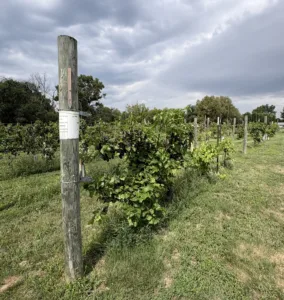
Asmundson said deer occasionally can be a nuisance for grape growers, particularly when vines are young and are producing new shoots. She said grapevine fruits are typically not a primary food source for deer, making this year's recent behaviors unusual.
"Usually if you have problems with deer, they're going to come in and they're going to eat the young shoots of the plant, which if you have small vines or new vines isn't that big of a deal," Asmundson said. "Deer aren't usually one of the main problems that we have."
That pattern, however, appears to be changing this year, possibly due to drought, according to Asmundson. On social media platforms, local grape growers surrounding the Minot area have shared their experiences with deer becoming more of an issue than before. In one case, the herd went beyond chasing the young plants and ate the fruit from the mature vines.
"Since it's close to the river, and there are native grapes on the river bank, these deer may already know that grapes are food and when they found the vineyard, they were already aware that it was a treat," Asmundson said. "Usually they don't go after the fruit.”
The dry conditions may be additionally be changing where deer look for food. Asmundson said with less fresh vegetation available, crops such as grapes become an appealing alternative as they provide nutrients and moisture.
"I haven't heard of it before in this area. It could be because it is fairly dry this year," Asmundson said. "There isn't a lot of greenery for them to eat. The hay has been baled and then it didn't really come back because we didn't get a lot of rain, so there isn’t that fresh alfalfa. They may have just got lucky and stumbled onto it and it was something that was green and had moisture so they were drawn to it."
For harvesters, losing a crop late into the season can have month-long effects beyond the harvest. Asmundon explained how grapes that are eaten before they can be picked cannot be used to produce wine, meaning less product is available to sell or promote.
"Most places have some supply, some wine supply, but they're not going to have an extra year bottled up in the cellar,” Asmundson said. "That means missing out on trade shows – the Pride of Dakota festival and where they market. If they don't have wine to market their product, they can't go to those events."
Asmundson said for grape harvesters, the biggest challenge is time. Losing a part of a harvest late into the season can be devastating. She said the region's short summers make it difficult to grow grape varieties, but the NDSU Research Extension Center is working toward finding and making assortments that can potentially withstand harsh weather and short time frames.
"Our biggest challenge is time. We don't have long enough summers. We have to find or we're trying to create new varieties here that don't take as long to ripen," Asmundson said. “We have some varieties from the University of Minnesota, Wisconsin and some from South Dakota that we do here. But like Concord, which is a popular one in most of the country, it'll grow here, but it doesn't have time to ripen. We just don't have long enough summers."
To prevent deer and other animals from entering a harvest area, NDSU officials recommend an 8-foot fence for the best defense.
Asmundson emphasized physical barriers are generally the most effective, but other deterrents could be dogs and motion-activated lights.
"If you have a dog, that helps a lot. They don't like to come into the yard if you have a dog but after that, fences are probably your best option," Asmundson said. "Motion lights work well most of the time, but sometimes the deer will get used to those. Your best bet is still fences. Six feet is good, 8 feet is better. I would say 6 (feet) would be enough if it was electric, but 8 (feet) is definitely better because they can jump 6-foot fences."