
Commission rejects proposed feedlot
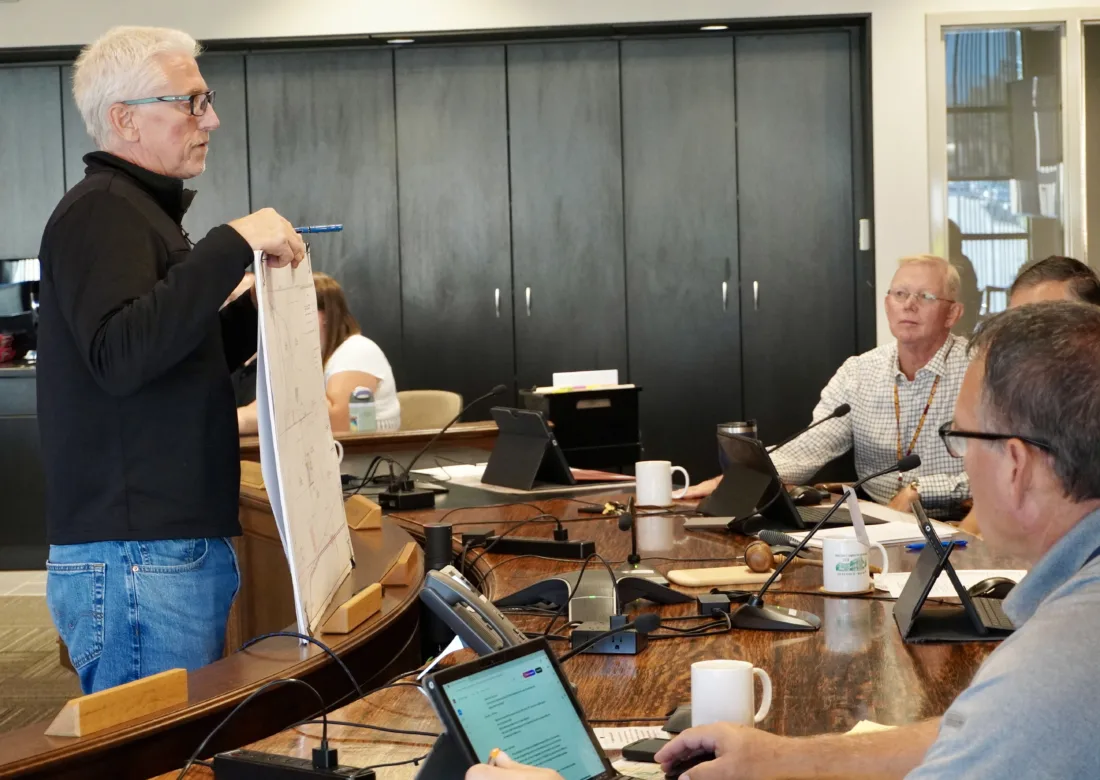
JILL SCHRAMM/MDN Sean Weeks, engineer for Ansuz, LLC, displays a map to the Ward County Commission during discussion on siting of an animal feeding operation near Surrey on Tuesday, Sept. 1. From left are commissioners Jim Rostad, Ron Merritt and Jason Olson.
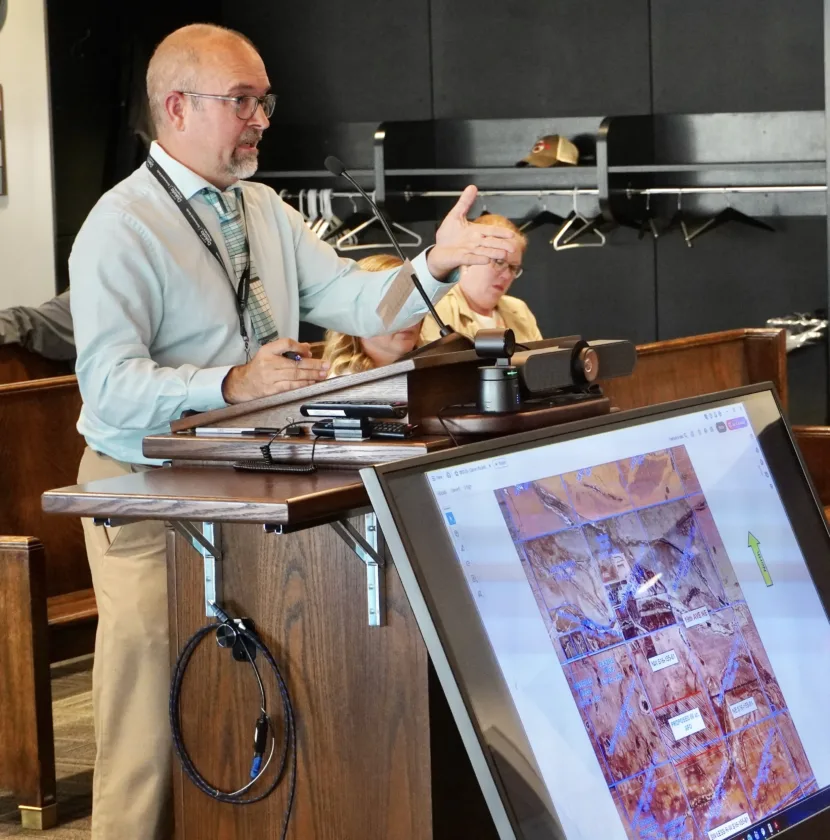
Jill SCHRAMM/MDN Marty Haroldson, director of the Division of Water Quality in the North Dakota Department of Environmental Quality, speaks to the Ward County Commission Tuesday, Sept. 1, behind a map showing the location in Surrey Township of a proposed animal feeding operation.
JILL SCHRAMM/MDN Sean Weeks, engineer for Ansuz, LLC, displays a map to the Ward County Commission during discussion on siting of an animal feeding operation near Surrey on Tuesday, Sept. 1. From left are commissioners Jim Rostad, Ron Merritt and Jason Olson.
Jill SCHRAMM/MDN Marty Haroldson, director of the Division of Water Quality in the North Dakota Department of Environmental Quality, speaks to the Ward County Commission Tuesday, Sept. 1, behind a map showing the location in Surrey Township of a proposed animal feeding operation.
Trending
Ward County commissioners narrowly said no to a proposed animal feeding operation near Surrey on Tuesday, Sept. 1. The 3-2 vote reflected differing views on whether the feedlot met zoning requirements.
Nathan Smith, a partner and proposed operator in the project, said after the meeting that he plans to file a court appeal because the commission's decision does not comply with the county's ordinance.
"They acted outside their scope," he said.
The commission heard from representatives of the applicant, Ansuz, LLC, who stated the project would meet half mile odor setbacks from residences and required distances from private wells and streams, disputing findings of the Ward County Planning Commission, which had recommended denial.
Commissioner Jason Olson, one of the county representatives on the planning commission, moved to accept the planning commission's recommendation to deny a conditional use permit, citing considerable opposition at the planning hearing.
Commissioner Miranda Schuler said the opposition comes from neighbors unhappy with a nearby feedlot by the same operator.
"I understand this is a new application, and this is not the same as is already operating, but a lot of it exists because of maybe poor neighboring conditions. And I would encourage, regardless of what happens, work some of that out so that we can find a way to make this work. Because it's an important thing in our economy. It's an important thing for our state," Schuler said of animal agriculture. "I don't know that I can support denying right now because I believe just from a strictly planning and zoning use, it meets what's being asked."
Olson was joined in voting down the requested conditional use permit by John Fjeldahl and Jim Rostad.
Tying up discussion were differences over whether a flow-way that carries runoff sporadically is a protected waterway and whether the City of Surrey's zoning master plan counts the same as actual zoning in identifying residential areas.
Sean Weeks, engineer for the project, said even if protected streams exist and even if Surrey's exterritorial area is truly zoned residential agriculture, the project meets the mandated setbacks in the county's ordinance.
Setbacks are determined by the size of the operation, which in this case was no more than 2,000 animal units. Animal units are defined by cattle type, typically based on weight, and actual head counts could be up to 2,667 animals.
The commission went through various technical considerations that left not everyone in agreement. There were discussions over roads and water quality testing.
Commissioner Ron Merritt said the applicant demonstrated, although not perfectly, that it can meet the zoning requirements. Regarding water quality concerns, he said the North Dakota Department of Environmental Quality (NDDEQ) would address those if the county advances the project.
Marty Haroldson, director of the Division of Water Quality in the NDDEQ, said environmental concerns would be the focus at the state level. He said the state works with applicants to ensure water is protected. However, he said, stormwater containment and manure management can be part of a plan to meet the requirements.
Rostad said he's closer to approval than he was before the discussion but has concerns for neighboring property owners. Fjeldahl said he can't support the permit until the operator's existing feedlot addresses its noncompliance issue.
The county had determined Smith's feedlot north of the proposed new site was of the size that it should have had a permit and now is out of compliance. Cattle have been moved, and Smith said only four animals remain.
Eric Olson, attorney for the applicant, took issue with the Ward County Sheriff’s Department for flying a drone over the feedlot Aug. 12 to count animals. County Planning and Zoning Administrator Beth Pietsch said a search warrant was obtained for the flyover, but Eric Olson responded the warrant never was provided to the property owner, making the flyover illegal.
Smith said the county's compliance rules for his feedlot could apply to some other operations if applied equally and fairly.
"They are going to drive the cattle industry out of Ward County," he said, adding the loss is not just to farms and ranches but to the jobs those enterprises create. He indicated he is looking to expand his operation elsewhere due to the county's stance.