
Our American Story: Celebrating ND250 with Indigenous culture
Trending
Throughout 2026, the ND250 Commission, administered by the State Historical Society of North Dakota, is leading the state's commemoration of the 250th anniversary of the founding of the United States. Through meaningful, inclusive, and inspiring projects and events, the commission celebrates North Dakota's rich history, diverse people, and bright future while honoring the state's heritage, individual values, and spirit of community.
As North Dakota reflects upon 250 years of history, one of the most meaningful ways to understand our shared history is to recognize the enduring presence and contributions of Indigenous peoples and tribal nations.
Tribal sovereignty is not a relic of the past; it remains a living and essential part of the United States' democratic framework and government-to-government relationships. Across the state, tribal nations are welcoming visitors to experience Native American culture through events, tourism, and places of learning. Each offer opportunities to listen, observe, and engage.
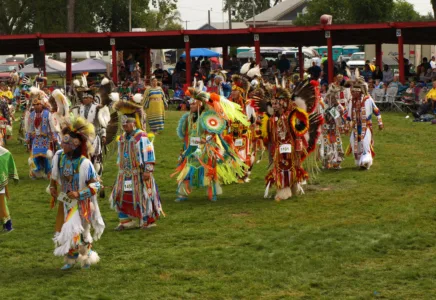
For North Dakotans, a powwow is a unique celebration of Indigenous culture and highlights a rich tapestry of Native American culture that includes food, arts and crafts, storytelling, spirituality and friendship.
Powwows are vibrant gatherings that bring together singing, dancing and community. While each powwow is unique, they share common elements such as the Grand Entry, traditional songs, and intertribal dances. These events are both celebrations and living expressions of culture and history, passed down through generations.
One of the largest events in the region is the United Tribes Technical College International Powwow, held in Bismarck at the Lone Star Arena from Sept. 11-13. This will be the 56th annual celebration. Visitors come from across the country and around the world, making it an opportunity not only to experience Native culture, but to see the connections between tribal nations. During the ND250 commemoration, additional events such as the TMBCI Powwow in Belcourt on Sept. 4-6 will further highlight the importance of cultural exchange and understanding.
Beyond these larger gatherings, state and regional powwows are held throughout the year across North Dakota's tribal communities, offering opportunities to experience traditions in local settings and support tribal businesses.
Equally important are the places where history, language, and culture are shared every day.
Across the state's reservations, cultural centers, museums and historic sites provide deeper insight into Indigenous history and daily life. Locations such as the earth lodge villages along the Missouri River and reconstructed sites like On-A-Slant Village help visitors understand how communities lived, worked and governed long before statehood.
Tribal colleges and community cultural centers also play an important role. These institutions are not only places of education, but centers for preserving language, sharing traditions and continuing cultural practices. Visitors can learn about everything from traditional foods and agriculture to art, music and storytelling, often guided by those who live and carry these traditions forward.
These experiences are part of a broader effort supported by the North Dakota Native Tourism Alliance, which brings together all five tribal nations in North Dakota to share their stories in their own voices. Through coordinated tourism initiatives, the alliance helps ensure that visitors can engage respectfully and authentically with Native communities.
Native tourism is more than visiting attractions; it is an opportunity to directly learn from tribal nations, support their businesses, and engage respectfully in their living cultures that continue to thrive today. At the heart of these opportunities is a simple but important idea: that the most meaningful way to understand history is to hear it from those who live it
As part of ND250, these experiences invite North Dakotans to expand their understanding of "Our American Story" by recognizing that it includes many voices, perspectives and traditions. Visiting a powwow, exploring a cultural center, attending the MHA Indian Horse Relays at the North Dakota State Fair or taking part in a community event offers a chance not just to observe history, but to connect with it.
These moments of learning and exchange help build a stronger appreciation for the cultures that continue to shape North Dakota today. They remind us that history is not only something found in books, but something that lives in communities, celebrations, and shared experiences.
As we mark the 250th anniversary of the United States, the ND250 Commission encourages all North Dakotans to take part by exploring, learning and listening.