
Water fund shortfall could impact cities
Trending
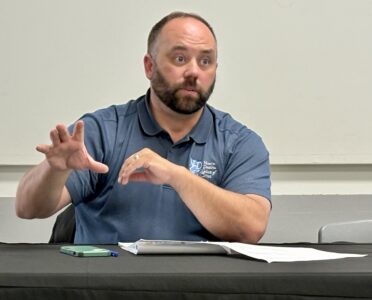
SURREY - Cities could have a harder time accessing state grant dollars for certain water infrastructure under proposed options to a cost-share program, according to information shared at a North Dakota League of Cities listening session in Surrey Thursday, July 23.
League of Cities Executive Director Matt Gardner said the State Water Commission is projecting available funding to fall $1.7 billion short of meeting project needs around the state. The wish list of projects isn't necessarily an exact number so the shortfall number could be off, he said.
"But, at the end of the day, there's going to be a shortfall, and there's projects that won't get funding," he said.
Among the options to stretch the dollars are funding ceilings on the Mouse River Enhanced Flood Protection Project (MREFPP) and the Red River Valley Water Supply Project. The MREFPP would have a ceiling of $304 million that could come from the state's water trust fund. By bonding for costs beyond the ceiling, it leaves more money in the fund for other purposes, Gardner explained.
Minot City Finance Director David Lakefield said the ceiling represents legislative intent from about a decade ago and doesn't reflect inflation since then.
Another option within the larger proposal - on which the State Water Commission is seeking public comment - would reduce the state's cost-share on replacement projects from 60% to 25%, requiring cities to pay 75% instead of 40%. Replacement projects are defined as installing similar systems or components to what currently exists for the purpose of preserving or enhancing service. Deferred maintenance or repair work beyond routine maintenance would not be eligible for any cost-share. Applicants also would need to first apply to a state-operated revolving loan fund for water projects to demonstrate affordability challenges.
"They're trying to come forward with a plan through 2039, and so in order to fund the things that are needed, they think that replacement should have a lower cost share and a $2 million cap (per project sponsor) through 2039," Gardner said. "I think the water commission wants to get out of doing replacement projects. If you look back far enough, they weren’t funding replacement projects, but there was a lot less funding back then."
Garrison City Auditor Diane Affeldt said requiring Garrison to come up with 75% would stop projects from happening.
"We have nowhere to get growth for new," she said, noting the city is landlocked between agricultural land not for sale and Lake Sakakawea. The restrictions could mean the water commission will find there's no longer requests for the money, Affeldt said.
"It's going to sit there and go only to those cities - the major cities - that have growth, and the rest of us that are the heart of the state can't use it because we're not growing and we can't replace. So, our infrastructure is going to age. It's going to fail. It's going to collapse, and we have no means of getting funding," she said.
"I think it would be a struggle even if they reversed it and said, 'OK, we'll do 40 percent and you pay the 60 (percent)," added Burlington City Council member Devra Smestad.
Another proposed option of the water commission is to adjust cost-share percentages based on a project's prioritization. High priority projects would receive a 50% cost share. Gardner listed projects such as water plants and tying into regional water systems among examples of high priorities.
Moderate priority projects would receive 45% and low priority 40%, with a ceiling per project of $5 million through June 2039. Replacement projects would remain at the recommended cap of 25%. Exceptions would exist for projects that have legislative intent amounts connected with their funding, including the MREFPP and Northwest Area Water Supply.
Gardner said he has been asking cities whether they prefer lower cost shares by the state, which increases the chance of getting at least a reduced grant, or keeping the higher cost share and risking not getting a grant at all.
Talking with cities across the state, opinions vary on how the state should go about stretching its dollars and whether new projects should be favored over replacements, he said.
"It's hard when we start creating a one-size-fits-all program because there’s so many unique differences," he said. "Everybody wants to go to Legacy Fund earnings for projects, and, yes, that fund is growing, but it's pretty taxed right now. A lot of it is allocated."
The League of Cities is completing listening sessions in six regions of the state. The North Central meeting in Surrey included participation by representatives of Surrey, Granville, Minot, Burlington and Garrison.