
Former fair manager gives 2026 event high marks
Trending
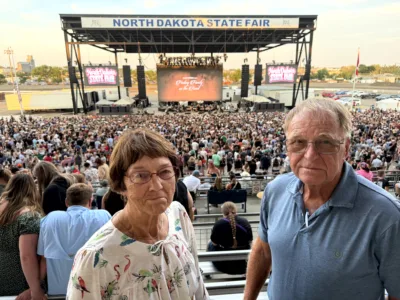
Although he retired as fair manager 20 years ago, Jerry Iverson and his wife, Connie, still can be found strolling the fairgrounds at the North Dakota State Fair, taking in the exhibits and conversing with long-time friends.
It has been 50 years since Iverson, then a 28-year-old vocational agricultural teacher, took on the role of NDSF general manager. His first fair was in 1976 and his final fair was in 2005, a 30-year run.
"They make it look better every year," Iverson said of the fairs since then.
He recalled the fairgrounds, when he started in January 1976, with no asphalt, no State Fair Center as it exists today, a smaller grandstand and a small stucco building serving as the fair office.
Iverson told of a Saturday night storm that came through in one of those earlier years, twisting and breaking the grandstand stage and prompting an emergency call to a Florida outfit to bring in a replacement stage from Minneapolis. The replacement stage was in place by Monday, but with the new, sturdy stage that exists today, those worries about wind are over, he said.
"The thing that I'm amazed with is the Minot community - what it’s done," he said. "The city, the county, the fair - everybody kind of went together to do that. When they go through the records, they see they're still working together. The 28-year-old vo-ag teacher wouldn't have gotten this done. The whole community really worked together on those projects."
He said his experience with fair exhibits and entertainment when he came in as fair manager consisted of taking students and their livestock to the North Dakota Winter Show and organizing a donkey basketball game at the Minot Municipal Auditorium.
Yet, despite limited experience and a staff that consisted only of a part-time secretary, Sally Brendle, and summer groundskeeper, Gordon L. Johnson, they put on a fair. They were able to do it and grow the fair because they had the backing of legislators, city leaders and other influential supporters who would dream up ideas and figure out how to make them happen, Iverson said.
"They loved the fair and they were kind to me," he said. "I was a lucky guy at the right time."
An early imprinting experience, Iverson said, came in a meeting with long-time legislator Rep. Brynhild Haugland of Minot, who let him know there was much opportunity for the fair but when you capitalize on it, spread the credit and don't use the word "I" very often.
Another highlight was strategizing with then mayor Orlin Backes on a 1% city sales tax for the All Seasons Arena, after it had failed at the ballot box in November 1996. The next year, voters approved an $8 million addition to the arena by voting for a 1% sales tax, which later shifted to the Northwest Area Water Supply project.
When Iverson retired at the end of 2005, the fair office had seven staff, not including groundskeepers during the fair.
"There was a young guy out there that I hired when he was about 13 years old by the name of Craig Rudland. The two best things I did when I worked here - I hired Renae and and I hired Craig Rudland," Iverson said.
Renae Korslien initially worked for the banker who managed the financial operations during the fair. Iverson offered her a full-time job, which in time led to Korslien becoming State Fair manager upon Iverson's departure. She retired after 50 years overall with the fair. Rudland, then assistant manager, brought his 40 years of fair experience to the position in 2024.
"They've been really good. They've taken the fair wherever I left it off, and they just kept things going," Iverson said.
Rudland is the current fair manager and Korslien also still frequents the fair, helping as a volunteer this year.
Jerry and Connie Iverson, of Binford with a winter home in Texas, have been taking in various activities at this year's fair. She drags him to the quilt displays and he drags her to the beef show, but they do share a common enjoyment in all aspects of the fair.
They particularly enjoy the 4-H and FFA exhibits and activities. When he started as fair manager, Iverson said, the 4-H exhibit building had boys and girls dorms, with a cafeteria in back. The grandstand held crops and gardens displays for 4-H and FFA, and a tent stood near the grandstand for FFA exhibits.
Iverson said he knew all the county agents and most of the vo-ag teachers at that time, so he wrote letters to encourage them to bring more young exhibitors to the fair.
"They made a hero out of me. They brought projects and they brought kids, and that's continued to grow," he said. Now, the State Fair Center accommodates all types of static exhibits.
Iverson also recalled coaxing the North Dakota Game & Fish Department to take on the fairground's idle pond area, noting the department's transformation of the area and the addition of the fur traders rendezvous has created a major attraction for the fair.
Iverson said what impresses him most with the changes at the fair is the size of the crowds. He remembered mid-week days in the late '70s when crowds were pretty sparse across the fairgrounds.
But today's professional food stands, quality free stages and improved facilities have set a new bar. Advancements such as computerized gates have escorted the fair into a new era, Iverson said.
"The fair is growing," he added. "It just keeps growing because they keep doing it right."